GlucoPril Official Website › About
AboutAbout Goglucopril, The GlucoPril Retail Desk
Goglucopril is the authorized U.S. retailer for GlucoPril, operating from New York.
This desk sells the product and writes these pages, and both halves of that are stated on every page rather than buried here. It is not the manufacturer and not VITALIFES, the house brand on the label. What follows is how the pages are sourced, what gets cited, what this desk earns, and where its knowledge stops.
Who writes this website, on what evidence, and with what commercial interest.
Who publishes this GlucoPril website?
A retail desk with two contact routes that do genuinely different things.
Goglucopril, a retail desk operating as the authorized U.S. retailer for GlucoPril. The office address is 1375 Broadway, Floor 8, New York, NY 10018, USA and returns are received at 601 West 26th Street, Floor 4, New York, NY 10001, USA. The editorial address is [email protected], staffed Mon–Fri 9:00am–5:00pm ET.
Tracking, address changes and refunds run through a separate desk on +1 (302) 200-3480, operated by the payment processor. That number is a Delaware line while both addresses above are in New York, which is ordinary for this arrangement and worth stating rather than glossing.
This desk does not manufacture anything. It does not hold the formula, set the price, design the label or run a laboratory. Everything this website says about what is in the bottle comes from the label artwork and the seller’s own ingredient graphic, and where those two disagree with anything, the artwork wins.
What this desk does
Sells the product through the seller’s checkout, writes and maintains these pages, and answers editorial questions at the website address.
What this desk does not do
Manufacture, formulate, test, set prices, or see orders. The order desk holds the records and this one holds the pages.
How each GlucoPril page is written
Three sources, one order of precedence, and no borrowing between them.
From three sources, kept separate on purpose. The label artwork supplies every hard fact about the bottle: the fill, the house brand, the two claims, the direction to take two drops daily after a meal. The seller’s ingredient graphic supplies the seven names. Published research supplies everything said about what those plants have been studied for.
The third source never borrows the authority of the first two. A trial that gave 1,200 mg of a standardised extract to people with type 2 diabetes is cited for what it found at 1,200 mg, and it is never presented as a finding about two drops of a seven-extract liquid whose amounts are not printed.
Where the three disagree, the order is fixed: the label beats the paperwork, and the research is described rather than transferred. Where the seller makes a claim on its marketplace artwork that no ingredient on this label supports, this website shows the artwork and says so, which is what the page on the label claims does at length.
- Every ingredient statement traces to the label artwork or the seller’s ingredient graphic.
- Every research statement traces to a named paper with a PubMed identifier.
- Every trial citation carries the amount that trial used, so a reader can see the distance from two drops.
- Where a number was not supplied to this desk, the page says so rather than estimating one.
Why this GlucoPril website reads the way it does
Concentrated rather than sprinkled, and the reason that distinction matters.
Most pages selling a botanical liquid are written to remove doubt. This one is written to locate it, which produces a different shape: the flattering facts and the awkward ones sit in the same paragraph rather than on different pages.
The reason is practical rather than principled. A reader deciding about a supplement has usually already met a dozen pages that agree with the bottle, and the thing they cannot get anywhere is the size of the gap between what a label claims and what its ingredients have been tested for. On this product that gap is unusually interesting, because all seven named extracts come off the venous and capillary shelf while the front of the bottle sells glucose metabolism.
So the honesty on this website is concentrated rather than sprinkled. Sections whose eyebrow says honest analysis carry the caveats; the rest of each page describes the product. A caution repeated in every paragraph teaches a reader nothing and makes the whole page unreadable, which is the failure mode this approach is built to avoid.
- The label wins over the paperwork, and the artwork wins over both.
- A trial is cited for the amount it used, never for the bottle it sits beside.
- Doubt is quarantined into the section whose job it is, and stated once there.
- A figure nobody read is left out rather than estimated.
The citation policy behind every GlucoPril page
Forty-five sources, each retrieved, with the blocked ones named as blocked.
Every PubMed record cited on this website was retrieved in the session these pages were written, through the NCBI programmatic interface, and the bibliographic details were built from what came back rather than from memory. Forty-five sources are carried in total and each page cites only the subset it uses.
Where a source could not be retrieved, that is recorded rather than worked around. An FDA structure/function page answers scripted requests with a bot block; it is live and it could not be read here, so it is described as blocked rather than cited blind. A gotu kola page at the National Center for Complementary and Integrative Health does not exist, so it is not cited; the four NCCIH pages that do exist were each confirmed and are cited by name.
Two claims that a supplement site would normally reach for are refused outright. There is no human trial for stone root at any amount, for the entire genus, so nothing is claimed for it. There is no randomised metabolic trial for motherwort, so nothing is claimed for that either, and its obstetric literature is used only to explain why this bottle is kept away from pregnancy.
- The paper exists and was retrieved, not remembered.
- The amount the trial used is printed beside its finding.
- It describes an extract at a trial quantity, never this liquid at two drops.
- Where no paper exists, no claim is made in its place.
What this desk earns when you buy GlucoPril
A commission, disclosed, and the four facts on this site that work against it.
A commission on orders placed through the links on this website. That is the commercial arrangement and there is no version of these pages in which it is not worth knowing.
It creates an obvious pressure, and the only useful response to it is to be specific about the product rather than warm about it. This website prints that no amount is published for any of the seven extracts; that six of the seven have never been trialled against a blood sugar outcome; that the seventh moved neither HbA1c nor fasting glucose in a six-month trial; and that several claims on the seller’s own marketplace panels have no ingredient on this label behind them.
None of those sentences helps sell a bottle. They are on the site because a retail desk that only prints the flattering half of what it knows is an advertisement with a byline on it, and a reader can tell the difference faster than the desk would like.
The imagery policy on this GlucoPril website
The seller’s own artwork, captioned, and no faces that were never supplied.
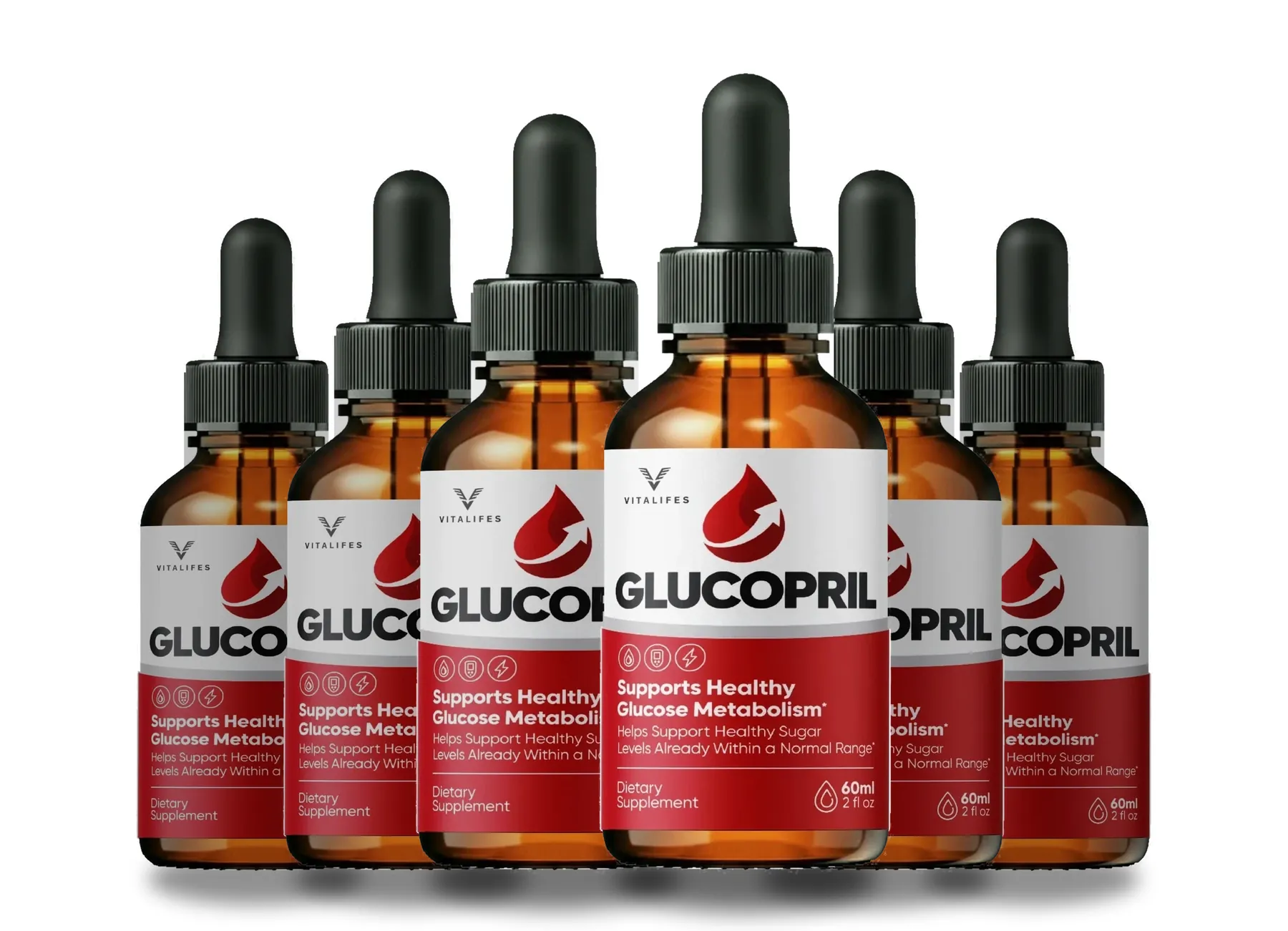
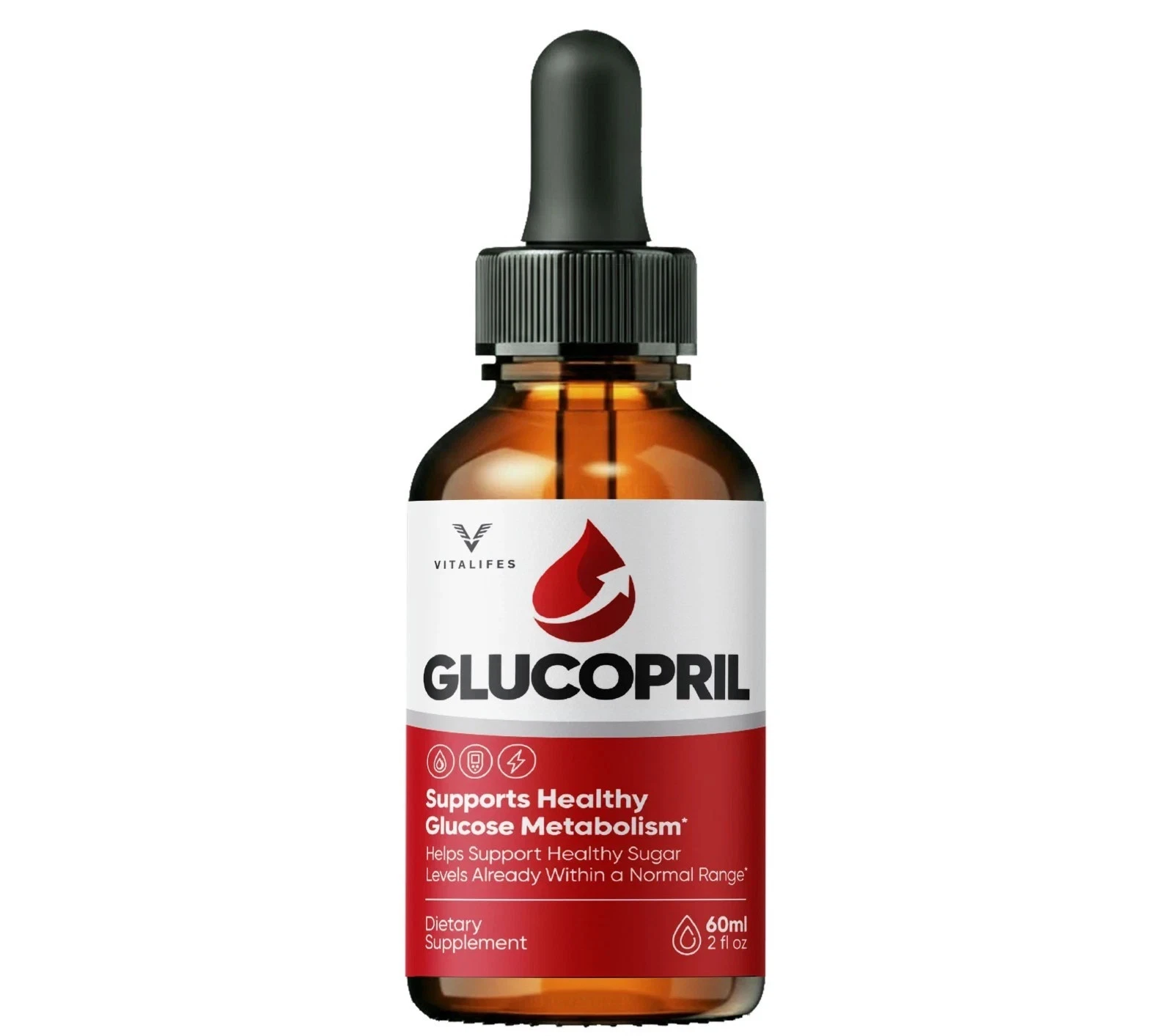
Every photograph on these pages comes from the seller’s own asset pack. The bottle shots, the pack stacks, the ingredient graphic, the how-to-take panel and the four seals are the seller’s artwork, reproduced so a reader can see what this website is reading.
No stock photography of people appears anywhere. No portraits are attached to the eight named buyers on the reviews page, because none were supplied and a stock face beside a name is an invention rather than an illustration.
Every image carries a caption saying what it is and why it is on the page. An image with no caption is asking a reader to work out for themselves why it is there, which on a commercial page is rarely an innocent question.
What this GlucoPril desk does not know
Six things this desk does not know, collected here rather than repeated everywhere.
The amount of any extract in the liquid. The carrier the drops are suspended in. The manufacturer’s identity or the facility’s location. Whether any batch has been tested and by whom. The price, which the seller’s listing refused to show on 19 September 2026. And the length of the return window, which is printed on the listing each order goes through rather than on the seal.
Six holes, listed in one place, which is the treatment this website gives every gap: state it once, in the section whose job it is, and then write about the bottle rather than about the hole.
Nothing here is a clinical opinion either. Diabetes is diagnosed and managed with measurements and, where needed, medication. This desk sells a dietary supplement and writes about a label, and those are the limits of what it is doing.
How corrections to this GlucoPril website work
One address, corrections made on the page, and a review date that moves.
Write to [email protected]. Corrections are made on the page itself rather than in a separate log, and they move the review date forward so a reader can see that the page has been touched.
Artwork is the most common source of a correction. Labels change between production runs, and a bottle that arrives carrying something this website does not describe is a fact this desk wants. A photograph of the base, showing the lot, is the most useful thing to attach.
That address cannot help with an order. Parcels, refunds and delivery addresses all run through +1 (302) 200-3480, and an email sent to the wrong desk is time lost on a window measured in weeks.
Sources this GlucoPril desk relies on most
The papers cited most often across the rest of the website.
- Tawanwongsri W, Mordmuang A, Phenwan T, Siri-Archawawat D. Efficacy and safety of Centella asiatica (L.) Urb. [Apiaceae] as a dietary supplement for glycemic control and lipid regulation in patients with type 2 diabetes: a randomized controlled trial in Thailand. Front Pharmacol. 2025;16:1680647. PMID 41383475. Dose: 1,200 mg/day for 6 months; adjusted analysis found no between-group difference in HbA1c, fasting plasma glucose or LDL-C. https://pubmed.ncbi.nlm.nih.gov/41383475/
- Grohmann T, Walker AW, Russell WR, et al. A grape seed and bilberry extract reduces blood pressure in individuals at risk of developing type 2 diabetes. Front Nutr. 2023;10:1139880. PMID 37351191. Dose: 300 mg grape seed extract with 250 mg bilberry daily for 12 weeks; blood pressure fell and glucose measures did not change. https://pubmed.ncbi.nlm.nih.gov/37351191/
- Martinez-Zapata MJ, Vernooij RW, Simancas-Racines D, et al. Phlebotonics for venous insufficiency. Cochrane Database Syst Rev. 2020;11(11):CD003229. PMID 33141449. Sixty-nine randomised trials; moderate-certainty evidence that this whole class reduces oedema slightly and slightly increases adverse events. https://pubmed.ncbi.nlm.nih.gov/33141449/
- Alsawadi A. The perception filler: a proposed conceptual framework for ingredient-interpretation gaps in food supplements. J Nutr. 2026;156(10):101803. PMID 42660500. https://pubmed.ncbi.nlm.nih.gov/42660500/
- National Center for Complementary and Integrative Health. Diabetes and Dietary Supplements: What You Need To Know. Read 19 September 2026. https://www.nccih.nih.gov/health/diabetes-and-dietary-supplements-what-you-need-to-know
- MedlinePlus, U.S. National Library of Medicine. Blood Glucose. Read 19 September 2026. https://medlineplus.gov/bloodglucose.html
Order GlucoPril from the desk that wrote these pages
The commission is disclosed above, and so are the four facts on this website that work against it.
Price at checkout · the return window is the one on your listing · money-back guarantee as the listing prints it
Order GlucoPril On The Official WebsiteTwo drops a day after a meal · 60 ml a bottle · lot GLU-26/GO-3914