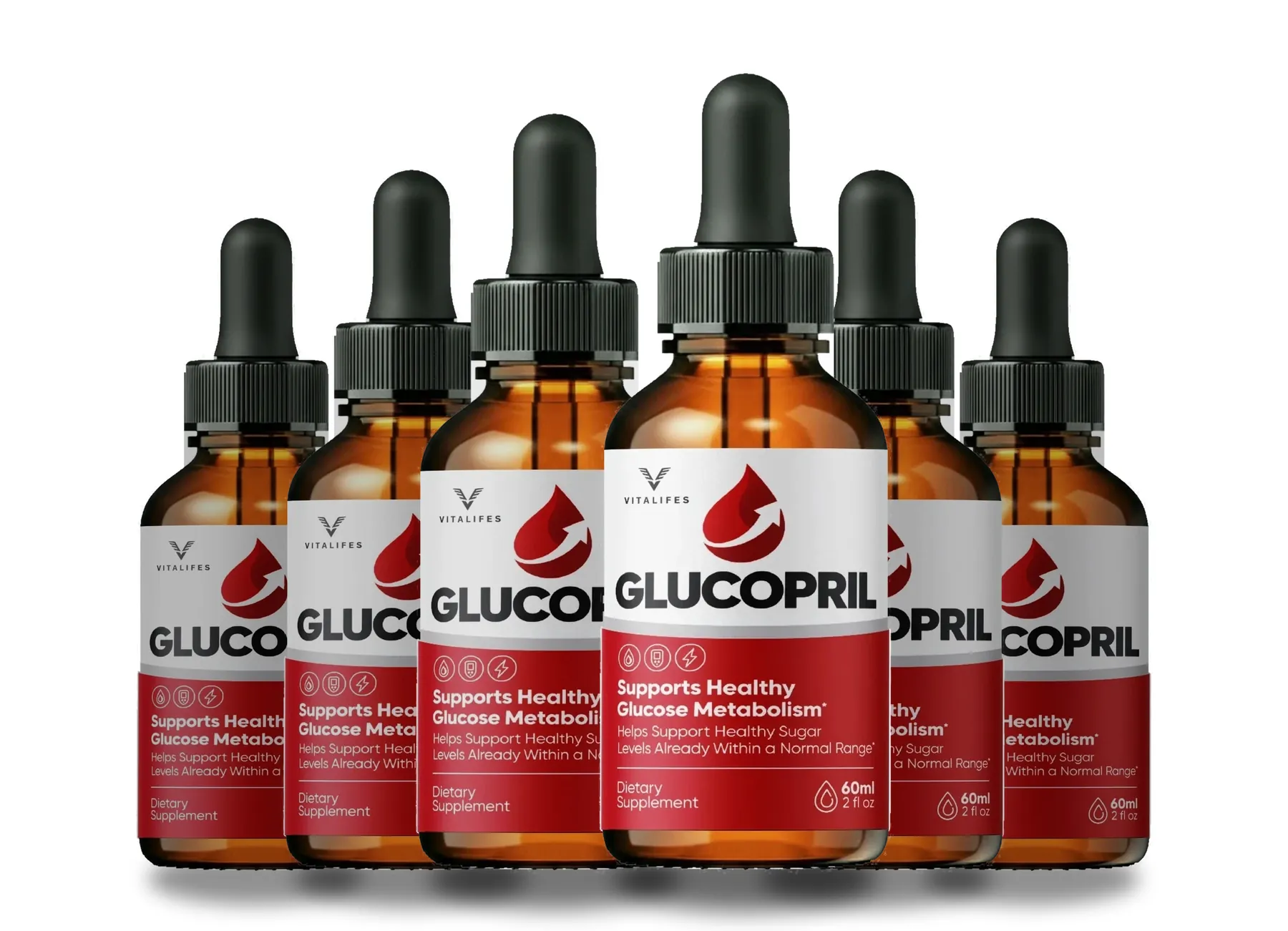
GlucoPril Official Website › Blood Sugar Supplement Guide
Blood Sugar Supplement GuideThe Blood Sugar Supplement Guide: What The Evidence Supports
Six botanicals dominate this shelf, and their evidence bases are wildly uneven. Berberine has an umbrella meta-analysis and the largest pooled effect. Cinnamon has one too and a weaker story. Chromium, gymnema, bitter melon and banaba trail behind them. This guide walks each one, names the amount its trials used, and says which of them are on the bottle this website sells.
The whole shelf, ingredient by ingredient, with the trial amounts printed.
What people are actually trying to do when they buy these
Three readers, one shelf, and only two of them well served by it.
Usually one of three things. Somebody has been told a fasting reading is higher than it should be and wants to act before it becomes a prescription. Somebody already has a diagnosis and is looking for something to sit alongside what they take. Or somebody has read the word metabolism on a label and is buying a general feeling of doing something sensible.
Those three readers need different advice, and only the first two are in the market this shelf is really built for. MedlinePlus on prediabetes sets out what the condition is and what the interventions with the strongest evidence behind it are, and none of them is a supplement: weight, movement and diet carry the trial evidence in that space.
That is the honest frame for everything below. These botanicals are studied against small changes in numbers, usually alongside the things that actually move them, and the best of them produces an effect that would be unremarkable beside a medication.
A fasting glucose reading is a snapshot and HbA1c is an average over about three months. MedlinePlus explains both. Nearly every trial below reports one or the other, and knowing which is which makes the results readable.
Berberine: the largest pooled effect on this shelf
The one ingredient on this shelf with umbrella-level evidence behind it.
An alkaloid from goldenseal, barberry and several other plants, and the ingredient with the strongest quantitative case in this category. A 2024 umbrella meta-analysis pulled together the existing meta-analyses of berberine against glycaemic control and inflammatory markers in metabolic disorders, which is the level of evidence most of this shelf never reaches.
The practical points a buyer needs are about form and tolerability rather than about whether it does anything. Berberine is poorly absorbed, which is why trial doses are large and usually split across the day, and gastrointestinal upset is the common reason people stop. It also has a serious interaction profile with prescribed medicines, which is a conversation with a prescriber rather than a label.
For this guide the important fact is simpler: berberine is not in the product this website sells, and it is not in most of the products advertised beside it either.
Cinnamon: an umbrella review, and a more careful reading
Umbrella-level evidence, two complications, and a species question on the label.
The most familiar name on the shelf and the one most often bought on the strength of a headline. A 2023 umbrella meta-analysis looked at cinnamon supplementation for glycaemic control in type 2 diabetes and polycystic ovary syndrome, pooling the meta-analyses that already existed.
Two things complicate the picture for a shopper. The first is species: cassia and Ceylon cinnamon are different plants with different coumarin content, and a label saying only cinnamon has not told you which one is in the capsule. The second is that kitchen quantities and trial quantities are not the same thing, so the folk advice about sprinkling it on porridge is not what the papers studied.
Cinnamon is also not on the bottle this website sells.
Chromium, gymnema, bitter melon and banaba
Four ingredients with real literatures and no pooled weight behind them.
The next tier, and the one where a buyer should be most careful about what a label implies. Each of these has a real research literature and none has the pooled weight of the two above.
Chromium is a trace mineral with a genuine role in insulin signalling and a long history of supplementation trials producing modest and inconsistent results. Gymnema sylvestre carries a striking folk reputation for blunting sweet taste and a much thinner clinical record. Bitter melon is widely used as a food and a remedy across South Asia, with small trials that do not settle the question. Banaba, standardised to corosolic acid, sits on a similar footing.
What unites them for a shopper is that a label naming any of them has told you something about the manufacturer’s intent and very little about what to expect. The National Center for Complementary and Integrative Health keeps a plain-language page on diabetes and dietary supplements that is worth reading before any of them, and its overall conclusion is cautious.
| Ingredient | Where its evidence sits | What a label naming it tells you |
|---|---|---|
| Berberine | Umbrella meta-analysis; largest pooled effect on the shelf | The manufacturer chose the best-evidenced option, and dosing will be large |
| Cinnamon | Umbrella meta-analysis; species and quantity both matter | Ask which species, and at what amount |
| Chromium | Many trials, modest and inconsistent results | A trace mineral with a real mechanism and an unimpressive record |
| Gymnema | Strong folk reputation, thin clinical record | Expect a taste effect and little else that is measured |
| Bitter melon | Small trials, unsettled | Widely used as a food; the supplement case is weaker than the reputation |
| Banaba | Small trials of corosolic acid | A narrow literature behind a bold claim |
Every row is about a published record, not about any particular capsule.
The vein and capillary shelf, and how it ends up beside this one
Seven plants with good evidence for something else entirely.
There is a second, older family of botanicals that shares shelf space with the group above and belongs to a completely different clinical tradition: gotu kola, hawthorn, horse chestnut, butcher’s broom, grape seed, stone root and motherwort. These are the chronic venous insufficiency set, used across European phlebology since the 1980s for heavy legs, swelling and capillary fragility.
Their evidence is real and it is about legs. A 1996 Lancet trial gave 50 mg of horse chestnut aescin twice daily for twelve weeks and took 43.8 ml off the lower leg, against 46.7 ml for compression stockings. Cochrane’s review of sixty-nine randomised trials of this whole class reports a small benefit for oedema and a slight increase in ordinary adverse events.
Two of them have been pointed at a blood sugar outcome, and both left it alone. Gotu kola at 1,200 mg a day for six months in people with type 2 diabetes changed neither HbA1c nor fasting plasma glucose. Grape seed at 300 mg a day for twelve weeks in people at risk of type 2 diabetes lowered blood pressure and left glucose measures where they were. Hawthorn at 1,200 mg a day for sixteen weeks in type 2 diabetes lowered diastolic blood pressure and reported no glycaemic benefit.
Those are useful plants with a real job. The job is not this one, and a buyer looking at a label carrying them should know which shelf they came from.
How to read a trial in this category without being misled
Four checks that outlive every ingredient ranking above.
Four habits, and they are worth more than any ingredient ranking because they survive the next paper.
- Check what was measured. Fasting glucose is a snapshot; HbA1c is a three-month average. A change in the first without the second is a much smaller finding than a headline usually suggests.
- Check the amount and the form. A standardised extract at 300 mg a day is not the same object as a teaspoon of a spice or two drops of a blend.
- Check what else the participants were doing. Several trials on this shelf run alongside a diet in both arms, which is the right design and makes the supplement's own contribution harder to see.
- Check the population. A result in people with type 2 diabetes does not transfer to somebody with normal readings, and a result in people at risk does not transfer to either.
The fourth is the one that matters most for products sold on a healthy sugar levels already within a normal range claim, because almost nobody runs trials in that population. The research is done in people whose numbers are abnormal, and the claim is aimed at people whose numbers are not.
Why “supports healthy glucose metabolism” is the strongest claim allowed
Every label on this shelf is allowed the same sentence, whatever is behind it.
Every product on this shelf is a dietary supplement, and dietary supplements in the United States may make structure/function claims rather than disease claims. A claim about supporting a normal bodily process is permitted; a claim to treat, prevent or cure a disease is not, and diabetes is a disease.
That is why the labels all read the same way. Supports healthy glucose metabolism. Helps support healthy sugar levels already within a normal range. The phrase already within a normal range is doing a great deal of work: it aims the claim at people who do not have the condition the product is bought for.
None of this is a trick by any particular seller. It is the legal shape of the whole category, and the practical consequence for a reader is that the strength of a claim on a label tells you nothing about the strength of the evidence behind it. Every product here, from the best-evidenced to the thinnest, is allowed exactly the same sentence.
What all of this means if you are buying
Five conclusions, none of which requires buying anything.
Five conclusions, in the order they are useful.
If the aim is to move a number, the evidence points at weight, movement and diet first, and berberine is the best-evidenced supplement on this shelf. If a label names none of the six ingredients in the first half of this guide, it is not really a blood sugar formula in the sense the shopper has in mind, whatever the front of the box says.
If a label prints no amounts, the comparison with any trial cannot be made at all, and that is worth knowing before rather than after. If a label names a plant without its part or its species, the same applies with a different cause.
And if the thing you actually want to know is what your readings are doing, no supplement on this shelf answers that. A meter and a laboratory result do, and they are the only things that do.
- Which of the six main ingredients it actually names, if any.
- Whether an amount is printed beside each one.
- Whether the plant part and species are stated.
- What the front-of-pack claim commits to, which is always the same sentence.
- What you intend to measure, and when you will measure it.
Who publishes this GlucoPril guide?
Every trial and review named above, with the amount each one used.
- Nazari A, Ghotbabadi ZR, Kazemi KS, et al. The effect of berberine supplementation on glycemic control and inflammatory biomarkers in metabolic disorders: an umbrella meta-analysis. Clin Ther. 2024;46(2):e64-e72. PMID 38016844. https://pubmed.ncbi.nlm.nih.gov/38016844/
- Zarezadeh M, Musazadeh V, Foroumandi E, et al. The effect of cinnamon supplementation on glycemic control in patients with type 2 diabetes or with polycystic ovary syndrome: an umbrella meta-analysis. Diabetol Metab Syndr. 2023;15(1):127. PMID 37316893. https://pubmed.ncbi.nlm.nih.gov/37316893/
- Tawanwongsri W, Mordmuang A, Phenwan T, Siri-Archawawat D. Efficacy and safety of Centella asiatica (L.) Urb. [Apiaceae] as a dietary supplement for glycemic control and lipid regulation in patients with type 2 diabetes: a randomized controlled trial in Thailand. Front Pharmacol. 2025;16:1680647. PMID 41383475. Dose: 1,200 mg/day for 6 months; adjusted analysis found no between-group difference in HbA1c, fasting plasma glucose or LDL-C. https://pubmed.ncbi.nlm.nih.gov/41383475/
- Grohmann T, Walker AW, Russell WR, et al. A grape seed and bilberry extract reduces blood pressure in individuals at risk of developing type 2 diabetes. Front Nutr. 2023;10:1139880. PMID 37351191. Dose: 300 mg grape seed extract with 250 mg bilberry daily for 12 weeks; blood pressure fell and glucose measures did not change. https://pubmed.ncbi.nlm.nih.gov/37351191/
- Walker AF, Marakis G, Simpson E, et al. Hypotensive effects of hawthorn for patients with diabetes taking prescription drugs: a randomised controlled trial. Br J Gen Pract. 2006;56(527):437-43. PMID 16762125. Dose: 1,200 mg hawthorn extract daily for 16 weeks in 79 people with type 2 diabetes; diastolic blood pressure fell, and the trial did not report a glycaemic benefit. https://pubmed.ncbi.nlm.nih.gov/16762125/
- Diehm C, Trampisch HJ, Lange S, Schmidt C. Comparison of leg compression stocking and oral horse-chestnut seed extract therapy in patients with chronic venous insufficiency. Lancet. 1996;347(8997):292-4. PMID 8569363. Dose: dried extract standardised to 50 mg aescin twice daily for 12 weeks in 240 patients; lower-leg volume fell 43.8 ml, against 46.7 ml for compression stockings. https://pubmed.ncbi.nlm.nih.gov/8569363/
- Martinez-Zapata MJ, Vernooij RW, Simancas-Racines D, et al. Phlebotonics for venous insufficiency. Cochrane Database Syst Rev. 2020;11(11):CD003229. PMID 33141449. Sixty-nine randomised trials; moderate-certainty evidence that this whole class reduces oedema slightly and slightly increases adverse events. https://pubmed.ncbi.nlm.nih.gov/33141449/
- National Center for Complementary and Integrative Health. Diabetes and Dietary Supplements: What You Need To Know. Read 19 September 2026. https://www.nccih.nih.gov/health/diabetes-and-dietary-supplements-what-you-need-to-know
- MedlinePlus, U.S. National Library of Medicine. Blood Glucose. Read 19 September 2026. https://medlineplus.gov/bloodglucose.html
- MedlinePlus, U.S. National Library of Medicine. Prediabetes. Read 19 September 2026. https://medlineplus.gov/prediabetes.html
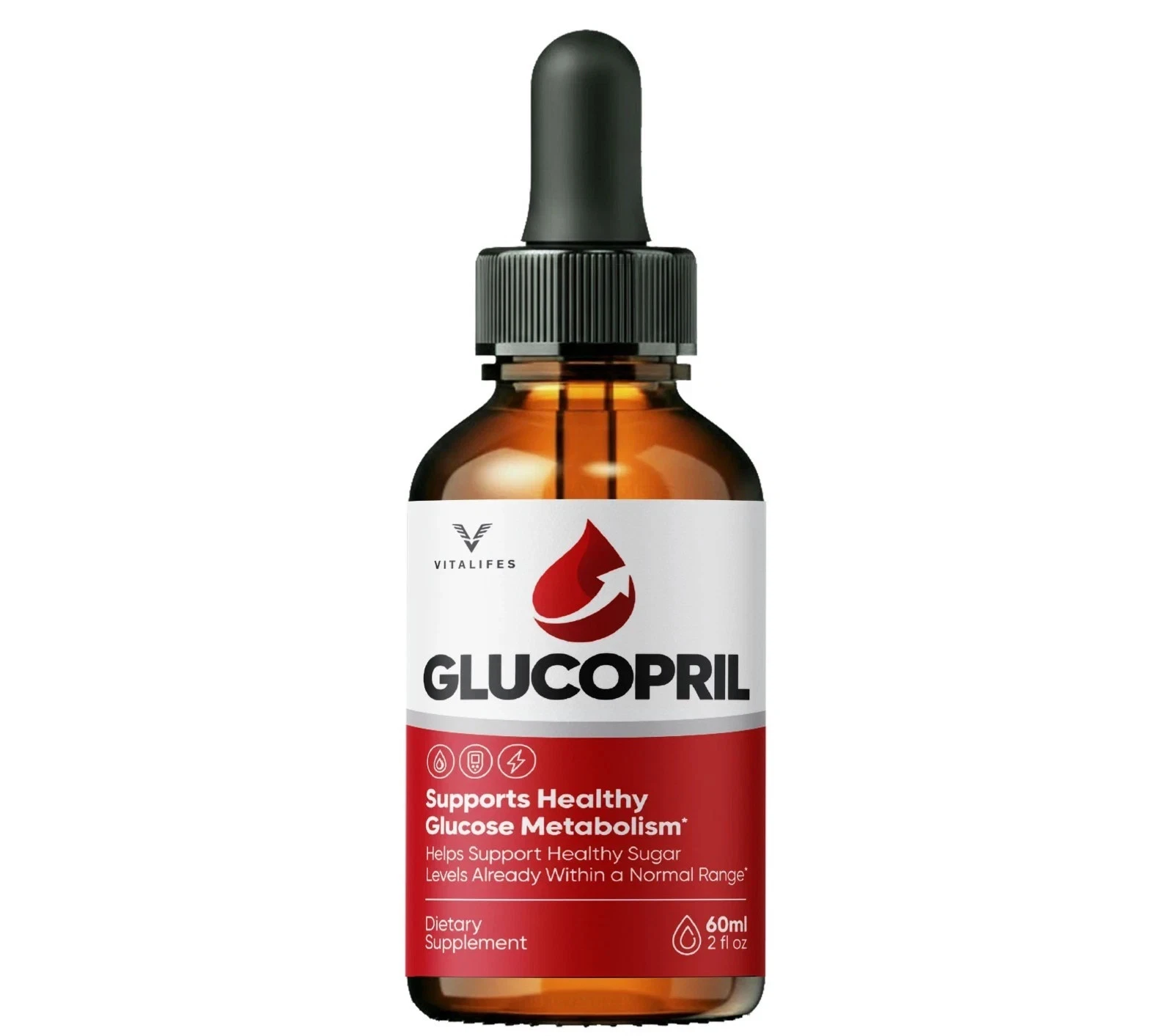
See how GlucoPril reads against this guide
It names seven plants, and all seven of them come from the second shelf described above rather than the first.
Price at checkout · the return window is the one on your listing · money-back guarantee as the listing prints it
Order GlucoPril On The Official WebsiteTwo drops a day after a meal · 60 ml a bottle · lot GLU-26/GO-3914