GlucoPril Official Website › Benefits
BenefitsWhat Does The GlucoPril Label Claim?
The GlucoPril bottle prints two claims and the rest of the label is the category and the fill.
Supports healthy glucose metabolism, and helps support healthy sugar levels already within a normal range. Both are support claims about normal function, the second is limited by its own last six words, and neither promises a number will move.
Four printed lines, read one word at a time.
What is actually printed on a GlucoPril bottle?
Reproduced exactly, because paraphrase is how a claim grows.
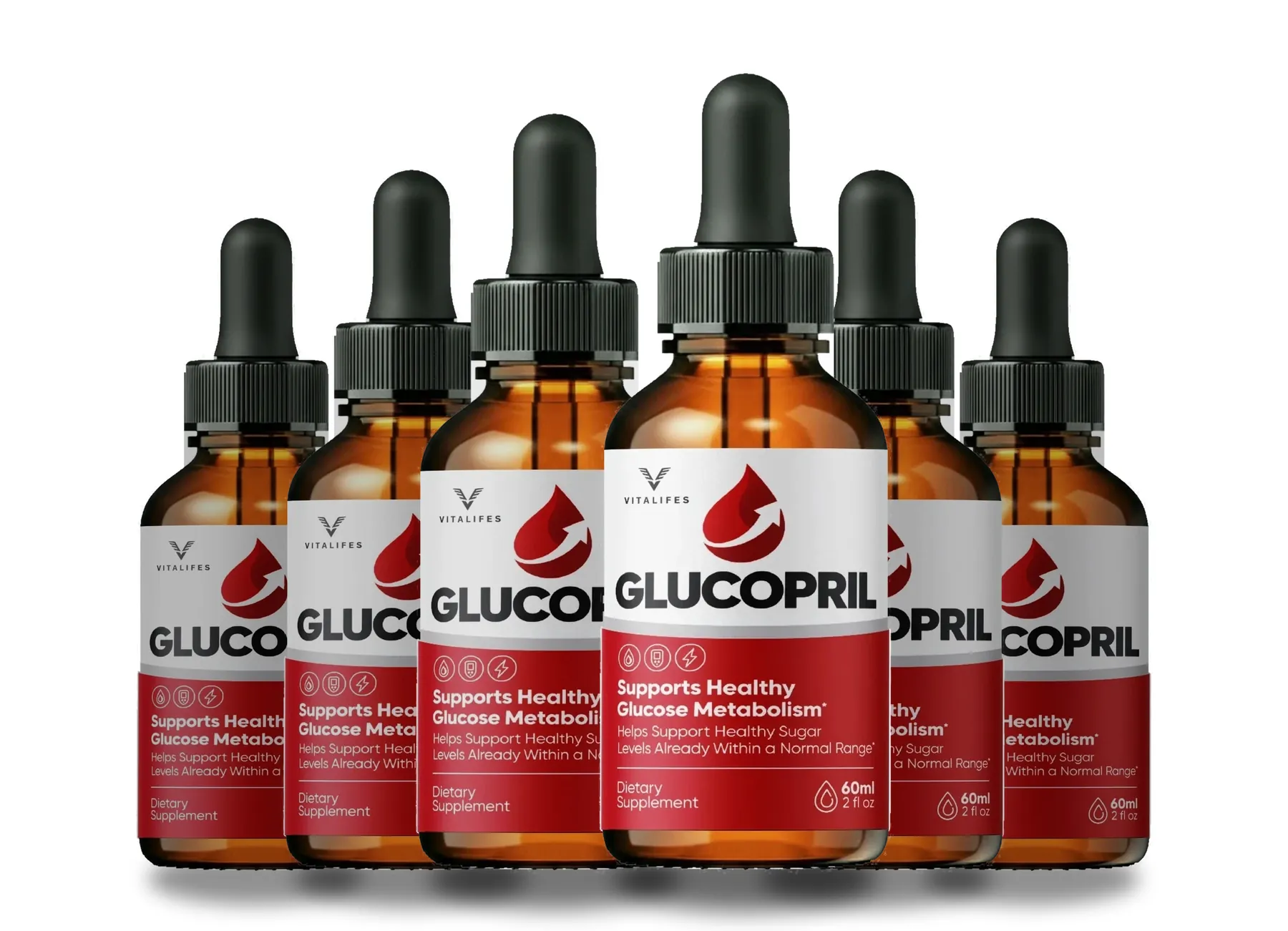
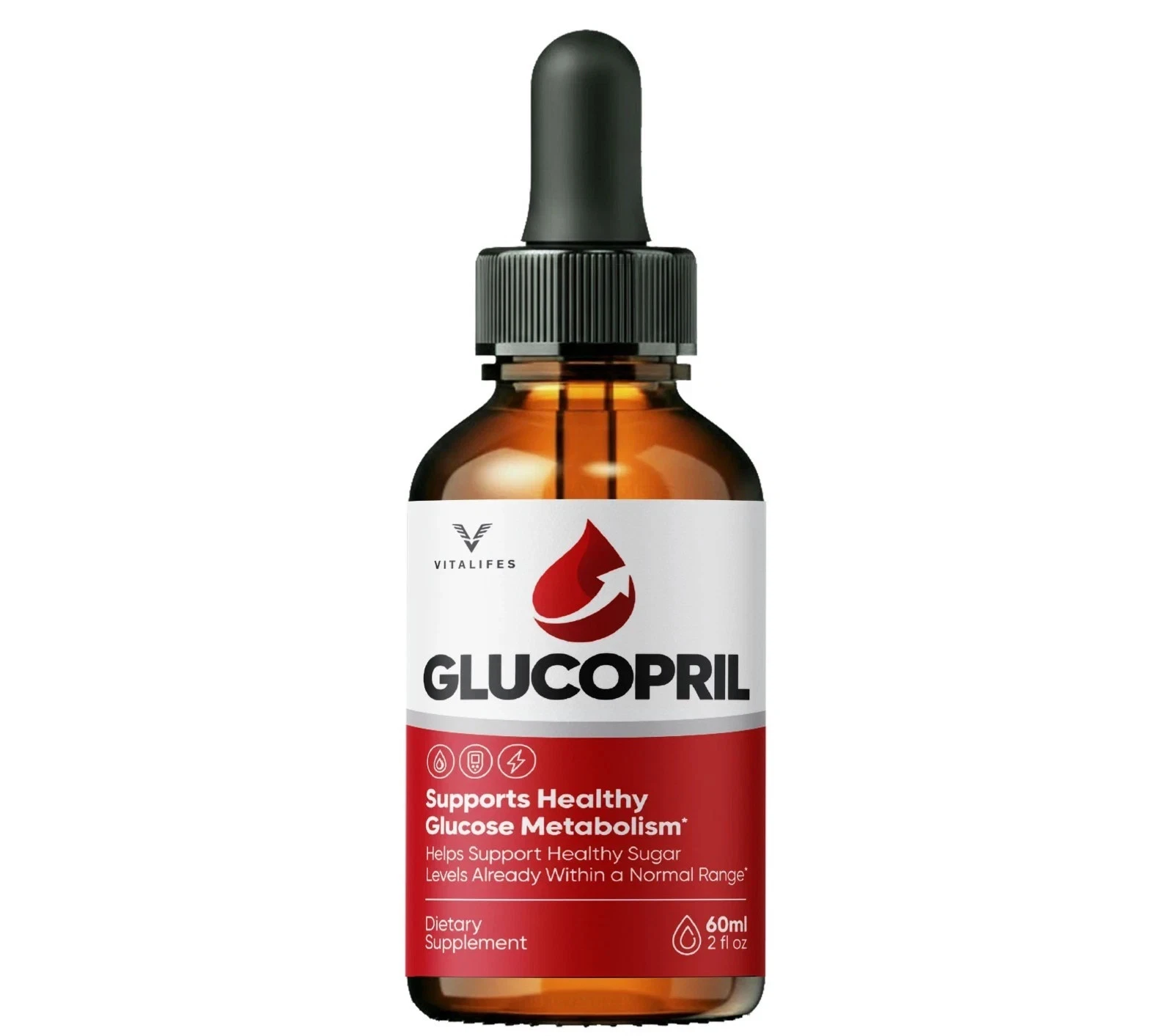
Four things, and the list is short enough to give in full. The house brand VITALIFES sits above the product name with a wing mark. Then the name, then a row of three outline glyphs, then two claim lines, then the category and the fill. That is the entire front of the label and there is no back-panel photograph in the pack.
Everything this website says about what the bottle offers has to fit inside those two claim lines. They are reproduced below exactly as printed, because paraphrasing a claim is how a claim grows.
| What the label prints | Where it sits |
|---|---|
| Supports Healthy Glucose Metabolism | First claim line, under the glyph row |
| Helps Support Healthy Sugar Levels Already Within a Normal Range | Second claim line, in smaller type |
| Dietary Supplement | Category line, as required |
| 60ml / 2 fl oz | Fill, at the foot of the label |
Four printed lines. Everything on this website sits inside them.
What does "supports" commit GlucoPril to?
Two claim lines, and what each word in them is doing.
Less than most readers assume, and the difference is deliberate rather than sneaky. A structure or function claim describes an effect on the normal working of the body. A disease claim says a product treats, cures, prevents or diagnoses something. The second kind belongs to medicines, and a dietary supplement that made one would be an unapproved drug.
So the grammar is doing real work. "Supports healthy glucose metabolism" describes a process that is already running in a healthy body. It does not promise a number will fall. The second line goes further in the same direction: levels "already within a normal range" excludes, in six words, everyone whose readings are outside one.
Read those two lines together and they describe a maintenance product for a healthy adult. That is a narrower offer than the aisle's reputation suggests, and it is the offer this bottle is actually making.
- Support describes a process, not an outcome, and no figure is promised anywhere.
- "Already within a normal range" is the qualifier that limits the second claim to people whose readings are normal.
- No sentence on the label mentions diabetes, prediabetes, insulin or HbA1c.
- The FDA disclaimer at the foot of every page on this website is the standing note that no claim here has been evaluated.
What the GlucoPril marketplace panels claim, and why it stays there
Described, counted, and left where they were found.

The seller ships two square red graphics alongside the product images, and they are a much longer list than the bottle carries. Between them they name energy, fatigue, immune system, mood, digestion, stamina, gut health, mental clarity, detoxification, antioxidants, and vital vitamins and minerals.
Those are the seller's claims. They are described here rather than repeated as this website's, and the artwork ships as artwork.
One of them is worth singling out, because it is not merely unsupported. The named list on this label is seven plant extracts, so a claim about vitamins and minerals has nothing on the bottle behind it at all. Nothing in the formula is a vitamin and nothing in it is a mineral.
The rest fall into a second category: plausible-sounding benefits with no trial in these plants pointed at them. Gotu kola has a cognition and mood meta-analysis behind it, which is the closest any of the seven comes to one of those panel claims, and it is a long way from a mental clarity promise on a glucose bottle.
What the bottle claims and what the listing claims are two different things, and a buyer is entitled to know which one arrives in the box. The bottle is the product.
| Claim on the seller's panels | Where it appears | What is behind it on this label |
|---|---|---|
| Energy, fatigue, stamina | Marketplace artwork only | No ingredient trialled for it |
| Immune system, gut health, digestion | Marketplace artwork only | No ingredient trialled for it |
| Mood, mental clarity and focus | Marketplace artwork only | Gotu kola has cognition and mood work, at oral doses far above anything here |
| Detoxification, antioxidants | Marketplace artwork only | Grape seed is polyphenol-rich; no detoxification outcome was measured |
| Vital vitamins and minerals | Marketplace artwork only | The named list is seven plant extracts |
None of the five rows appears on the bottle. All five appear on the seller's square graphics.
Which GlucoPril benefit has a trial behind it?
Four benefits, two of them printed, and the evidence runs the other way.
Take the two printed claims and the class the ingredients belong to, and ask what has actually been measured. The answer is uneven in an interesting way: the benefit with the best evidence is not the one on the front.
For the printed glucose claim, three relevant trials exist and all three came back the same way. Gotu kola at 1,200 mg a day for six months moved neither HbA1c nor fasting glucose. Grape seed at 300 mg a day for twelve weeks moved blood pressure and left the glucose measures alone. Hawthorn at 1,200 mg a day for sixteen weeks reported a diastolic blood pressure fall and no glycaemic benefit.
For the venous claim nobody is making on this bottle, the evidence is stronger. Cochrane on horse chestnut pooled six trials at a mean 32.1 ml of leg volume. A meta-analysis covering 10,246 subjects assessed butcher's broom in its usual combination. Eight gotu kola trials improved microcirculatory measures. That is a benefit with a research file, and it is not printed anywhere on the label.
The GlucoPril benefit the label has the best case for, and does not make
The gap between what is in the bottle and what is on the front of it.
A formula of seven phlebotonics has a real, conventional use, and the manufacturer has chosen not to sell it that way. That is a commercial decision rather than a defect, and it is the most interesting thing about this product.
The consequence for a buyer is straightforward. Bought for the printed claim, the expectation is not well supported and there is nothing in the formula that makes it more likely. Bought for what the ingredients were selected in, the expectation is closer to the research, and two limits still apply: the amounts are not published, and a seven-plant combination has never been trialled as a combination.
Neither of those limits is unusual in this aisle. Both are worth knowing before the money moves, which is why they are on this page and not buried.
- Two claims are printed on the bottle and both are support claims about normal function.
- The second is limited by six words to people whose levels are already in a normal range.
- Three trials looked for a glycaemic effect in these plants and did not find one.
- The class the ingredients belong to has moderate-certainty evidence for reducing leg swelling.
- The seller's marketplace panels claim eleven further benefits that are not on the bottle.
The GlucoPril benefits that have nothing to do with pharmacology
What a buyer gets that is not in the bottle.
Three of them, and they are worth counting because they are the ones a buyer definitely receives. A daily routine attached to a meal is a small ritual that tends to pull other habits along with it. A bottle on the kitchen counter is a visible reminder that the numbers matter to you. And the act of starting something tends to come with the measuring, the walking and the earlier dinner that actually shift readings.
None of that is an ingredient effect and this website is not claiming it as one. It is, however, the honest explanation for a share of what any supplement roster records, and a reader who notices it is better placed to judge the rest.
It also suggests the right way to run the first three months: change one thing at a time, keep a short note, and read it at the end rather than relying on memory.
Questions about GlucoPril benefits
What does GlucoPril claim to do?
Two things, printed on the front: supports healthy glucose metabolism, and helps support healthy sugar levels already within a normal range. Nothing on the label mentions diabetes, insulin or HbA1c.
Does GlucoPril claim to lower blood sugar?
No. Support is a structure and function claim about normal working, and the second claim limits itself to levels already in a normal range. A claim to lower anything would be a different kind of sentence.
What about the energy and immune claims on the listing?
They are on the seller's square marketplace graphics rather than on the bottle. They are described on this page and not repeated as this website's claims. The vitamins and minerals line has nothing behind it at all: the named list is seven plant extracts.
Is there a benefit the ingredients support better?
Reduced leg swelling and venous symptoms, which is what this class of plants was trialled for. It is not printed on the label, so this website does not claim it either.
Has GlucoPril itself been tested?
No trial of this seven-plant combination exists. What exists is the research on each plant alone, usually as a standardised single extract at a fixed daily dose, which is what the ingredients page sets out card by card.
Sources behind the GlucoPril label claims
The three glycaemic trials first, then the venous evidence the ingredients actually have.
- Tawanwongsri W, Mordmuang A, Phenwan T, Siri-Archawawat D. Efficacy and safety of Centella asiatica (L.) Urb. [Apiaceae] as a dietary supplement for glycemic control and lipid regulation in patients with type 2 diabetes: a randomized controlled trial in Thailand. Front Pharmacol. 2025;16:1680647. PMID 41383475. Dose: 1,200 mg/day for 6 months; adjusted analysis found no between-group difference in HbA1c, fasting plasma glucose or LDL-C. https://pubmed.ncbi.nlm.nih.gov/41383475/
- Chong NJ, Aziz Z. A systematic review of the efficacy of Centella asiatica for improvement of the signs and symptoms of chronic venous insufficiency. Evid Based Complement Alternat Med. 2013;2013:627182. PMID 23533507. Eight trials; microcirculatory measures improved, most studies at unclear risk of bias. https://pubmed.ncbi.nlm.nih.gov/23533507/
- Puttarak P, Dilokthornsakul P, Saokaew S, et al. Effects of Centella asiatica (L.) Urb. on cognitive function and mood related outcomes: a systematic review and meta-analysis. Sci Rep. 2017;7(1):10646. PMID 28878245. https://pubmed.ncbi.nlm.nih.gov/28878245/
- Walker AF, Marakis G, Simpson E, et al. Hypotensive effects of hawthorn for patients with diabetes taking prescription drugs: a randomised controlled trial. Br J Gen Pract. 2006;56(527):437-43. PMID 16762125. Dose: 1,200 mg hawthorn extract daily for 16 weeks in 79 people with type 2 diabetes; diastolic blood pressure fell, and the trial did not report a glycaemic benefit. https://pubmed.ncbi.nlm.nih.gov/16762125/
- Pittler MH, Ernst E. Horse chestnut seed extract for chronic venous insufficiency. Cochrane Database Syst Rev. 2012;11(11):CD003230. PMID 23152216. Leg volume fell by a weighted mean 32.1 ml against placebo across six trials; the authors call for larger definitive trials. https://pubmed.ncbi.nlm.nih.gov/23152216/
- Boyle P, Diehm C, Robertson C. Meta-analysis of clinical trials of Cyclo 3 Fort in the treatment of chronic venous insufficiency. Int Angiol. 2003;22(3):250-62. PMID 14612852. Dose: Ruscus aculeatus root extract 150 mg with hesperidin methyl chalcone 150 mg and ascorbic acid 100 mg per capsule; 10,246 subjects. https://pubmed.ncbi.nlm.nih.gov/14612852/
- Grohmann T, Walker AW, Russell WR, et al. A grape seed and bilberry extract reduces blood pressure in individuals at risk of developing type 2 diabetes. Front Nutr. 2023;10:1139880. PMID 37351191. Dose: 300 mg grape seed extract with 250 mg bilberry daily for 12 weeks; blood pressure fell and glucose measures did not change. https://pubmed.ncbi.nlm.nih.gov/37351191/
- Martinez-Zapata MJ, Vernooij RW, Simancas-Racines D, et al. Phlebotonics for venous insufficiency. Cochrane Database Syst Rev. 2020;11(11):CD003229. PMID 33141449. Sixty-nine randomised trials; moderate-certainty evidence that this whole class reduces oedema slightly and slightly increases adverse events. https://pubmed.ncbi.nlm.nih.gov/33141449/
Order GlucoPril with both printed claims read in full
Two claim lines, seven named extracts, and 60 ml of amber glass at two drops a day.
Price at checkout · three bottles is the pack most buyers take · money-back guarantee as the listing prints it
Order GlucoPril On The Official WebsiteTwo drops a day after a meal · 60 ml a bottle · lot GLU-26/GO-3914