GlucoPril Official Website › Side Effects
Side EffectsGlucoPril Side Effects
No trial of the seven GlucoPril extracts together has counted a single adverse event.
What exists is each plant's own record. The class slightly increases minor events against placebo. Gotu kola carries two liver case reports, two plants lower blood pressure, hawthorn interacts with digoxin, and motherwort rules out pregnancy.
Seven plants, seven separate safety records, and no record for the combination.
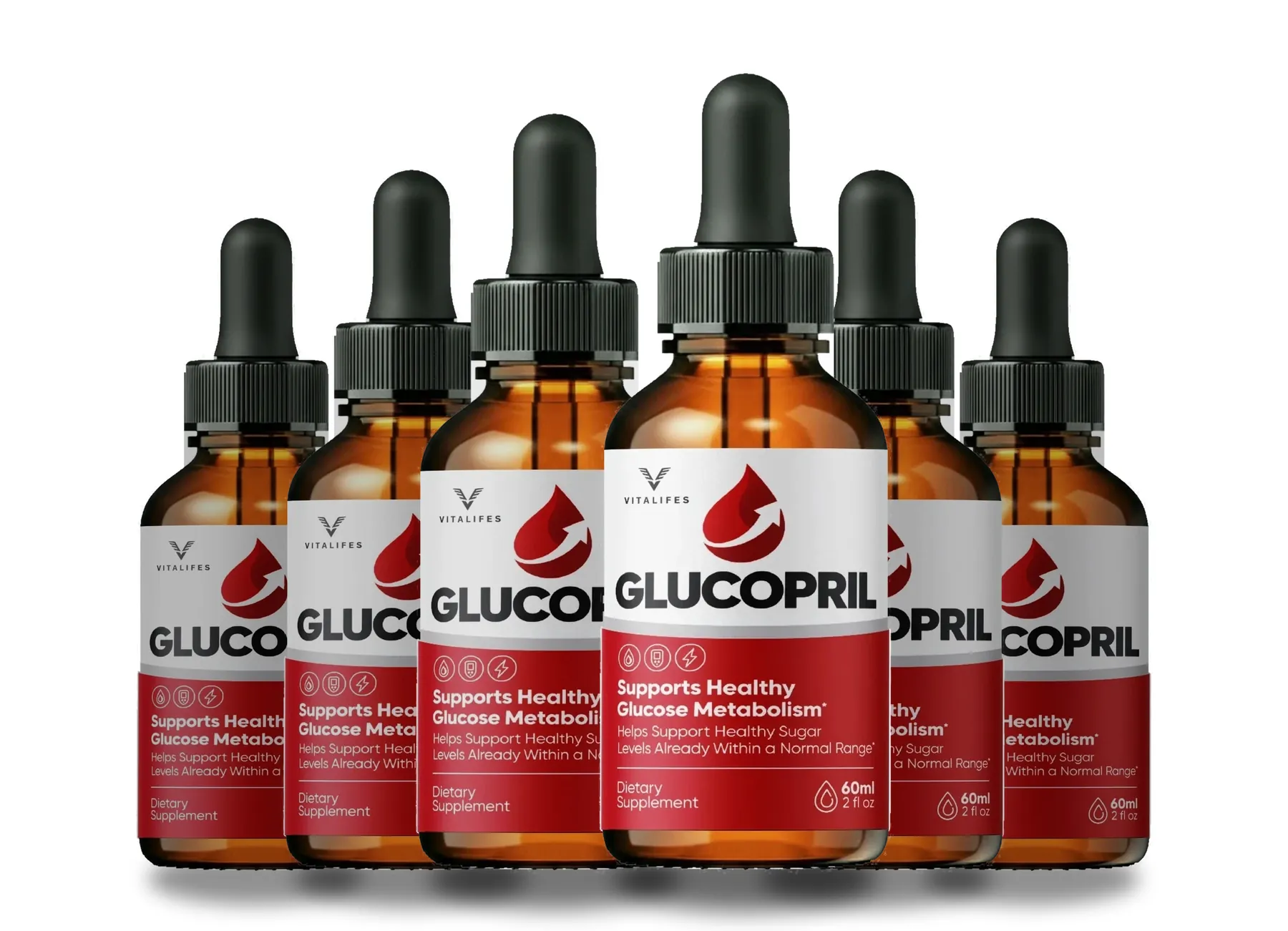
What the GlucoPril label itself says about taking it
One line on the artwork, doing two jobs.
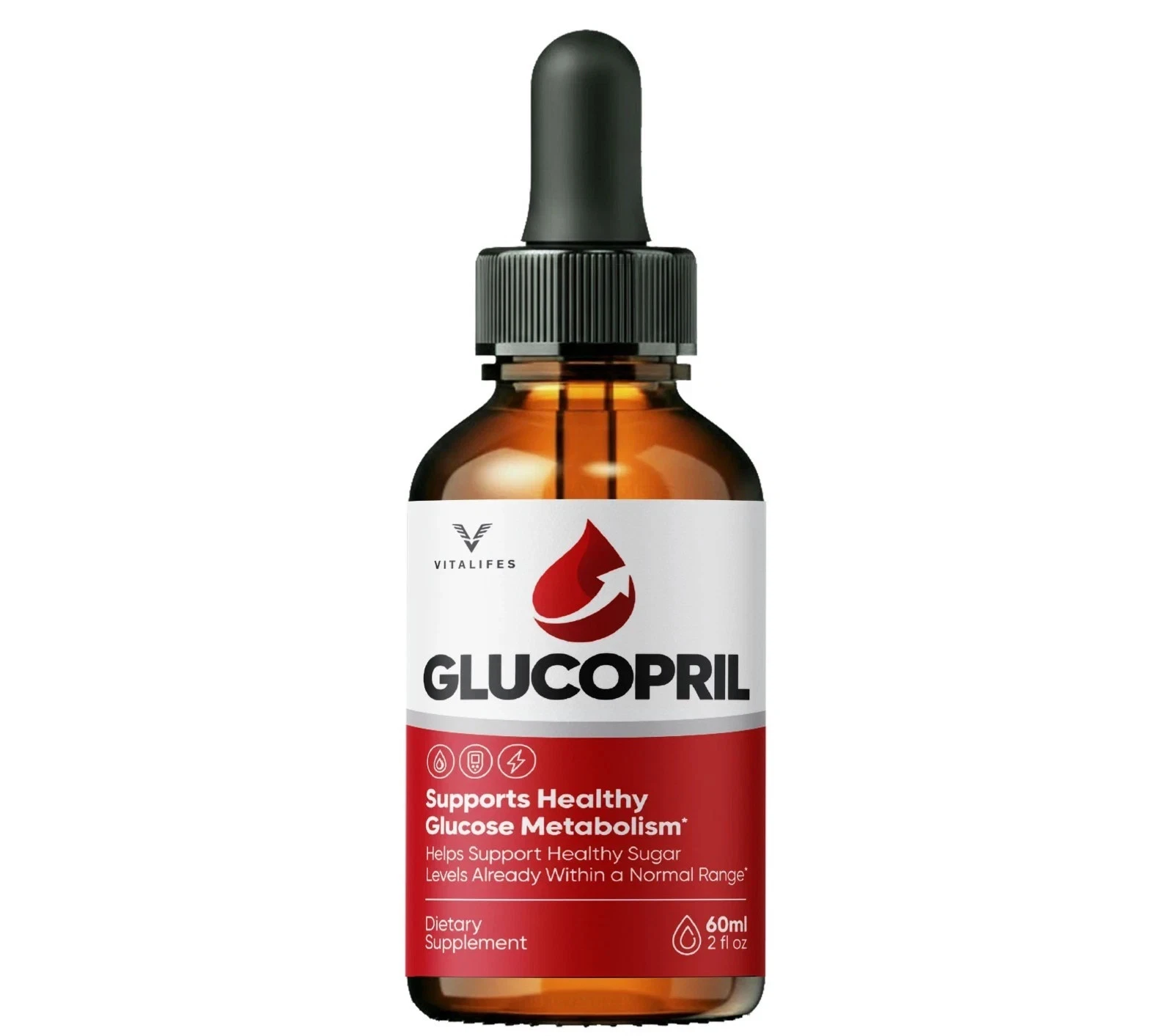
The printed direction is take 2 drops daily after a meal for best results, and best results when taken consistently every day. That is a dosing instruction and a caution at the same time: after a meal is how the trials in this class dose these plants, and it is the single change that prevents most of the stomach upset they cause.
The front of the bottle carries the two claim lines, the category and the fill, and there is no back-panel photograph in the pack to read a longer caution from. So the printed direction is the whole of the label's own safety text, and everything else on this page comes from the research behind the seven names.
Follow the bottle. Two drops daily after a meal, and no more than the label states.
What side effects are on record for the GlucoPril plants?
Plant by plant, from the trials that counted adverse events.
Nothing is on record for this combination, because no trial of these seven together has been run. What exists is the safety record of each plant on its own, generally at daily amounts far above anything two drops could carry, and that record is reassuring in outline and specific in a few places.
The class as a whole has been counted. Cochrane's review of 69 randomised trials of phlebotonics reports moderate-certainty evidence that this family slightly increases adverse events against placebo. The events in question are the ordinary ones: stomach upset, headache, loose stools. Slightly more common than nothing is the honest summary, and it is worth knowing before rather than after.
Read the bottle you received rather than this page for the printed caution, because artwork changes between production runs and the bottle in your hand is the current one.
| Plant | What its own trials reported | How often |
|---|---|---|
| Gotu kola | Nausea, stomach discomfort, drowsiness; hepatic case reports exist | Uncommon; the liver reports are rare and are covered below |
| Chinese hawthorn | Dizziness, headache, palpitations, mild digestive upset | Generally mild in the heart-failure programme |
| Horse chestnut | Stomach upset, itching, headache; nausea on an empty stomach | Common enough that trials dose it with food |
| Stone root | No controlled trial exists, so no adverse-event table exists | Unknown |
| Motherwort | Drowsiness and gastrointestinal upset in traditional use | Unknown; no randomised trial against a metabolic outcome |
| Butcher’s broom | Gastrointestinal discomfort, occasional nausea | Uncommon in the pooled combination trials |
| Grape seed | Headache, dry mouth, nausea, dizziness | Uncommon; among the better-tolerated extracts in the set |
Every row describes a standardised single extract at a trial dose. The amount in two drops of a seven-plant blend is a different object and no amount is printed for it.
The one GlucoPril ingredient with published liver case reports
Two published case reports, in proportion, once.
Gotu kola, and this is stated once, here, at the length it deserves rather than sprinkled across the site. A 2005 case series in a Spanish gastroenterology journal describes hepatotoxicity associated with ingesting Centella asiatica. A 2011 report in Digestive and Liver Disease describes the same in a child and is titled as a call for caution with alternative remedies.
Proportion matters here in both directions. These are case reports, which means a small number of people, an association rather than a proven cause, and an unknown denominator of everyone who took the plant without incident. Gotu kola is consumed widely as a food and a tea across South and Southeast Asia. Case reports are also exactly how a genuine signal first appears, which is why they are published at all.
The practical reading is proportionate. Anyone with existing liver disease, anyone taking a medicine that is hard on the liver, and anyone who drinks heavily has a reason to raise this bottle with a clinician specifically rather than generally. Everyone else has a reason to stop and ask if unexplained fatigue, dark urine, pale stools or yellow eyes appear while taking it.
Unexplained tiredness, nausea that does not settle, dark urine, pale stools, pain under the right ribs, or any yellowing of the skin or eyes. Stop taking the drops and speak to a doctor. Take the bottle with you, because the seven names on it are more useful to a clinician than any description of it.
The GlucoPril extracts that move blood pressure
Two plants, two measured effects, and one reader who needs to know first.
Two of the seven, and both effects were measured deliberately rather than noticed in passing. Sixteen randomised grape seed trials pooled for blood pressure found a downward effect, and the 2023 cross-over trial in people at risk of type 2 diabetes recorded the same thing at 300 mg a day for twelve weeks. Hawthorn at 1,200 mg a day for sixteen weeks lowered diastolic pressure in 79 people with type 2 diabetes, in a trial where that was the finding rather than a side note.
For a reader with no blood pressure medicine and no history of low readings, this is closer to a feature than a hazard. The effect sizes in those trials are modest, and a modest downward push is generally welcome.
For a reader already taking an antihypertensive it is the most important paragraph on this page. Two additional downward pushes on top of a medicine titrated to a target is how a person ends up lightheaded standing up from a chair. The fix is not to stop the medicine. It is to tell the prescriber that the bottle exists, before the first dose.
- Watch for lightheadedness on standing, especially in the first fortnight.
- Watch for unusual tiredness, or a heart rate that feels slower than usual.
- Take a home reading if you already own a cuff, and take it at the same time of day.
- Raise it before starting if you take any medicine for blood pressure, including a diuretic.
Four prescriptions to raise before opening a GlucoPril bottle
Named individually, because a general caution helps nobody.
Digoxin
The one interaction here with a study of its own. A pharmacokinetic study looked at digoxin alongside a hawthorn preparation directly. Digoxin has a narrow therapeutic window, which means the gap between a working dose and a toxic one is small, and that is precisely the situation where an unannounced botanical is a bad idea.
Glucose-lowering medicine
Metformin, a sulfonylurea, a GLP-1 agonist, insulin. The trials behind these plants did not find a glycaemic effect, which argues against a dramatic interaction, and it does not replace telling the person who adjusts your doses. They are the one who reads your numbers against your prescription.
Blood pressure medicine
Covered in full above. Two plants on this bottle lower blood pressure in their own trials, and an antihypertensive is titrated to a target that assumes nothing else is pushing in the same direction.
Anticoagulants and antiplatelets
Warfarin, apixaban, clopidogrel, and daily aspirin taken on advice. Polyphenol-rich extracts are routinely flagged in this context, and a 2012 emergency case report involving over-the-counter horse chestnut seed extract is the kind of event that makes the caution worth stating rather than assuming.
One sentence covers all four. Take the bottle to whoever writes the prescription, because reading seven names off a label is faster and more accurate than describing a supplement from memory. NCCIH's page on diabetes and dietary supplements makes the same point without selling anything.
Why GlucoPril is not for pregnancy or nursing
One plant, and a literature that points the wrong way.
Motherwort, and the reason is specific rather than precautionary boilerplate. The clinical literature for Leonurus is obstetric. A 2025 meta-analysis studies it synergised with oxytocin for preventing postpartum haemorrhage, which places it squarely in the territory of uterine action. A 2024 laboratory study shows coumarins from the related Leonurus japonicus having opposite effects on uterine smooth muscle depending on their substituents.
A plant with documented uterine activity, at an amount nobody has published, is not a pregnancy supplement. The 2013 phytochemistry and pharmacology review collects what the plant contains and confirms that its pharmacology is cardiac and uterine rather than metabolic.
Nursing falls under the same heading for the ordinary reason: what passes into milk from a seven-plant extract blend has not been studied, here or anywhere. The label is written for adults aged 18 and over, and that limit is on this website for a reason rather than as furniture.
What nobody can tell you about GlucoPril side effects
The limits of what this page can say, stated once.
Two things, and both follow from the same fact. No amount is given for any of the seven extracts, and side effects are a dose phenomenon. A plant that is benign at 20 mg and troublesome at 600 mg has one safety profile at each, and without a figure neither can be applied to this bottle.
The second is the combination. Seven extracts in one carrier have not been given to anybody in a trial, so nobody has counted what happens when they arrive together. The sensible default is to assume the union of each plant's cautions rather than the intersection, which is what this page has done.
Set against that, the serving is two drops, and the amounts involved are almost certainly below every trial protocol quoted on this website. Small amounts of well-characterised botanicals are, in general, uneventful. That is a reasonable expectation rather than a guarantee, and the difference between those two words is the whole of this section.
- The class slightly increases minor adverse events against placebo, at moderate certainty.
- Gotu kola carries two published liver case reports and one clear list of symptoms to stop for.
- Two of the seven plants lower blood pressure in their own trials.
- Hawthorn has a studied interaction with digoxin, which has a narrow therapeutic window.
- Motherwort is why this bottle is not for pregnancy or nursing.
When to stop taking GlucoPril, and who to call
Three tiers, so a mild stomach does not get treated like an emergency.
Stop immediately for these
Yellowing of skin or eyes, dark urine with pale stools, swelling of the lips, face or tongue, a rash that spreads, chest pain, or fainting. Stop the drops and seek medical help rather than waiting to see.
Stop and ask for these
Persistent nausea, unexplained tiredness that lasts more than a few days, repeated lightheadedness on standing, or a heart rate that feels unusually slow. None is an emergency and all are worth a conversation.
Pause and reintroduce for these
Mild stomach upset in the first week. Confirm the dose is going in after a meal rather than before it, stop for two days, and try again. If it returns, this product is not agreeing with you and that is a complete answer.
Call the order desk for the refund, not for the symptom
The desk at +1 (302) 200-3480 handles tracking, changes and refunds, and the refund policy page sets out the steps. It is not a clinical service and does not hold your medical history.
GlucoPril safety questions
Does GlucoPril have side effects?
No trial of this seven-plant combination has counted them. The class it belongs to slightly increases minor adverse events against placebo at moderate certainty, and the events are the ordinary ones: stomach upset, headache, loose stools.
Can GlucoPril be taken with metformin?
Tell the person who prescribes it before you start. The trials behind these plants did not find a glycaemic effect, which argues against a dramatic interaction, and your prescriber is the one reading your numbers against your doses.
Is gotu kola safe for the liver?
Two published case reports associate Centella asiatica with hepatotoxicity, one of them in a child. Case reports are associations with an unknown denominator, and they are also how a real signal first appears. Anyone with liver disease should raise this bottle specifically.
Will it lower blood pressure?
Grape seed and hawthorn both did in their own trials. If you take a blood pressure medicine, that is a reason to tell your prescriber rather than a reason to stop the medicine.
Can GlucoPril be taken during pregnancy?
No. Motherwort's clinical literature is obstetric and a related species acts on uterine smooth muscle in laboratory work. The label is for adults aged 18 and over.
What should be done about mild stomach upset?
Check the dose is going in after a meal rather than before one, stop for two days, and try again. If it comes back, the product is not agreeing with you, which is a complete answer and a refund conversation.
Sources for the GlucoPril safety review
The case reports first, then the interaction study, then the class review that counted adverse events.
- Jorge OA, Jorge AD. Hepatotoxicity associated with the ingestion of Centella asiatica. Rev Esp Enferm Dig. 2005;97(2):115-24. PMID 15801887. https://pubmed.ncbi.nlm.nih.gov/15801887/
- Dantuluri S, North-Lewis P, Karthik SV. Gotu Kola induced hepatotoxicity in a child - need for caution with alternative remedies. Dig Liver Dis. 2011;43(6):500. PMID 21334992. https://pubmed.ncbi.nlm.nih.gov/21334992/
- Tankanow R, Tamer HR, Streetman DS, et al. Interaction study between digoxin and a preparation of hawthorn (Crataegus oxyacantha). J Clin Pharmacol. 2003;43(6):637-42. PMID 12817526. https://pubmed.ncbi.nlm.nih.gov/12817526/
- Walker AF, Marakis G, Simpson E, et al. Hypotensive effects of hawthorn for patients with diabetes taking prescription drugs: a randomised controlled trial. Br J Gen Pract. 2006;56(527):437-43. PMID 16762125. Dose: 1,200 mg hawthorn extract daily for 16 weeks in 79 people with type 2 diabetes; diastolic blood pressure fell, and the trial did not report a glycaemic benefit. https://pubmed.ncbi.nlm.nih.gov/16762125/
- Snow A, Halpenny D, McNeill G, et al. Life-threatening rupture of a renal angiomyolipoma in a patient taking over-the-counter horse chestnut seed extract. J Emerg Med. 2012;43(6):e401-3. PMID 21310579. https://pubmed.ncbi.nlm.nih.gov/21310579/
- Wojtyniak K, Szymanski M, Matlawska I. Leonurus cardiaca L. (motherwort): a review of its phytochemistry and pharmacology. Phytother Res. 2013;27(8):1115-20. PMID 23042598. https://pubmed.ncbi.nlm.nih.gov/23042598/
- Chen C, Liu Q, Lu Y, et al. Motherwort synergized with oxytocin for postpartum hemorrhage prevention: integrated clinical efficacy and mechanism exploration. Phytomedicine. 2025;145:156951. PMID 40527062. https://pubmed.ncbi.nlm.nih.gov/40527062/
- Fan Y, Liu C, Wang F, et al. Coumarins with different substituents from Leonurus japonicus have opposite effects on uterine smooth muscle. Int J Mol Sci. 2024;25(18). PMID 39337649. https://pubmed.ncbi.nlm.nih.gov/39337649/
- Zhang H, Liu S, Li L, et al. The impact of grape seed extract treatment on blood pressure changes: a meta-analysis of 16 randomized controlled trials. Medicine (Baltimore). 2016;95(33):e4247. PMID 27537554. https://pubmed.ncbi.nlm.nih.gov/27537554/
- Grohmann T, Walker AW, Russell WR, et al. A grape seed and bilberry extract reduces blood pressure in individuals at risk of developing type 2 diabetes. Front Nutr. 2023;10:1139880. PMID 37351191. Dose: 300 mg grape seed extract with 250 mg bilberry daily for 12 weeks; blood pressure fell and glucose measures did not change. https://pubmed.ncbi.nlm.nih.gov/37351191/
- Martinez-Zapata MJ, Vernooij RW, Simancas-Racines D, et al. Phlebotonics for venous insufficiency. Cochrane Database Syst Rev. 2020;11(11):CD003229. PMID 33141449. Sixty-nine randomised trials; moderate-certainty evidence that this whole class reduces oedema slightly and slightly increases adverse events. https://pubmed.ncbi.nlm.nih.gov/33141449/
- National Center for Complementary and Integrative Health. Diabetes and Dietary Supplements: What You Need To Know. Read 19 September 2026. https://www.nccih.nih.gov/health/diabetes-and-dietary-supplements-what-you-need-to-know
Order GlucoPril with the cautions read first
Two drops a day after a meal, seven named extracts, and four prescriptions worth raising before the first dose.
Price at checkout · three bottles is the pack most buyers take · money-back guarantee as the listing prints it
Order GlucoPril On The Official WebsiteTwo drops a day after a meal · 60 ml a bottle · lot GLU-26/GO-3914