GlucoPril Official Website › Blog › A Missing Panel
What A Missing Supplement Facts Panel Actually Costs You
A panel is six fields on the back of a bottle and it is the most useful document in the whole category. Without one you can know what is in a product and never how much, and every comparison a careful shopper wants to make becomes impossible at once. Here is exactly what is lost, and what can be done instead.
- A Supplement Facts panel carries six fields, and each one enables a different check.
- Without a panel, no label amount can be set against any published trial amount.
- Front-of-pack claims are unaffected by the absence, which is the awkward part.
- A milligram figure circulating in marketplace listings is a marketplace report, not a printed panel.
- The workaround is to print the trial dose beside each named extract and leave the distance visible.
What a panel is, field by field
A Supplement Facts panel looks like a regulatory chore and it is not. It is a compact data structure, and each field in it exists because it answers a question a buyer would otherwise have to guess at.
Serving size converts everything else. An amount per serving means nothing until you know whether a serving is one capsule or four, and a label that gives one without the other is giving you half a sentence. Amount per ingredient is the field that does the real work: it is what lets a reader take a row off a label and search for what happened when a trial gave that much of that thing to real people.
Percent Daily Value applies to nutrients with an established reference and is genuinely useless for most botanicals, which have none. The proprietary blend line is the honest version of hiding the recipe: it says these five things total 400 mg without saying in what proportion, which is worse than full disclosure and much better than nothing. Other ingredients names the carrier, the capsule shell and anything else present, which is where allergens live.
| Field a panel carries | What it lets a reader do | On this product |
|---|---|---|
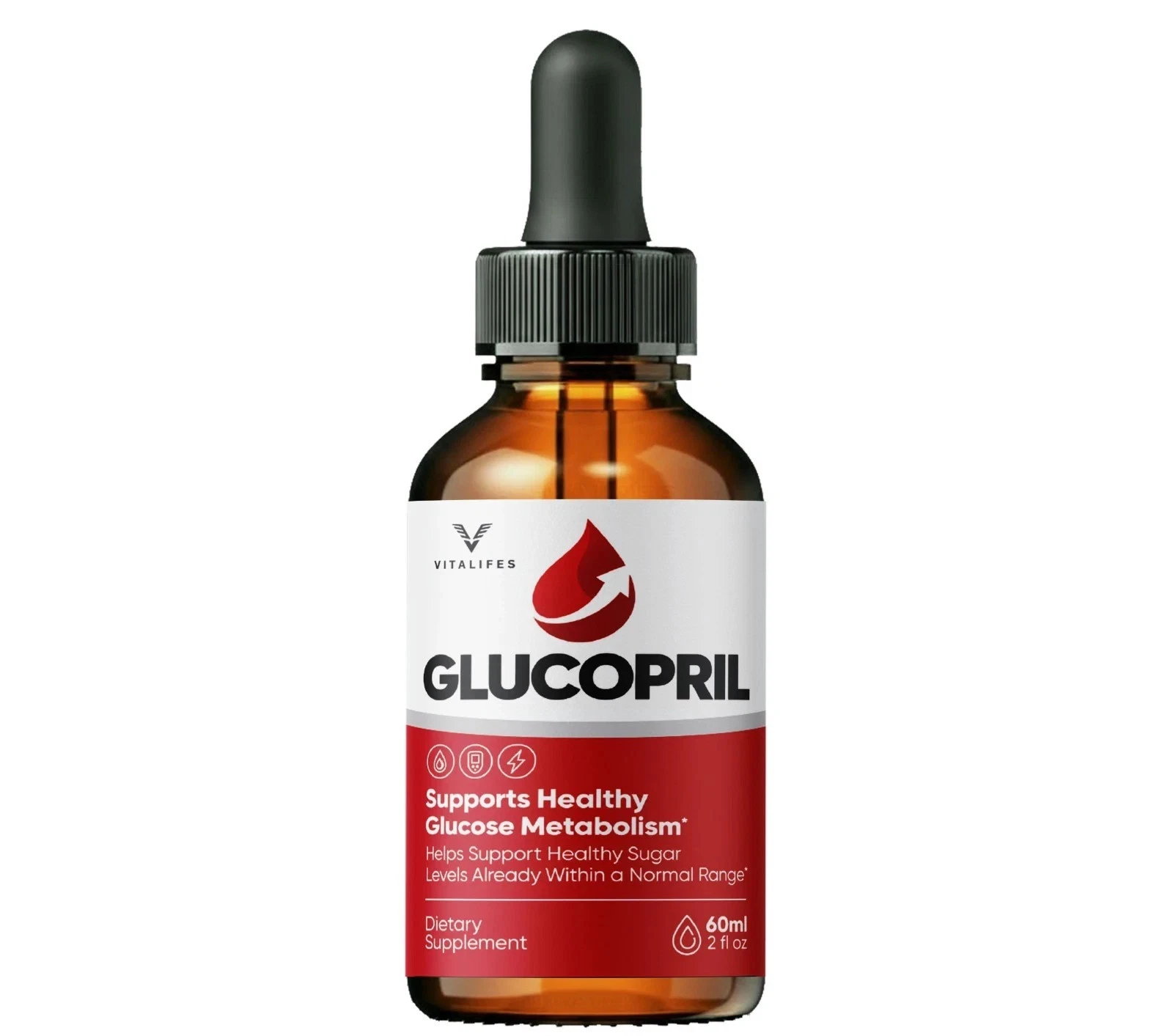
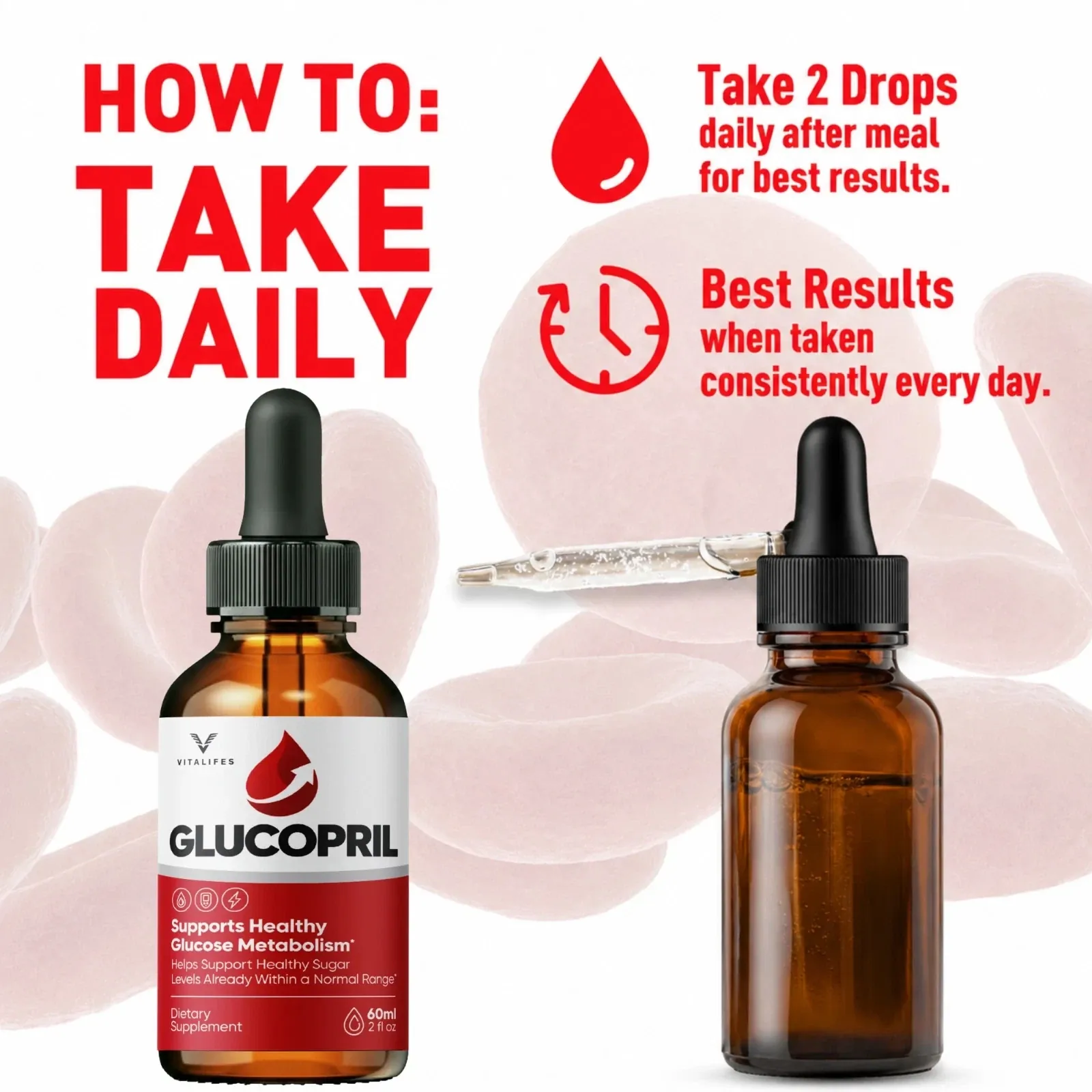
| Serving size | Convert a per-serving amount into a daily one | The front gives a direction rather than a serving line: two drops daily after a meal |
| Amount per serving, per ingredient | Compare the label against the amount a published trial used | Not given for any of the seven |
| Percent Daily Value | Judge a vitamin or mineral against an established reference | None appears, and most botanicals have no Daily Value to print |
| Proprietary blend line | See that amounts are grouped, and know the total at least | No blend line appears on any artwork |
| Other ingredients | Know the carrier, and check for allergens | No line. What the drops are suspended in is not named |
| Manufacturer or distributor | Know who to ask, and who is accountable | No address. The house brand is the only organisation named |
The middle column is the point. A panel is not paperwork; it is the document that makes every other comparison possible.
What goes missing when there is no panel
Three checks disappear at once, and they are the three a careful buyer most wants to run.
The first is the trial comparison. This is the single most valuable thing anybody can do with a supplement label, and it takes two minutes: read the amount, find what the published work used, and notice the ratio. The Lancet horse chestnut comparison used 50 mg of aescin twice a day. The PRECISE trial used 300 mg of grape seed extract daily. The butcher’s broom meta-analysis assessed 150 mg of root extract per capsule. Those are checkable numbers, and without a panel there is nothing on the label to check them against.
The second is the proportion check. Seven named ingredients could be seven equal shares or one ingredient and six traces. Both are legal, both look identical on an ingredient graphic, and only a panel distinguishes them.
The third is the carrier. A liquid is a solution, and what it is dissolved in matters for taste, for storage, for anybody avoiding alcohol and for anybody with an allergy. An other-ingredients line answers that in one row.
| Extract | Amount its published trials used | What that trial measured |
|---|---|---|
| Horse chestnut | 50 mg of aescin twice daily, 12 weeks | Lower-leg volume |
| Grape seed | 300 mg a day, 12 weeks | Blood pressure, in people at risk of diabetes |
| Gotu kola | 1,200 mg a day, 6 months | HbA1c and fasting glucose, both unchanged |
| Butcher's broom | 150 mg per capsule, with two companions | Leg volume and symptoms |
| This bottle | Two drops, amount unstated | Nothing has been measured |
The last row is why the first four cannot be used to predict anything. The distance between them is not knowable from the label.
Why the front of the bottle is unaffected
Here is the part that makes the whole subject uncomfortable. The absence of a panel does nothing at all to what a front label is permitted to claim.
Structure/function claims in this category are about the claim’s wording rather than about the evidence behind any particular formula. Supports healthy glucose metabolism is permitted on a product with a fully disclosed panel of well-evidenced ingredients at trial amounts, and it is permitted on a product that discloses nothing. The sentence is the same sentence.
That asymmetry is worth holding onto, because it inverts the intuition most shoppers bring. A confident front-of-pack claim feels like evidence of substance behind it. It is evidence of a copywriter who knows which sentences are allowed.
See what GlucoPril does print, in full
Four things on the front of the bottle, seven extracts on a separate graphic, and the amount each one’s published trials used printed beside it on the ingredients page.
Price at checkout · three bottles is the pack most buyers take · money-back guarantee as the listing prints it
Order GlucoPril On The Official WebsiteTwo drops a day after a meal · 60 ml a bottle · lot GLU-26/GO-3914
The gap readers fill in for themselves
There is a small literature on how people read ingredient lists, and it describes something most of us do without noticing. A 2026 paper in the Journal of Nutrition proposes a framework for what it calls ingredient-interpretation gaps in food supplements: the reasoning a reader supplies when a label gives a name without a quantity.
The default assumption is generous. Shown a named ingredient with no amount, most readers assume the amount is a sensible one, on the reasoning that a manufacturer would not bother naming something it had barely included. That assumption is doing a great deal of work and nothing on the label supports it.
The reverse assumption is not better. A formula with no panel is not automatically a token formula, and treating every undisclosed product as empty is as unjustified as treating every one as generous. The honest position is that the reader does not know, and that the label has chosen not to say.
What follows from that is a decision rather than a verdict. Some buyers are comfortable buying on the strength of an ingredient list and a return window. Others want the arithmetic. Both are reasonable, and only the second is served by a panel.
What can honestly be done instead
Not much, and it is worth being plain about that rather than dressing up a workaround as a solution.
What this website does is print the amount each published trial used beside every named extract, so a reader can see the scale of what the research involved even though the distance to two drops cannot be measured. That is not a substitute for a panel. It is the best available response to not having one, and it has one real virtue: it makes the gap visible instead of quietly closing it.
The other thing worth doing is refusing figures that circulate without a document behind them. A proprietary blend total of roughly 121 mg appears in third-party marketplace listings for this product. It is on no artwork anywhere in the seller’s pack. A number with no printed panel behind it is a report about a listing, not a fact about a bottle, and printing it as though it were the second would be the exact failure this whole page is about.
Five checks for a label with no panel
- Read the ingredient graphic and the label and see whether they agree. On this product they agree exactly on all seven names, which is better than it sounds.
- Check whether the plant part and species are given. Naming the part is the second most useful thing a label can do after printing an amount.
- Look for a lot code on the base. It will not tell you what is inside, and it does mean a bottle can be traced to a run.
- Find out whether there is a refund route with a telephone number behind it, and what window it runs on.
- Decide, before paying, whether you are the kind of buyer who wants the arithmetic. If you are, a product with no panel is not going to become satisfying later.
Those five are the whole of what is available. The National Center for Complementary and Integrative Health publishes a plain-language page on diabetes and dietary supplements that is worth reading alongside any of them, and its general conclusion about this category is cautious.
A dietary supplement for healthy adults of 18 and over, not a medicine and not FDA-approved. No missing panel changes the two sentences the front of the bottle is permitted to print, and no page on this website goes beyond them. The testing and quality page reads each of the four seals on the pack and says what it covers.
References
- Alsawadi A. The perception filler: a proposed conceptual framework for ingredient-interpretation gaps in food supplements. J Nutr. 2026;156(10):101803. PMID 42660500. https://pubmed.ncbi.nlm.nih.gov/42660500/
- Tawanwongsri W, Mordmuang A, Phenwan T, Siri-Archawawat D. Efficacy and safety of Centella asiatica (L.) Urb. [Apiaceae] as a dietary supplement for glycemic control and lipid regulation in patients with type 2 diabetes: a randomized controlled trial in Thailand. Front Pharmacol. 2025;16:1680647. PMID 41383475. Dose: 1,200 mg/day for 6 months; adjusted analysis found no between-group difference in HbA1c, fasting plasma glucose or LDL-C. https://pubmed.ncbi.nlm.nih.gov/41383475/
- Diehm C, Trampisch HJ, Lange S, Schmidt C. Comparison of leg compression stocking and oral horse-chestnut seed extract therapy in patients with chronic venous insufficiency. Lancet. 1996;347(8997):292-4. PMID 8569363. Dose: dried extract standardised to 50 mg aescin twice daily for 12 weeks in 240 patients; lower-leg volume fell 43.8 ml, against 46.7 ml for compression stockings. https://pubmed.ncbi.nlm.nih.gov/8569363/
- Grohmann T, Walker AW, Russell WR, et al. A grape seed and bilberry extract reduces blood pressure in individuals at risk of developing type 2 diabetes. Front Nutr. 2023;10:1139880. PMID 37351191. Dose: 300 mg grape seed extract with 250 mg bilberry daily for 12 weeks; blood pressure fell and glucose measures did not change. https://pubmed.ncbi.nlm.nih.gov/37351191/
- Boyle P, Diehm C, Robertson C. Meta-analysis of clinical trials of Cyclo 3 Fort in the treatment of chronic venous insufficiency. Int Angiol. 2003;22(3):250-62. PMID 14612852. Dose: Ruscus aculeatus root extract 150 mg with hesperidin methyl chalcone 150 mg and ascorbic acid 100 mg per capsule; 10,246 subjects. https://pubmed.ncbi.nlm.nih.gov/14612852/
- National Center for Complementary and Integrative Health. Diabetes and Dietary Supplements: What You Need To Know. Read 19 September 2026. https://www.nccih.nih.gov/health/diabetes-and-dietary-supplements-what-you-need-to-know