GlucoPril Official Website › Blog › Does GlucoPril Work?
Does GlucoPril Really Work? 6 Questions to Ask First
No trial of GlucoPril itself exists, so nobody can say it works or does not. The label only claims support. The seven plants have real vein and leg research, while the two tested against blood sugar left it unchanged. Ask six questions before you judge: what is claimed, what is inside, what was measured, and what you want.
- No trial of this seven-plant combination exists, at any amount.
- Two support lines are printed on the label, and neither promises to lower blood sugar.
- Gotu kola, given at 1,200 mg a day for six months in type 2 diabetes, left both HbA1c and fasting glucose unchanged.
- Hawthorn at 1,200 mg a day for 16 weeks in 79 people with type 2 diabetes lowered diastolic blood pressure and showed no glycemic benefit.
- Grape seed at 300 mg a day for 12 weeks lowered blood pressure and left glucose measures unchanged.
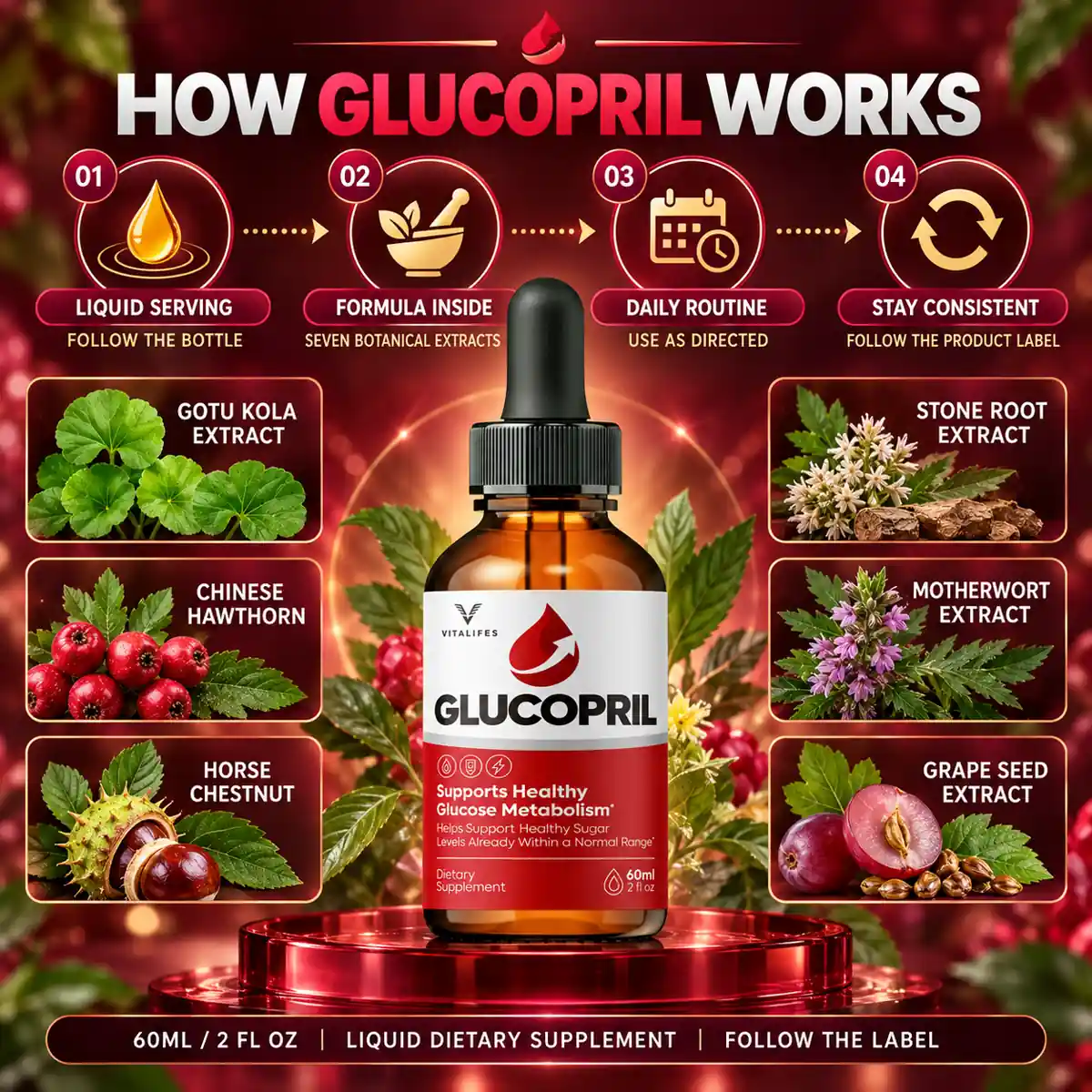
- Nothing is printed beside any of the seven extracts.
GlucoPril is a dietary supplement. It is not a drug and it is not FDA approved, and no dietary supplement is. These statements have not been evaluated by the Food and Drug Administration. This product is not intended to diagnose, treat, cure or prevent any disease. Questions about your health belong with a doctor.
Question 1: What does the GlucoPril label actually claim?
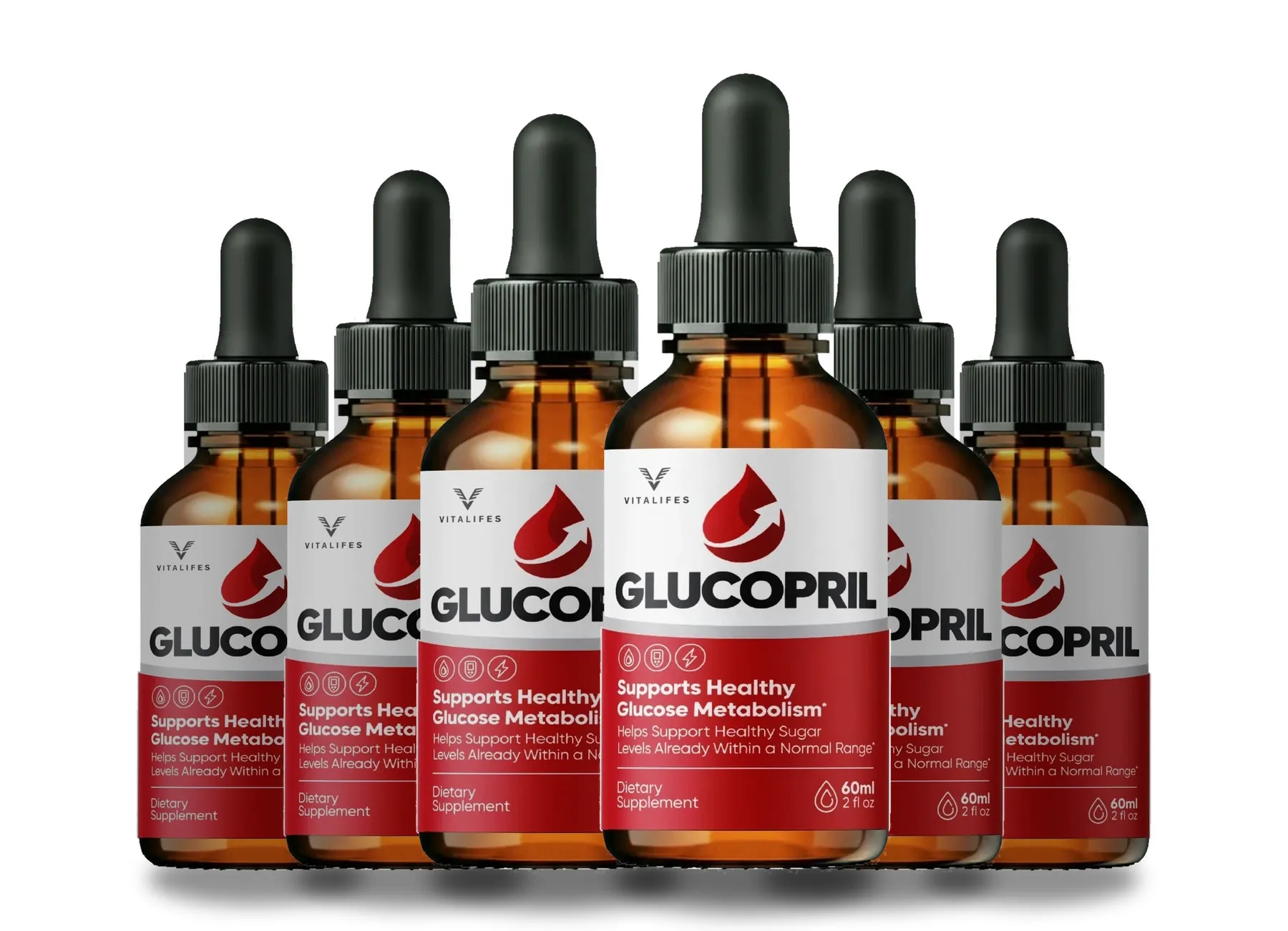
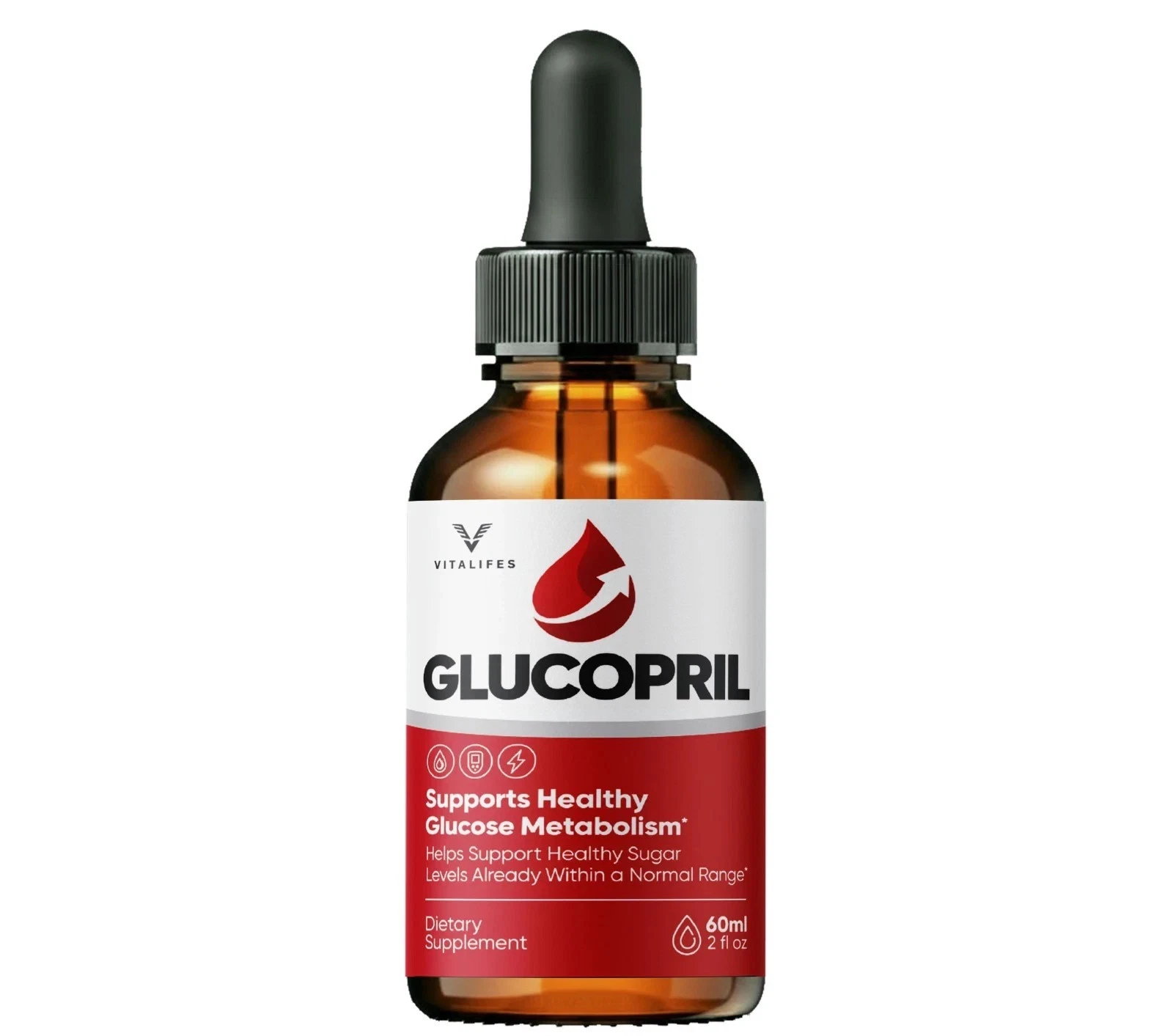
Start with the printed words, because a claim can only be judged against its own wording. Two lines are printed across the front: "Supports Healthy Glucose Metabolism" and "Helps Support Healthy Sugar Levels Already Within a Normal Range".
Both lines use support wording about normal function. "Supports" names a process, not an outcome, and the closing words of the second line confine it to levels that are already normal. Diabetes, prediabetes, insulin and HbA1c are never mentioned, and nothing promises to lower anything.
So the first answer is plain: the label never offers to lower blood sugar. If that is what you came for, nothing printed promises it. What does blood sugar support do on this label? It describes support for normal function, nothing more, and the glucopril blood sugar support angle belongs to the front claim and not to the formula.
Question 2: What is inside, and how much?
The seller's graphic names seven plants, from gotu kola to grape seed, with no amount beside any of them. The artwork has no Supplement Facts panel. The table in question 3 lists all seven.
Several well-known blood sugar plants are absent: banaba, bitter melon, gymnema, chromium, cinnamon and berberine. That absence is the most useful single fact about the formula.
Question 3: What were these plants actually tested for?
Look at the outcome each research file measured. The pattern is clear once you see it in one place.
| Plant | Research field | What the trials counted |
|---|---|---|
| Gotu kola | Microcirculation and capillary leak | Ankle swelling, capillary filtration |
| Chinese hawthorn | Heart and blood pressure | Diastolic blood pressure, heart-failure endpoints |
| Horse chestnut | Venous insufficiency | Lower-leg volume in ml |
| Stone root | Traditional vein use | Nothing in a controlled trial |
| Motherwort | Traditional heart and obstetric use | Postpartum blood loss, uterine muscle |
| Butcher's broom | Venous insufficiency | Leg volume, ankle size |
| Grape seed | Cardiovascular markers | Blood pressure, lipids |
Only gotu kola and grape seed were set a blood sugar endpoint. Hawthorn was studied in people with type 2 diabetes, but its trial reported blood pressure as the finding.
The strongest file belongs to horse chestnut, and its headline number is a leg, not a blood test. A 1996 Lancet comparison measured lower-leg volume in millilitres.
If you want to read it for yourself
GlucoPril is a 60 ml liquid with seven named plants and no printed amounts, and the checkout shows the current price and the return window.
You will see the current total and the return window before you pay.
See today's price and guaranteeShips from within the U.S.; tracking arrives in the order email.
Disclosure: this site earns a commission on orders placed through its links.
Question 4: Has any plant here been tested against blood sugar?
Three trials looked at the plants in people with, or at risk of, type 2 diabetes. All three came back the same way for glucose.
- Gotu kola, 1,200 mg a day for six months in type 2 diabetes: no difference in HbA1c, fasting glucose or LDL cholesterol (Thai trial, 2025).
- Hawthorn, 1,200 mg a day for 16 weeks in 79 people with type 2 diabetes: diastolic blood pressure fell and no glycemic benefit was reported (Reading trial).
- Grape seed with bilberry, 300 mg a day for 12 weeks in people at risk of type 2 diabetes: blood pressure fell and the glucose measures stayed put (PRECISE trial).
A pooled analysis of grape seed trials put fasting plasma glucose 2.01 mg/dL lower, with HbA1c unchanged (meta-analysis). The site notes that this is smaller than the day-to-day swing of a home meter.
Remember the gap in scale. Those trials gave one standardised extract at a time, in milligrams. This bottle holds seven extracts in a two-drop serving with no amount printed, so the trials describe the plants and not the product.
How does GlucoPril work, link by link?
There is a reasonable chain of ideas behind a vein formula on a glucose label. It helps to see each link and how well it holds.
| Link in the chain | How well it holds | What was measured |
|---|---|---|
| The plants reach the bloodstream | Well established for aescin, grape seed polyphenols and gotu kola triterpenes | Absorption studies |
| They act on vessel walls | Moderate-certainty evidence across the class | Leg volume, ankle size, capillary filtration |
| Vessel behavior affects insulin delivery | Reasonable in theory, not shown for these plants | Nothing in this formula |
| A glucose reading changes | Tested three times and not found | HbA1c, fasting plasma glucose |
The chain holds for three links and breaks at the fourth, which is the one the front of the bottle is about.
A liquid starts to absorb sooner than a capsule because there is no shell to dissolve. That is a modest advantage. It is also a different question from when anything changes. The trials behind these plants ran 12 weeks at the shortest.
Question 5: What can reviews tell you?
Some, but not about glucose, and any glucopril results quoted by buyers are experiences, not measurements. The distributor's figures are 4.6 out of 5 from 696 written reviews and 7,991 orders. Those are its own summary numbers, not transcripts anyone here has read. A review can tell you whether a routine was easy to keep, whether the parcel arrived and whether the desk answered.
Stars and short comments cannot tell you whether a supplement moved a measurement. Eight roster rows cannot overturn a six-month trial. The reviews post reads the numbers line by line.
Question 6: What do you actually want it for?
This question decides most outcomes, and it is where the glucopril benefits question gets a straight answer. The same logic applies to blood sugar support benefits claimed by any product. A good formula bought for the wrong reason disappoints as reliably as a poor one.
| Benefit | Printed on the bottle? | What has been measured |
|---|---|---|
| Supports healthy glucose metabolism | Yes, front label | Three trials in the right groups found no glycemic change |
| Sugar levels that are already in a normal range | Yes, front label | No trial of this combination at any amount |
| Less leg swelling and fewer venous symptoms | No | Moderate-certainty class evidence, millilitre outcomes |
| Lower blood pressure | No | Seen in grape seed and hawthorn trials; also a reason to tell your prescriber |
The benefit with the best research file is the one the label does not print.
If your real concern is heavy legs by evening, you are closer to the research these plants come from. That is not a promise of a result. If your real concern is a glucose reading, the evidence points the other way, and a clinician is the right person to ask.
Do any blood sugar supplements hold up in trials?
Do blood sugar support supplements work? The honest answer is mixed, and it depends on the ingredient. NCCIH's page on diabetes and dietary supplements is frank that little of this category has survived trials. Umbrella reviews of berberine and cinnamon do report measurable glycemic effects, with the usual caveats about trial quality and the size of the change. Neither plant is on this label.
On most days, other things move a reading more than a supplement does: the last meal, sleep, a walk, a cold, stress, the time of day, and the meter and strips themselves. Any reading that worries you belongs with a clinician.
Frequently asked questions
Does GlucoPril work?
No trial of GlucoPril itself exists, so no one can say. The label claims support only. The plants have research for leg and vein outcomes, and the two tested against blood sugar did not move it.
Does GlucoPril really work for blood sugar?
The label does not claim to lower blood sugar. Gotu kola and grape seed were each tested against a blood sugar outcome and left it unchanged, and hawthorn reported no glycemic benefit.
How does GlucoPril work?
Two drops go into the ordinary digestive route. Where the plants act, they act on vein walls and capillaries, which is what their trials measured. The step from a vessel to a glucose reading was tested three times and not found.
What are the benefits of GlucoPril?
Two support claims are printed on the front. The best-studied benefit of the plant family is less leg swelling, which is not printed anywhere on the label.
Has GlucoPril itself been tested?
No trial of the seven-plant combination exists. What exists is research on each plant alone, usually as a single standardised extract at a fixed daily dose.
Do blood sugar supplements work?
It depends on the ingredient. NCCIH says little of the category has held up in trials. None of the plants studied most often for glucose is on this label.
Sources we used
- Tawanwongsri W, et al. Centella asiatica (gotu kola) for glycemic control in type 2 diabetes, randomized trial in Thailand. Front Pharmacol. 2025. 1,200 mg/day for 6 months; no between-group difference in HbA1c, fasting plasma glucose or LDL-C. https://pubmed.ncbi.nlm.nih.gov/41383475/
- Walker AF, et al. Hypotensive effects of hawthorn for patients with diabetes taking prescription drugs. Br J Gen Pract. 2006. 1,200 mg daily for 16 weeks in 79 people with type 2 diabetes; diastolic blood pressure fell, no glycemic benefit reported. https://pubmed.ncbi.nlm.nih.gov/16762125/
- Grohmann T, et al. A grape seed and bilberry extract reduces blood pressure in individuals at risk of developing type 2 diabetes (PRECISE). Front Nutr. 2023. 300 mg grape seed extract with 250 mg bilberry daily for 12 weeks; blood pressure fell and glucose measures did not change. https://pubmed.ncbi.nlm.nih.gov/37351191/
- Asbaghi O, et al. Grape seed extract on glycemic control, lipoproteins, inflammation and body weight: meta-analysis of randomized trials. Phytother Res. 2020. Fasting plasma glucose fell 2.01 mg/dL; HbA1c did not change. https://pubmed.ncbi.nlm.nih.gov/31880030/
- Diehm C, et al. Compression stocking versus horse-chestnut seed extract in chronic venous insufficiency. Lancet. 1996. 50 mg aescin twice daily for 12 weeks in 240 patients; lower-leg volume fell 43.8 ml, against 46.7 ml for stockings. https://pubmed.ncbi.nlm.nih.gov/8569363/
- Martinez-Zapata MJ, et al. Phlebotonics for venous insufficiency. Cochrane Database Syst Rev. 2020. Sixty-nine randomized trials; moderate-certainty evidence that the class reduces edema slightly and slightly increases adverse events. https://pubmed.ncbi.nlm.nih.gov/33141449/
- Nazari A, et al. Berberine supplementation on glycemic control: an umbrella meta-analysis. Clin Ther. 2024. https://pubmed.ncbi.nlm.nih.gov/38016844/
- Zarezadeh M, et al. Cinnamon supplementation on glycemic control: an umbrella meta-analysis. Diabetol Metab Syndr. 2023. https://pubmed.ncbi.nlm.nih.gov/37316893/
- National Center for Complementary and Integrative Health. Diabetes and Dietary Supplements: What You Need To Know. https://www.nccih.nih.gov/health/diabetes-and-dietary-supplements-what-you-need-to-know
- MedlinePlus, U.S. National Library of Medicine. Blood Glucose. https://medlineplus.gov/bloodglucose.html
Our view
Does GlucoPril work? The most accurate answer is that the question has no clean answer, because the product itself has never been tested and its amounts are not published. What exists is a set of plants with a solid leg-and-vein file and a thin, disappointing glucose file.
If you buy it for what the plants were studied for, your expectation is closer to the evidence, though still not guaranteed. If you buy it to move a meter, the research does not back that hope. Either way, change one thing at a time, keep a short note and let a clinician read any number that worries you.
Judge it on your own reasons
If the plants fit why you are buying, the checkout shows the price for one, three or six bottles and the return window for your order.
See today's price and guaranteeDisclosure: this site earns a commission on orders placed through its links.
Last updated