GlucoPril Official Website › Blog › GlucoPril Ingredients
GlucoPril Ingredients: 7 Extracts Checked One by One
The GlucoPril list holds seven plants, from gotu kola to grape seed, and nothing is printed beside any of them. All seven come from vein and capillary research, and only two were ever tested against blood sugar. Check each one for its part, its research file and its caution.
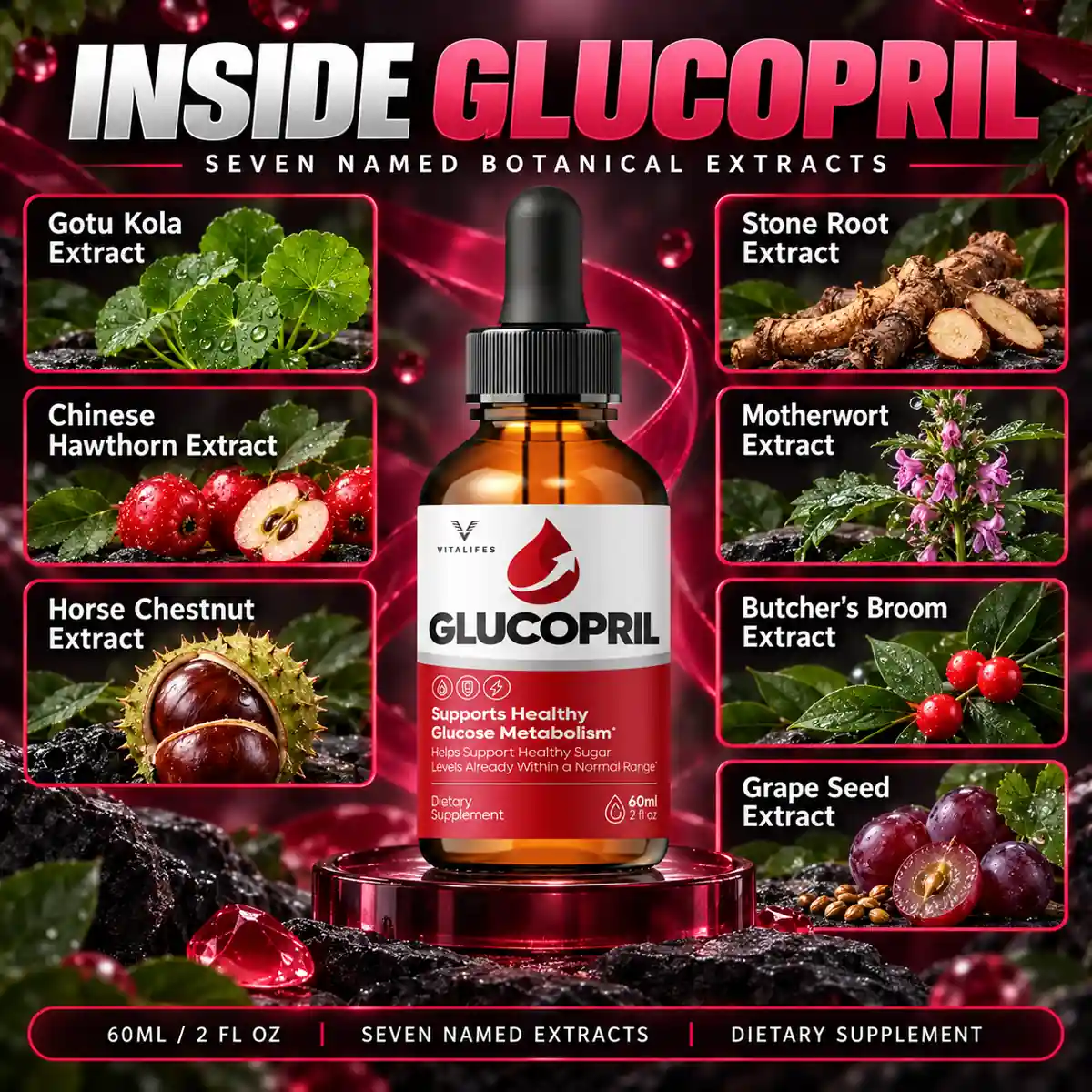
- Plant parts are given for four: leaf for gotu kola, fruit for Chinese hawthorn, and root for both stone root and butcher's broom.
- Nothing sits beside any extract, and the artwork has no Supplement Facts panel.
- The roughly 121 mg number you may see online is a marketplace report, not a label amount.
- Banaba, bitter melon, gymnema, chromium, cinnamon and berberine are all absent.
- Nothing names the carrier liquid, which matters to anyone avoiding alcohol.
- Stone root and motherwort bring no controlled human trial for any metabolic outcome.
GlucoPril is a dietary supplement. It is not a drug and it is not FDA approved, and no dietary supplement is. These statements have not been evaluated by the Food and Drug Administration. This product is not intended to diagnose, treat, cure or prevent any disease. Questions about your health belong with a doctor.
Where does the GlucoPril ingredients list come from?
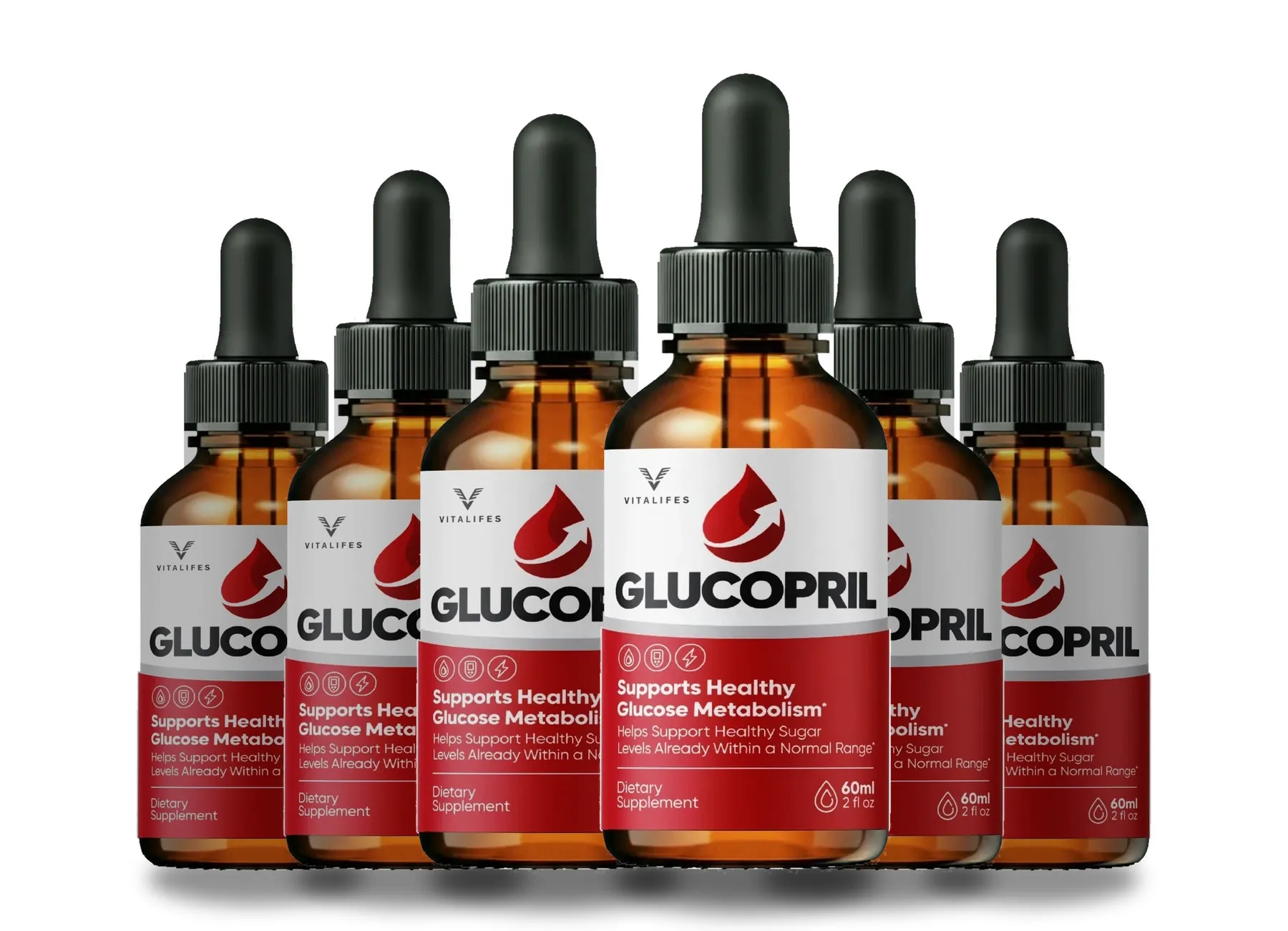
Not from the bottle. Every bottle photograph the seller publishes is a front view, and the front prints no ingredients. The seven names come from a separate square graphic on the seller's listing. The pack's own list agrees with that graphic on all seven names, which is rarer than it should be.
What neither source carries is a quantity. The same method works for blood sugar support ingredients, or any ingredient blood sugar supplement label: name, part, amount, evidence. So the checklist below asks four things of every plant: what is it, what part, what was it tested for, and what is the caution.
What does each of the 7 extracts have behind it?
Gotu kola (Centella asiatica, leaf)
The one name here taken into a modern diabetes trial: six months at 1,200 mg a day in type 2 diabetes saw no difference in HbA1c or fasting glucose. Its older file is vascular: 60 mg of a purified fraction twice a day for 12 months for swelling in diabetic microangiopathy. Caution: two published liver case reports.
Chinese hawthorn (fruit)
In 79 people with type 2 diabetes, 1,200 mg a day for 16 weeks lowered diastolic blood pressure and reported no glycemic benefit. The SPICE heart-failure trial gave 900 mg a day of one extract to 2,681 patients for 24 months and missed its primary endpoint. Caution: a studied interaction with digoxin.
Horse chestnut (seed)
The best-evidenced plant on the list, and the evidence is about legs. In 240 patients, 50 mg of aescin twice a day for 12 weeks took 43.8 ml off the lower leg. Cochrane pooled six placebo trials and found leg volume down by a weighted mean of 32.1 ml. No blood sugar trial exists. Caution: stomach upset, and nausea on an empty stomach.
Stone root (Collinsonia canadensis, root)
PubMed holds seven records for the whole genus. Two are journal notes from 1887 and 1888. No human trial exists at any amount. Its place in the formula is traditional vein practice, which is a reason and not evidence.
Motherwort (Leonurus cardiaca)
Traditionally given for palpitations and anxiety. The clinical work that exists is obstetric. No randomised trial against a metabolic outcome exists. Caution: this is why the bottle is kept away from pregnancy and nursing.
Butcher's broom (Ruscus aculeatus, root)
Studied as 150 mg of root extract with hesperidin and vitamin C in one capsule, across 10,246 subjects. A 12-week placebo-controlled trial improved leg volume and symptoms. A Cochrane review of single herbs for diabetic retinopathy found no usable evidence.
Grape seed (Vitis vinifera, seed)
A proanthocyanidin concentrate. 300 mg a day with bilberry for 12 weeks lowered blood pressure and left glucose measures unchanged. Sixteen pooled trials point to a blood pressure effect. Caution: it can lower blood pressure.
What do the trial amounts look like next to the label?
| Extract | On the GlucoPril artwork | What published trials used |
|---|---|---|
| Gotu kola | No amount printed | 1,200 mg a day; older work 60 mg twice a day |
| Chinese hawthorn | No amount printed | 1,200 mg a day; heart-failure trials 900 mg a day |
| Horse chestnut | No amount printed | 50 mg of aescin twice a day |
| Stone root | No amount printed | No human trial exists |
| Motherwort | No amount printed | No randomised metabolic trial exists |
| Butcher's broom | No amount printed | 150 mg of extract per capsule, with companions |
| Grape seed | No amount printed | 300 mg a day; 100 mg a day alongside a diet |
Trial doses are printed beside the label so that the distance between them stays visible. They do not tell you what is in the bottle.
Seven names, one bottle
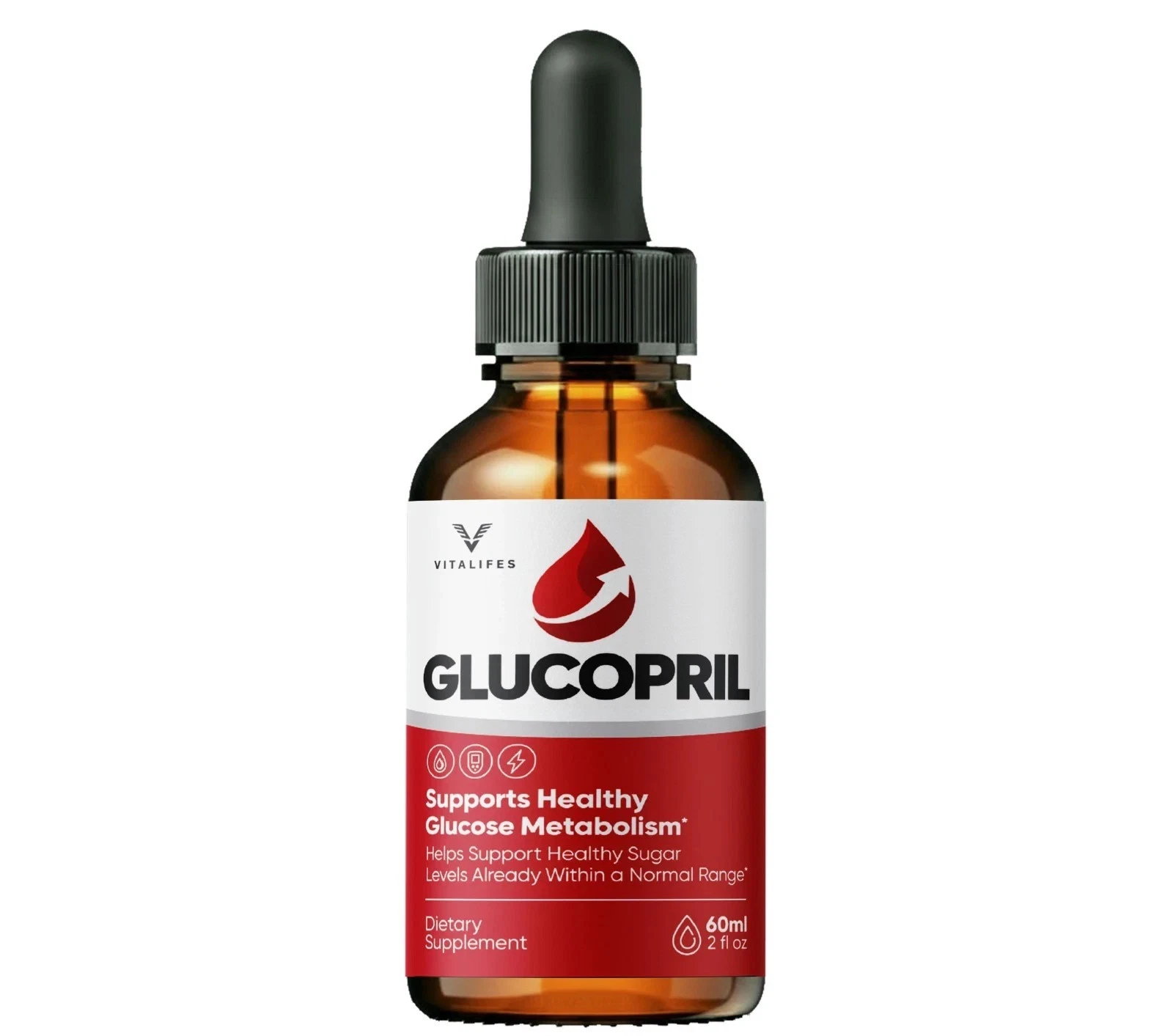
The same seven extracts are in every bottle of every pack, and the checkout shows the current price for one, three or six.
Price and return window are both read at the checkout.
See today's price and guaranteeLot GLU-26/GO-3914 is the run on file.
Disclosure: this site earns a commission on orders placed through its links.
What about the 121 mg figure you see online?
Online listings sometimes quote about 121 mg for the whole blend. No artwork shows it and no panel stands behind it, so GlucoPril should not be described as a 121 mg blend.
If you want to see the scale of the gap anyway, do the sum. 121 mg shared between seven extracts averages about 17 mg each. The trials above started at 60 mg and ran up to 1,200 mg. That is arithmetic on a report, not a finding about the bottle, because nobody outside the factory can confirm the split.
Which blood sugar plants are missing from GlucoPril?
Shoppers in this aisle often arrive with a short list in mind, and none of the names on it is here. Reviews that pool the research on berberine and cinnamon do report measurable glycemic effects, within the usual limits on trial quality and size. They also bring interaction lists of their own.
Shoppers hoping for the mainstream blood sugar shelf have bought something else, while shoppers hoping for a vein formula have bought a standard one.
What else is in the bottle besides the seven extracts?
Something has to carry the extracts. Nothing on the front names the carrier, and there is no other-ingredients line to consult. In this category the carrier is often glycerine, food-grade alcohol, water or a blend, but for this bottle it is not published.
That matters for taste, for shelf life and for anyone avoiding alcohol. If any of those counts for you, ring the order desk, +1 (302) 200-3480, before ordering. That includes anyone who needs a firm answer on vegetarian or vegan use.
Do the seven extracts interact with each other?
Two of them lower blood pressure in the same direction, so their effects are unlikely to cancel. Beyond that, a seven-plant combination has not been trialled as a combination, here or anywhere. What is known is what is known about each plant alone.
The cautions to carry away are short: gotu kola and the liver case reports, hawthorn and digoxin, grape seed and hawthorn and blood pressure, and motherwort and pregnancy. See the side effects checklist for the full list.
Frequently asked questions
What are the GlucoPril ingredients?
Seven plants, named on the seller's graphic and not on the bottle front: gotu kola, Chinese hawthorn, horse chestnut, stone root, motherwort, butcher's broom and grape seed.
How much of each ingredient is in GlucoPril?
Not published. The artwork gives no amount for any plant and shows no Supplement Facts panel.
Does GlucoPril contain berberine or cinnamon?
No, and none of chromium, gymnema, bitter melon or banaba either. The seven names come from vein and capillary research.
Which GlucoPril ingredient has the strongest research?
Horse chestnut, on volume of evidence. A Lancet comparison and a Cochrane review both counted millilitres of leg swelling. None of that work was about blood sugar.
Is there alcohol in GlucoPril?
Unknown. The label does not name the carrier liquid, so call +1 (302) 200-3480 before ordering if the answer matters.
What is the 121 mg figure for GlucoPril?
A marketplace report for the whole blend. It appears on no artwork in the pack and is not a label amount.
Sources we used
- Tawanwongsri W, et al. Centella asiatica (gotu kola) for glycemic control in type 2 diabetes, randomized trial in Thailand. Front Pharmacol. 2025. 1,200 mg/day for 6 months; no between-group difference in HbA1c, fasting plasma glucose or LDL-C. https://pubmed.ncbi.nlm.nih.gov/41383475/
- Incandela L, et al. Total triterpenic fraction of Centella asiatica in diabetic microangiopathy and edema. Angiology. 2001. 60 mg twice daily for 12 months. https://pubmed.ncbi.nlm.nih.gov/11666119/
- Walker AF, et al. Hypotensive effects of hawthorn for patients with diabetes taking prescription drugs. Br J Gen Pract. 2006. 1,200 mg daily for 16 weeks in 79 people with type 2 diabetes; diastolic blood pressure fell, no glycemic benefit reported. https://pubmed.ncbi.nlm.nih.gov/16762125/
- Holubarsch CJ, et al. The SPICE trial of Crataegus extract WS 1442 in heart failure. Eur J Heart Fail. 2008. 900 mg/day for 24 months in 2,681 patients; no significant effect on the primary endpoint. https://pubmed.ncbi.nlm.nih.gov/19019730/
- Diehm C, et al. Compression stocking versus horse-chestnut seed extract in chronic venous insufficiency. Lancet. 1996. 50 mg aescin twice daily for 12 weeks in 240 patients; lower-leg volume fell 43.8 ml, against 46.7 ml for stockings. https://pubmed.ncbi.nlm.nih.gov/8569363/
- Pittler MH, Ernst E. Horse chestnut seed extract for chronic venous insufficiency. Cochrane Database Syst Rev. 2012. Leg volume fell by a weighted mean 32.1 ml against placebo across six trials. https://pubmed.ncbi.nlm.nih.gov/23152216/
- Boyle P, et al. Meta-analysis of clinical trials of Cyclo 3 Fort in chronic venous insufficiency. Int Angiol. 2003. Ruscus root extract 150 mg with hesperidin methyl chalcone 150 mg and ascorbic acid 100 mg per capsule; 10,246 subjects. https://pubmed.ncbi.nlm.nih.gov/14612852/
- Vanscheidt W, et al. Butcher's broom preparation versus placebo in chronic venous insufficiency. Arzneimittelforschung. 2002. 12 weeks; leg volume and symptoms improved. https://pubmed.ncbi.nlm.nih.gov/12040966/
- Zhang HW, et al. Single herbal medicine for diabetic retinopathy. Cochrane Database Syst Rev. 2018. https://pubmed.ncbi.nlm.nih.gov/30566763/
- Grohmann T, et al. A grape seed and bilberry extract reduces blood pressure in individuals at risk of developing type 2 diabetes (PRECISE). Front Nutr. 2023. 300 mg grape seed extract with 250 mg bilberry daily for 12 weeks; blood pressure fell and glucose measures did not change. https://pubmed.ncbi.nlm.nih.gov/37351191/
- Zhang H, et al. Grape seed extract and blood pressure: a meta-analysis of 16 randomized controlled trials. Medicine (Baltimore). 2016. https://pubmed.ncbi.nlm.nih.gov/27537554/
- Wojtyniak K, et al. Leonurus cardiaca L. (motherwort): a review of its phytochemistry and pharmacology. Phytother Res. 2013. https://pubmed.ncbi.nlm.nih.gov/23042598/
- Shoemaker JV. Collinsonia Canadensis. Br Med J. 1887. https://pubmed.ncbi.nlm.nih.gov/20752052/
- Collinsonia Canadensis. South Med Rec. 1888. https://pubmed.ncbi.nlm.nih.gov/36022907/
- Nazari A, et al. Berberine supplementation on glycemic control: an umbrella meta-analysis. Clin Ther. 2024. https://pubmed.ncbi.nlm.nih.gov/38016844/
- Zarezadeh M, et al. Cinnamon supplementation on glycemic control: an umbrella meta-analysis. Diabetol Metab Syndr. 2023. https://pubmed.ncbi.nlm.nih.gov/37316893/
Our view
The GlucoPril ingredients list is short, readable and incomplete. You can name every plant and look each one up. You cannot weigh any of them, because the amounts are not published.
What the list does tell you is where the formula comes from. It is the standard vein and capillary set, with two traditional members that have almost no modern research. It is not the blood sugar shelf. Know that before you buy, and take the seven names to a prescriber if you take any medicine.
Take the list to your prescriber first
If the seven names suit you, the order page leads to the checkout, and the bottle will carry the same list you showed your doctor.
See today's price and guaranteeDisclosure: this site earns a commission on orders placed through its links.
Last updated