GlucoPril Official Website › Blog › Fasting Glucose
What Actually Moves A Fasting Glucose Reading
Somebody takes a supplement for three weeks, checks a morning reading, sees a lower number and concludes it worked. Almost everything about that sequence is unreliable, and understanding why is worth more than any ingredient comparison on this website.

- A fasting reading is a snapshot and HbA1c is a three-month average. They answer different questions.
- Sleep, a late dinner, a mild infection and stress all move a morning reading, sometimes substantially.
- A single reading before and a single reading after cannot separate a supplement from any of those.
- Weight, movement and diet carry the strongest trial evidence in this space, and none of them is a bottle.
- If you are going to measure, measure weekly at the same hour, and take a baseline week before starting anything.
The four measurements, and what each one answers
There is more than one number, and treating them as interchangeable is where most of the confusion starts. MedlinePlus on blood glucose is the plain-language reference worth having open alongside this section.
A fasting plasma glucose is a single measurement taken after about eight hours without food. It is a photograph of one moment, and the moment it photographs is strongly influenced by the previous evening.
HbA1c is a different kind of thing entirely. It reflects glucose bound to haemoglobin over the lifespan of red blood cells, which makes it an average across roughly three months. It is deliberately slow and deliberately hard to move, and that is its whole value: it cannot be improved by skipping dinner the night before a blood test.
| The measurement | What it actually is | What moves it |
|---|---|---|
| Fasting plasma glucose | A snapshot after eight hours without food | Last night's meal and its timing, sleep, illness, stress, the time of day |
| HbA1c | An average of roughly the last three months | Sustained patterns. It is deliberately hard to move quickly |
| A finger-prick meter reading | A snapshot, with its own margin of error | Everything above, plus technique and the strip |
| An oral glucose tolerance test | A measured response to a measured load | How the body handles a challenge, which is a different question again |
The first and the third are snapshots. Judging a supplement on one of them is judging it on the noisiest instrument available.
The practical upshot is that anybody judging a supplement over four weeks on morning finger-prick readings has chosen the noisiest instrument in the list to detect what would, at best, be a small effect.
Five things that move a morning reading
None of these is exotic. They are the ordinary contents of an ordinary month, and each one can produce a change larger than anything a botanical supplement has been shown to produce in a trial.
| What changed | Roughly how much it can move a fasting reading | How long the effect lasts |
|---|---|---|
| A late, large or carbohydrate-heavy dinner | Meaningfully | Into the next morning |
| A short or broken night's sleep | Meaningfully | The following day or two |
| An infection, even a mild one | Substantially | Days to weeks |
| Acute stress | Meaningfully | Hours to days |
| A change in weight or activity | Substantially, and in the direction you want | Sustained, and visible in HbA1c |
The bottom row is the one with the strongest trial evidence behind it, and it is not a supplement.
Sleep deserves particular mention because it is so easy to overlook. A few short nights in a row is a metabolic event, not just a tired week, and it shows up in exactly the measurement somebody is checking to see whether their new supplement is working. So does a cold. So does a stressful fortnight at work.
Why before-and-after cannot settle anything
This is the section that costs this product the most, and it is here because the rest of this website is not worth reading without it.
A trial has a control group for one reason: to find out what would have happened anyway. Any individual taking a supplement is running a study with one participant, no control, no blinding and no randomisation, while also living a life that changes several variables a week. Under those conditions a change in a number cannot be attributed to anything.
Two specific effects make it worse. Regression to the mean means that a reading taken because it was unusually high is, on average, followed by a lower one whatever you do in between. And the act of starting a supplement changes behaviour: people who begin taking something for their blood sugar also tend to eat a little more carefully that month, which is a real effect with a different cause.
- A single reading before and a single reading after cannot separate an effect from noise.
- Regression to the mean pushes an unusually high reading down regardless of treatment.
- Starting a supplement usually changes eating and activity at the same time.
- A four-week window is shorter than the shortest trial behind any plant on this label.
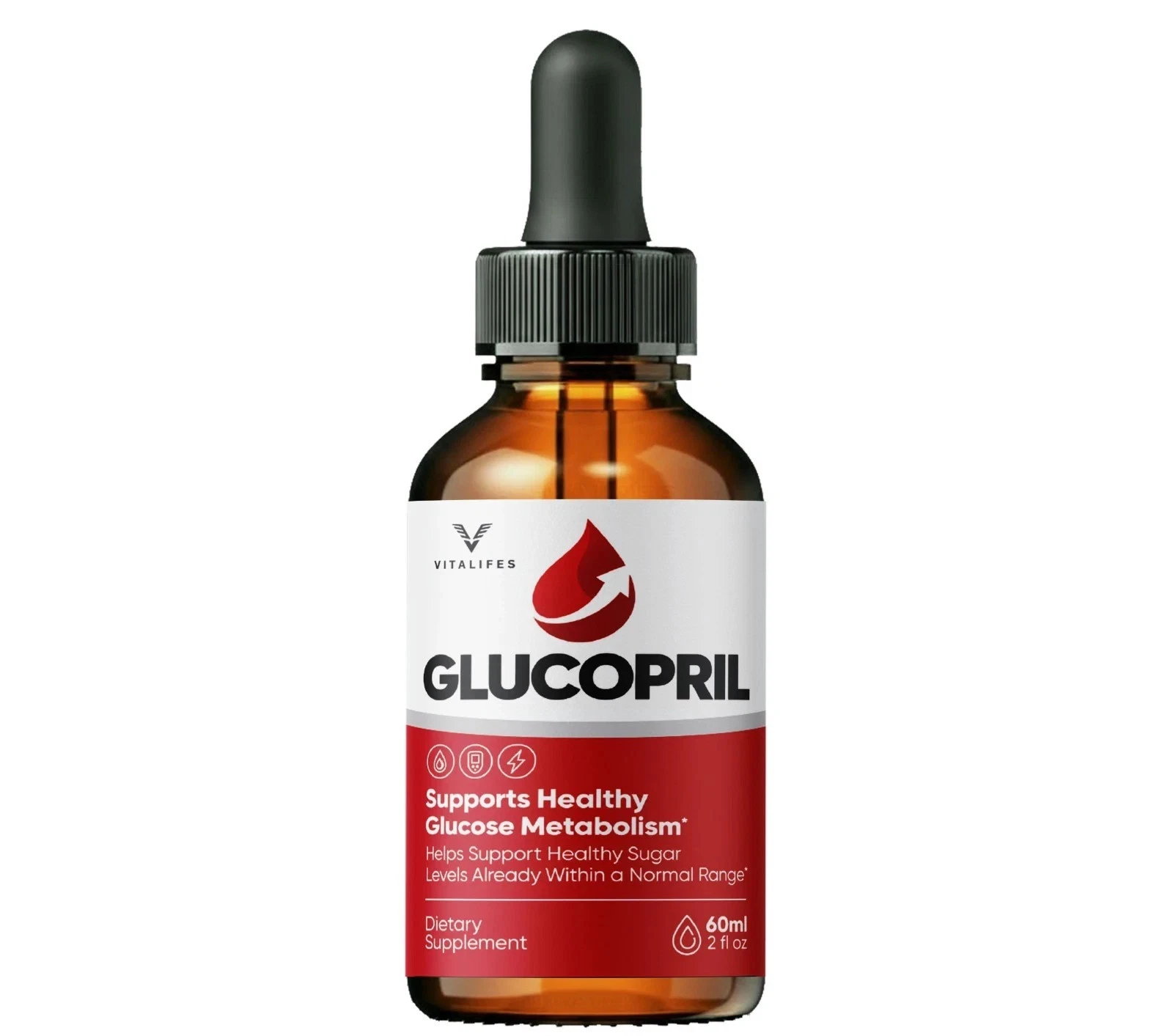
Read the GlucoPril timeline before deciding what to expect
The distributor’s own buyers filed between day 14 and day 54. The trials behind these seven plants ran twelve weeks at the shortest, and one of them ran two years.
Price at checkout · three bottles is the pack most buyers take · money-back guarantee as the listing prints it
Order GlucoPril On The Official WebsiteTwo drops a day after a meal · 60 ml a bottle · lot GLU-26/GO-3914
What the trials in this space actually found
Worth setting out precisely, because it is the honest context for every supplement on this shelf including the one this website sells.
A 2025 randomised trial gave 1,200 mg of gotu kola a day for six months to people with type 2 diabetes and found no difference in HbA1c, fasting plasma glucose or LDL cholesterol. That is a well-sized, well-designed negative result for an ingredient on this label.
A meta-analysis of grape seed extract across fifty trials reported fasting plasma glucose falling by 2.01 mg/dL, with a confidence interval running from 3.14 to 0.86. HbA1c did not change. A two-point change in a fasting reading is smaller than the difference a late dinner makes, and it is the pooled result of fifty trials, which is as good as this evidence gets.
The PRECISE cross-over trial gave 300 mg of grape seed extract with bilberry for twelve weeks to people at risk of type 2 diabetes. Blood pressure fell. Glucose measures did not change.
Set those beside what moves a reading in the table above and the proportions become clear. MedlinePlus on prediabetes and the National Center for Complementary and Integrative Health both describe the interventions with the strongest evidence in this space, and they are weight, movement and diet. No botanical on any shelf competes with that, and the honest version of a supplement’s role is alongside rather than instead.
How to measure properly if you are going to
If you are going to track anything, track it in a way that could actually tell you something. Six rules, and they cost nothing.
- Take a baseline week before starting anything, at the same hour each morning.
- Measure weekly rather than daily. Daily readings are mostly noise and mostly anxiety.
- Keep the hour, the technique and the pre-test evening as similar as you can manage.
- Write down what else changed that week: sleep, illness, travel, a heavy weekend.
- Judge on a trend across two months, not on any single number.
- Get an HbA1c through your own clinician if the question genuinely matters, because it is the measurement designed to answer it.
That last one is worth emphasising. An HbA1c is the instrument built for exactly this question and it is not something anybody can do at a kitchen table. If a reading matters enough to buy a supplement over, it matters enough to have measured properly.
When this stops being a supplement question
There is a point at which none of this is about which bottle to buy, and naming it is the most useful thing this article can do.
A fasting reading that is consistently out of range, a high HbA1c, or the classic symptoms of unusual thirst, frequent urination, unexplained weight loss and blurred vision are all reasons to make an appointment rather than a purchase. Diabetes is diagnosed with tests and managed with measurements and, where needed, medicine. A supplement is neither and replaces neither.
That is not a disclaimer attached to the end of an article. It is the whole point of the article. Everything else on this website assumes a reader who needs that appointment has already made it.
If you have never had a fasting glucose or an HbA1c measured properly, that is the first step, and it is more informative than anything on any supplement shelf.
A dietary supplement for healthy adults of 18 and over, not a medicine and not FDA-approved. It does not diagnose, treat, cure or prevent any disease, and it is not a substitute for prescribed medicine, a glucose meter or a laboratory result. The two sentences on the front of the bottle are the ceiling on everything this website says about it, and the disclaimer page sets them out in full.
References
- MedlinePlus, U.S. National Library of Medicine. Blood Glucose. Read 19 September 2026. https://medlineplus.gov/bloodglucose.html
- MedlinePlus, U.S. National Library of Medicine. Prediabetes. Read 19 September 2026. https://medlineplus.gov/prediabetes.html
- Tawanwongsri W, Mordmuang A, Phenwan T, Siri-Archawawat D. Efficacy and safety of Centella asiatica (L.) Urb. [Apiaceae] as a dietary supplement for glycemic control and lipid regulation in patients with type 2 diabetes: a randomized controlled trial in Thailand. Front Pharmacol. 2025;16:1680647. PMID 41383475. Dose: 1,200 mg/day for 6 months; adjusted analysis found no between-group difference in HbA1c, fasting plasma glucose or LDL-C. https://pubmed.ncbi.nlm.nih.gov/41383475/
- Asbaghi O, Nazarian B, Reiner Z, et al. The effects of grape seed extract on glycemic control, serum lipoproteins, inflammation, and body weight: a systematic review and meta-analysis of randomized controlled trials. Phytother Res. 2020;34(2):239-53. PMID 31880030. Fasting plasma glucose fell 2.01 mg/dL (95% CI -3.14 to -0.86); HbA1c did not change. https://pubmed.ncbi.nlm.nih.gov/31880030/
- National Center for Complementary and Integrative Health. Diabetes and Dietary Supplements: What You Need To Know. Read 19 September 2026. https://www.nccih.nih.gov/health/diabetes-and-dietary-supplements-what-you-need-to-know
- Grohmann T, Walker AW, Russell WR, et al. A grape seed and bilberry extract reduces blood pressure in individuals at risk of developing type 2 diabetes. Front Nutr. 2023;10:1139880. PMID 37351191. Dose: 300 mg grape seed extract with 250 mg bilberry daily for 12 weeks; blood pressure fell and glucose measures did not change. https://pubmed.ncbi.nlm.nih.gov/37351191/