GlucoPril Official Website › Blog › Chinese Hawthorn
Chinese Hawthorn And The Heart Failure Trials
Fourteen randomised trials and 855 patients sit behind hawthorn extract as a treatment adjunct for chronic heart failure. Every one of those trials used the leaf and flower. This label names the fruit. That single word is the whole story of what this section covers, and what it does not.
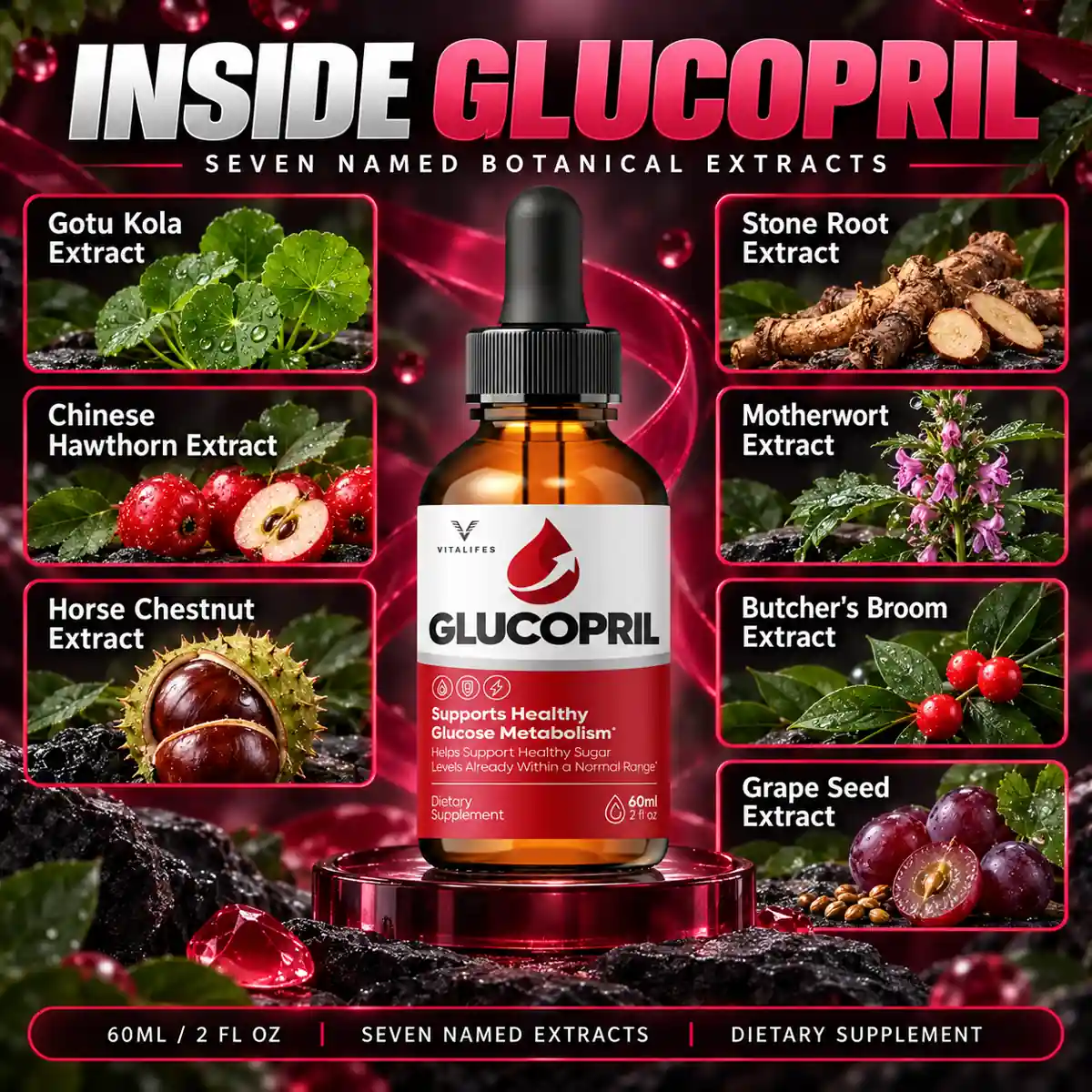
- This label names Chinese Hawthorn Extract and shows the fruit. The plant is most often Crataegus pinnatifida in that framing.
- The strongest hawthorn literature is fourteen placebo-controlled trials in chronic heart failure, and every one used a standardised leaf-and-flower extract, not the fruit.
- A pharmacokinetic study at 900 mg a day of that leaf-and-flower extract found no significant interaction with digoxin.
- A hawthorn fruit extract has shown glucose-uptake inhibition in a cell-culture model, and a hawthorn extract has lowered blood glucose in diabetic rats. Neither is a human trial.
- Nobody has run a placebo-controlled human trial of hawthorn, of either part, against a fasting glucose or HbA1c outcome.
One name, two plant parts
Hawthorn is a small genus of thorned shrubs and trees in the rose family, and several species carry the name into supplement labels. European medicine built its clinical literature on Crataegus monogyna and Crataegus laevigata, usually undifferentiated in trial reports as simply “hawthorn extract.” Chinese hawthorn is a related but distinct species, Crataegus pinnatifida, cultivated for its large red fruit and long used in Chinese cuisine and traditional medicine for digestion and, separately, for circulation.
This label names the fruit specifically, and the seller’s graphic shows ripe hawthorn berries rather than leaves or flowers. That is a real and checkable claim about which part of the plant went into this bottle, and it deserves credit: a great deal of this category prints a plant name and nothing else.
The complication is that the fruit and the leaf-with-flower are, pharmacologically, not the same material. The compounds studied most closely in each part overlap — both are rich in oligomeric procyanidins and flavonoids — but the two literatures below were built almost entirely on one of the two, and it is not the one this label names.
The heart failure literature, in full
Hawthorn’s reputation in clinical medicine rests on chronic heart failure, and it rests on an unusually large body of randomised, placebo-controlled work for a botanical.
A 2003 meta-analysis pooled eight trials and 632 patients with New York Heart Association class I to III heart failure, all using hawthorn extract monopreparations as an adjunct to conventional treatment. Maximal workload improved by a weighted mean of 7 Watt against placebo, and the pressure-heart-rate product — a measure of how hard the heart is working — fell by a weighted mean of 20. Symptoms such as breathlessness and fatigue improved as well.
A 2008 Cochrane review, the update of an earlier version, widened the net to fourteen trials and 855 patients. Its inclusion criterion is explicit in the review’s own methods: studies had to use “hawthorn leaf and flower extract monopreparations.” Workload improved by a weighted mean of 5.35 Watt, exercise tolerance by 122.76 Watt-minutes, and the pressure-heart-rate product fell by 19.22. The reviewers also noted what the trials did not show: no data on mortality beyond one small trial, so the case for hawthorn is a case about symptoms and exercise physiology, not survival.
| The review | What it pooled | What it reported |
|---|---|---|
| 2003 meta-analysis, hawthorn monopreparations | 8 trials, 632 patients, NYHA class I–III heart failure | Workload +7 Watt vs placebo; pressure-heart-rate product −20 |
| 2008 Cochrane review, leaf-and-flower extract | 14 trials, 855 patients, NYHA class I–III heart failure | Workload +5.35 Watt; exercise tolerance +122.76 Watt×min; pressure-heart-rate product −19.22 |
| Digoxin interaction study, WS 1442 leaf-and-flower extract | 8 healthy volunteers, crossover design, 21 days | No significant change in digoxin pharmacokinetics at 900 mg/day of hawthorn |
Every outcome in this table is a cardiac or exercise measure. None of them is a glucose reading, and every preparation is the leaf-and-flower extract rather than the fruit this label shows.
See where Chinese hawthorn sits among the GlucoPril seven
One of seven extracts named on the seller’s graphic, with the literature its species and part actually generated printed beside it.
Price at checkout · three bottles is the pack most buyers take · money-back guarantee as the listing prints it
Order GlucoPril On The Official WebsiteTwo drops a day after a meal · 60 ml a bottle · lot GLU-26/GO-3914
What an interaction study adds
A 2003 crossover study gave eight healthy volunteers digoxin 0.25 mg alone for ten days, then digoxin with Crataegus special extract WS 1442 — hawthorn leaves with flowers, 450 mg twice daily, so 900 mg a day — for three weeks. No pharmacokinetic parameter changed significantly. The authors concluded the two may be coadministered safely at the doses and formulation studied.
That figure, 900 mg a day of a standardised leaf-and-flower extract, is worth holding onto. It is the daily amount a real pharmacology study used for a single plant, taken alone. This bottle groups seven plants into a proprietary blend that marketplace reports put at roughly 121 mg total, for the fruit rather than the leaf and flower. Even granting hawthorn the largest possible share of that blend, the arithmetic does not reach the studied dose, and it could not, because the blend total is smaller than the single-ingredient dose by a wide margin.
The closest thing to a glucose citation
This is the section a glucose-positioned product needs most, and it is also the shortest, because the human evidence does not exist yet.
A 2021 laboratory study screened methanolic extracts from a range of traditionally used plants for their effect on glucose and fructose uptake in Caco2 cells, a human intestinal cell line used as a model of gut absorption. A methanolic extract made from Crataegus pinnatifida fruit was one of five fruit extracts — alongside black chokeberry, Japanese cornel, wolfberry and bilberry — that produced significant, reproducible inhibition of glucose uptake in the 40 to 80 per cent range as a group. The paper does not report hawthorn’s individual figure within that range, and a cell-culture assay is a mechanism study, not a demonstration that swallowing the extract changes a blood glucose reading.
A 2017 rat study gave hawthorn extract at 50, 100 and 200 mg per kilogram of body weight to rats with streptozotocin-induced type 2 diabetes, and reported lower blood glucose and higher plasma insulin release at all three doses, alongside lower triglycerides and cholesterol. The abstract does not specify which hawthorn species or plant part was used, which is itself worth naming: even the paper closest to a glucose finding for this plant leaves that detail unresolved.
A Caco2 monolayer and a streptozotocin-diabetic rat are both standard, legitimate first steps in pharmacology, and both are a long way from a person taking two drops of a seven-plant blend and having their fasting glucose checked eight weeks later. Absorption, metabolism, dose and species all change between a cell dish and a human gut. Neither study licenses a claim about what this bottle does to a blood sugar reading, and no search of the published record turns up a trial that would.
Setting the research beside this label
| What the research used | What this label carries | The gap |
|---|---|---|
| Standardised leaf-and-flower extract, most trials in the European species | Chinese Hawthorn Extract (fruit) | The best-studied clinical literature is built on a different plant part than the one on this label |
| 450–900 mg a day of that leaf-and-flower extract, studied alone | No amount printed; roughly 121 mg total across all seven plants | The single-ingredient research dose is not reachable inside the blend total |
| Fourteen trials measuring cardiac workload and exercise tolerance | Sold on a glucose-metabolism claim | The outcome measured and the outcome sold are different systems |
| A cell-culture assay and a rat model touching glucose uptake, fruit-specific | The one piece of research that shares both the plant part and the outcome | Real, but preclinical: no human dose-response data exists for either |
The first column is read off the published research. The second is read off the seller’s artwork. The third is what a buyer is left holding.
What is on the safety record
Hawthorn is generally well tolerated across the trial literature. A 2010 clinical review summarising the heart failure work describes the most common adverse effects as vertigo and dizziness, and flags theoretical interactions with antiarrhythmics, antihypertensives, digoxin and antihyperlipidemic agents — theoretical because the mechanism is plausible even where, as in the digoxin study above, a specific interaction was not found at the doses tested. The same review is explicit that proven conventional heart failure therapies should continue regardless, since no hawthorn trial has shown a mortality benefit.
- Most common reported effects: dizziness and vertigo, generally mild.
- Theoretical interactions exist with heart-rhythm medicines, blood pressure medicines, digoxin and cholesterol medicines.
- No trial of any hawthorn preparation has demonstrated a reduction in mortality.
- Anyone on a cardiac or blood pressure medicine should raise this plant, and the other six on this label, with their prescriber before starting.
What to make of it on this bottle
Hawthorn carries one of the largest randomised-trial literatures of any botanical in this blend, and none of it was designed around this product’s own claim. The fourteen-trial Cochrane review is real, rigorous, and about a different organ than the one this bottle is sold for.
The fruit-specific glucose signal is genuine too, and it is exactly two studies deep, neither in a person. That is not nothing — it is more mechanistic grounding than five of the other six plants on this label have for a glucose claim — and it is not a reason to expect a measurable change in a fasting reading from two drops of a blend that could not reach the leaf-and-flower research dose even if hawthorn were the only ingredient in the bottle.
A dietary supplement for healthy adults of 18 and over, not a medicine and not FDA-approved. Nothing in the hawthorn literature changes the two sentences the front of this bottle is permitted to print. Anyone taking a heart, blood pressure or cholesterol medicine should say so before starting, and the side effects page names each interaction specifically.
References
- Schreck K, Melzig MF. Traditionally Used Plants in the Treatment of Diabetes Mellitus: Screening for Uptake Inhibition of Glucose and Fructose in the Caco2-Cell Model. Front Pharmacol. 2021;12:692566. PMID 34489694. https://pubmed.ncbi.nlm.nih.gov/34489694/
- Aierken A, Buchholz T, Chen C, Zhang X, Melzig MF. Hypoglycemic effect of hawthorn in type II diabetes mellitus rat model. J Sci Food Agric. 2017;97(13):4557-4561. PMID 28337770. https://pubmed.ncbi.nlm.nih.gov/28337770/
- Pittler MH, Schmidt K, Ernst E. Hawthorn extract for treating chronic heart failure: meta-analysis of randomized trials. Am J Med. 2003;114(8):665-74. PMID 12798455. https://pubmed.ncbi.nlm.nih.gov/12798455/
- Pittler MH, Guo R, Ernst E. Hawthorn extract for treating chronic heart failure. Cochrane Database Syst Rev. 2008;2008(1):CD005312. PMID 18254076. https://pubmed.ncbi.nlm.nih.gov/18254076/
- Tankanow R, Tamer HR, Streetman DS, Smith SG, Welton JL, Annesley T, Aaronson KD, Bleske BE. Interaction study between digoxin and a preparation of hawthorn (Crataegus oxyacantha). J Clin Pharmacol. 2003;43(6):637-42. PMID 12817526. https://pubmed.ncbi.nlm.nih.gov/12817526/
- Dahmer S, Scott E. Health effects of hawthorn. Am Fam Physician. 2010;81(4):465-8. PMID 20148500. https://pubmed.ncbi.nlm.nih.gov/20148500/