GlucoPril Official Website › Blog › Reading A CoA
What A Certificate Of Analysis Actually Certifies (And What A Reference Number Doesn’t)
This bottle carries a lot code and a certificate-of-analysis reference: GLU-26/GO-3914 and GLU-3914-26-GO. Neither figure is fake, and neither one is the thing most readers assume it is. A CoA is a real, useful laboratory document, and it is also a document with a specific, limited job. This article covers what that job actually is, using published testing of other herbal supplement categories to show why the distinction matters.
- A Certificate of Analysis is a lab report tied to one manufacturing batch, not a study of the finished product's effect on a person.
- Its standard job is identity, purity and contaminant testing — confirming the plant named is the plant present, and that heavy metals, microbes and pesticide residues fall under a limit.
- Independent DNA-barcode testing of other herbal supplement categories has found real-world mislabeling rates worth knowing about, even though none of it tested this product.
- A CoA reference number, printed on a label with no document attached, tells a reader that testing exists somewhere. It does not, by itself, tell them what that testing found.
- This site's testing & quality page and batch verification page are where a reader actually requests the document behind this bottle's own reference number.
What a Certificate of Analysis actually is
A Certificate of Analysis, usually shortened to CoA, is a laboratory document tied to one specific manufacturing batch of one specific product. It is issued either by the manufacturer's own quality-control lab or by an independent third-party lab hired to test a sample pulled from that batch, and it reports the results of a defined panel of tests against a defined set of specifications. It is a real, standard, and genuinely useful part of dietary supplement manufacturing under the FDA's Current Good Manufacturing Practice regulations for this category. It is also, by design, a narrow document. It answers a specific set of questions about one batch, not a general question about whether a product works.
The four things a standard CoA typically covers
| Test category | What it checks |
|---|---|
| Identity | Is the plant material actually the species named, confirmed by a method such as macroscopic or microscopic examination, chemical marker testing, or DNA analysis |
| Purity / adulteration | Is the material free of undeclared fillers, substitute species, or bulking agents |
| Contaminants | Heavy metals (lead, arsenic, mercury, cadmium), microbial counts, and in some panels pesticide residues, each checked against a numeric limit |
| Physical specifications | Weight, moisture content, and for a liquid product, pH and fill volume |
This is the standard scope of a supplement-industry CoA. A specific document can be narrower or broader than this list, which is exactly why the document itself, not just its reference number, is what matters.
Three things it typically does not cover
Equally important is what this document type is not built to answer.
- Whether the product works. A CoA confirms what is in the bottle and what is not; it says nothing about what that mixture does in a human body. That question is the one every other article on this blog has tried to answer using published trials instead.
- How much of each ingredient is present, in a proprietary blend. A standard identity and purity panel does not require a lab to quantify each of seven botanical extracts separately inside a combined blend, the way the earlier article on this blog discussed for the dropper format on this bottle.
- Long-term stability past the tested date. A CoA reflects the batch at the time it was tested, not a guarantee that potency or purity holds unchanged for the full shelf life printed on the cap.
What independent identity testing has found in other supplement categories
No published, PubMed-indexed independent testing of GlucoPril specifically exists for this article to cite, and none is claimed here. What does exist is a body of published DNA-barcode authentication research on other popular herbal supplement categories, which is useful precisely because it shows what this type of independent identity testing is capable of finding when it is actually run.
A 2013 study published in Scientific Reports applied a DNA mini-barcode assay to 37 saw palmetto herbal supplements purchased on the US market. Of the 34 samples that yielded usable DNA, 85% were confirmed as genuine saw palmetto, 6% contained a related species that cannot legally be sold as saw palmetto in the United States, and the identity of the remaining 9% could not be conclusively determined.
A 2014 study in the journal Genome ran the same kind of assay on 40 Ginkgo biloba supplements. Three samples yielded no usable DNA at all. Of the 37 that could be assayed, 83.8% contained identifiable Ginkgo biloba DNA, and 16.2% — six supplements — contained fillers with no detectable Ginkgo DNA whatsoever.
Neither study tested a circulatory or blood-sugar botanical blend, and neither has any bearing on this specific product's own batches. They are cited here for one reason: they show that the gap between what a supplement label claims and what independent testing actually finds is a real, published, measurable phenomenon in this industry, not a hypothetical one, in categories with testing regimes broadly similar to this one.
Read what a CoA reference actually promises before ordering
A lot code and a certificate reference are printed on this bottle. This page explains what that kind of document is built to check, and where to request the one behind this batch.
Price at checkout · three bottles is the pack most buyers take · money-back guarantee as the listing prints it
Order GlucoPril On The Official WebsiteTwo drops a day after a meal · 60 ml a bottle · lot GLU-26/GO-3914
Who actually writes the document: manufacturer lab versus third party
Not every CoA carries the same weight, and the difference comes down to who ran the tests. A manufacturer's own in-house quality-control lab can issue a perfectly legitimate CoA, and under the FDA's Current Good Manufacturing Practice rules for this category, some level of in-house identity and purity testing is expected as a baseline. An independent third-party lab, with no ownership stake in the result, issues a document a reader can weigh a little differently, precisely because it has less to gain from a clean report. Neither type is automatically more truthful than the other, and neither type is automatically suspect. What matters is which kind of lab actually signed the document behind a given reference number, and that is exactly the kind of detail a reference code alone, printed on a bottle with no attached file, cannot convey.
This distinction is also why a reference number by itself is a weaker signal than it looks. GLU-3914-26-GO functions like a filing index: it tells a reader that some document, from some lab, covering some scope of testing, exists somewhere and can in principle be matched to this batch. It does not, printed on its own on a label, say whether the lab was in-house or independent, which of the four test categories above it actually covered, or when the sample was pulled relative to the bottle now in a buyer's hand.
A CoA is not the same document as a GMP or facility seal
This bottle's packaging also carries a Good Manufacturing Practice seal and an FDA-registered-facility roundel, and it is worth being precise about how those differ from a CoA, because all three get lumped together in most readers' minds as generic proof of quality. A GMP seal indicates the manufacturing facility follows a defined set of process controls — recordkeeping, equipment sanitation, staff training — not that any specific batch was independently tested. An FDA-registered-facility roundel means the facility filed its registration with the FDA, which the agency requires of food and supplement manufacturers as a baseline administrative step; it is not an FDA inspection result and not an approval of any product made there. A CoA is the only one of the three that reports an actual test result tied to one specific batch. This site's testing & quality page covers what each seal does and does not mean in more depth; the short version for this article is that three different documents are doing three different, narrower jobs than the single word “tested” usually implies.
Why a proprietary blend makes a CoA’s silence louder
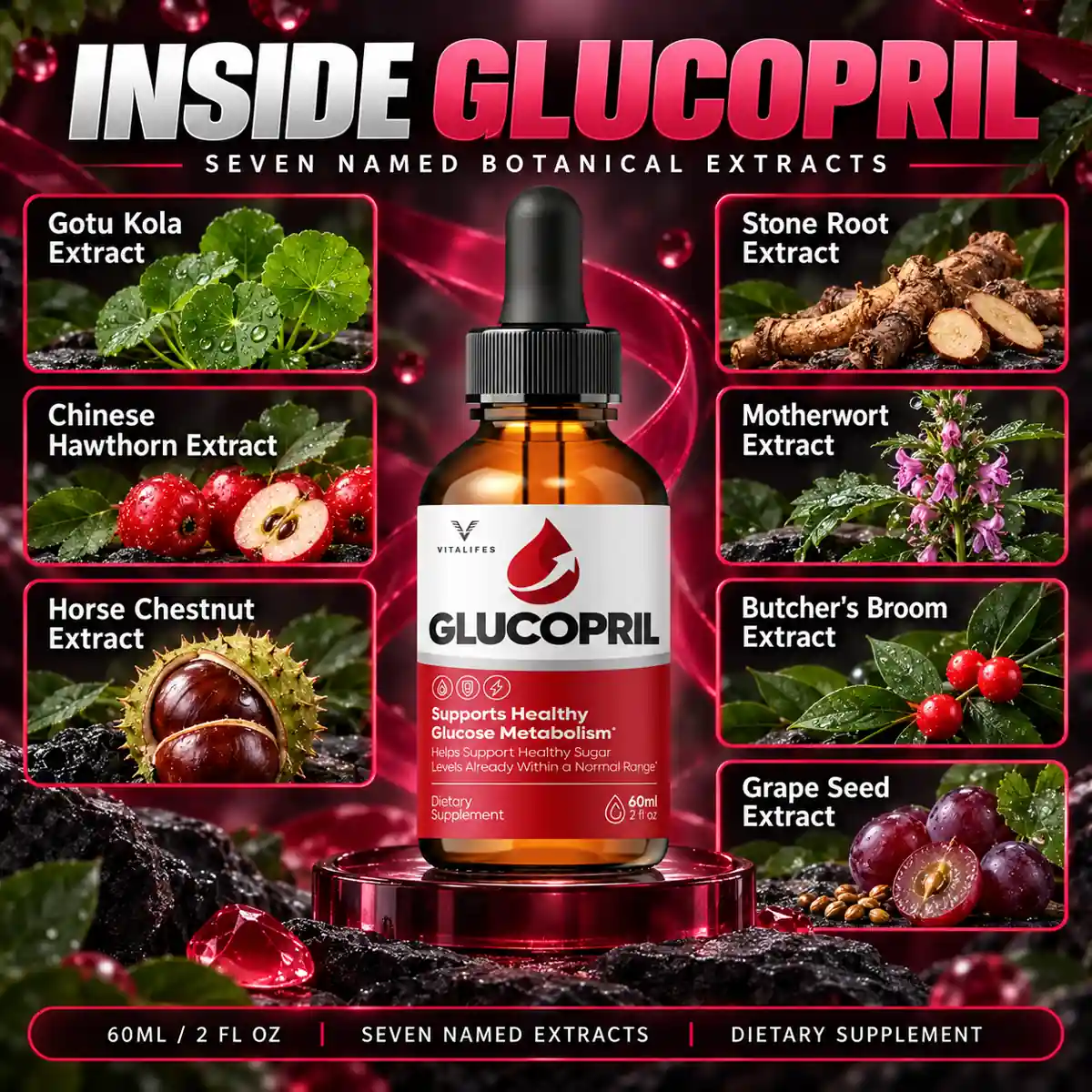
A CoA's identity test can, in principle, confirm that gotu kola, Chinese hawthorn, horse chestnut, stone root, motherwort, butcher's broom and grape seed extract are each genuinely present in a batch. What it does not typically do — and what this label's own proprietary-blend format makes harder to even request — is state how much of the roughly 121 mg blend total each of the seven contributes. An earlier article on this blog already covered how that missing per-ingredient figure blocks any comparison against a specific trial dose. A CoA does not close that gap; it was never built to.
How to actually request the document behind a reference number
A reference number printed on a label is not the certificate itself, and a genuine one is meant to be produced on request, not just printed as a code. This site's testing & quality page explains what the seals on the bottle do and do not mean, and the batch verification page is the specific route this site provides for matching a lot code against the batch record behind it. Neither of those pages is this article, and this article does not replace them; it exists to explain, in plain terms, what the document those pages point to is actually for before a reader goes looking for it.
What GLU-3914-26-GO does and does not establish
Printed on this bottle, a lot code and a CoA reference establish that a batch record exists and that a testing process, at some defined scope, was attached to it. Read against the published literature on this whole document category, they do not, by themselves, establish potency of any one of the seven named extracts, an efficacy finding, or a guarantee against every possible identity or purity failure — because even in industries with routine identity testing, the DNA-barcode literature above shows that failures still occur and still get published when someone specifically goes looking for them.
A Certificate of Analysis is a real, narrow, batch-specific document, and knowing exactly what it checks is more useful than knowing that a reference number exists.
A dietary supplement for healthy adults of 18 and over, not a medicine and not FDA-approved. Lot GLU-26/GO-3914 and certificate reference GLU-3914-26-GO are filing references printed on this bottle, not laboratory documents attached to this page, and no claim in this article should be read as a report of that specific document's contents.
References
- Little DP, Jeanson ML. DNA barcode authentication of saw palmetto herbal dietary supplements. Sci Rep. 2013;3:3518. PMID 24343362. Of 34 assayable samples, 85% confirmed genuine, 6% a substitute species, 9% inconclusive. https://pubmed.ncbi.nlm.nih.gov/24343362/
- Little DP. Authentication of Ginkgo biloba herbal dietary supplements using DNA barcoding. Genome. 2014;57(9):513-6. PMID 25495290. Of 37 assayable samples, 83.8% contained identifiable Ginkgo DNA; 16.2% contained fillers with none detected. https://pubmed.ncbi.nlm.nih.gov/25495290/