GlucoPril Official Website › Blog › Normal Range
What “Already Within A Normal Range” Means In Numbers
The second sentence on the front of this bottle says it helps support healthy sugar levels already within a normal range. It is a careful sentence, and it hangs entirely on a phrase almost nobody stops to define. So here are the numbers: where normal ends, how much your own reading moves when nothing has changed, and who the sentence is and is not written for.
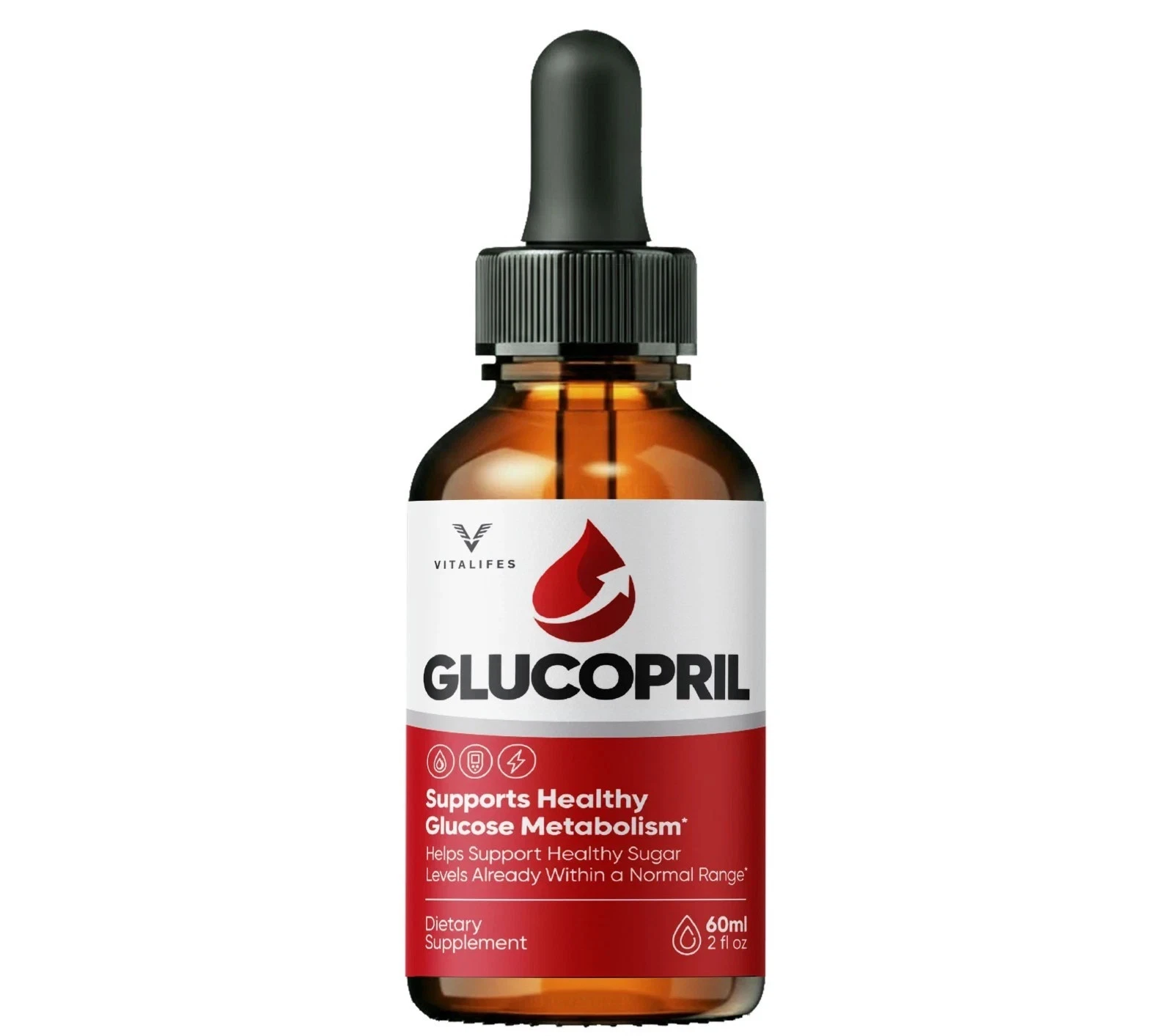
- The label’s own words are “Helps Support Healthy Sugar Levels Already Within a Normal Range”. It is written for people whose readings are already normal, not for people with prediabetes or diabetes.
- A review chapter from the NIDDK’s Diabetes in America puts the diabetes cut-points at a fasting plasma glucose of 126 mg/dL or more and an HbA1c of 6.5% or more, with impaired fasting glucose at 100 to 125 mg/dL and an HbA1c of 5.7% to 6.4% as the prediabetes band.
- The three standard tests disagree more than people expect: of those meeting the HbA1c criterion, only 27% to 98% meet the plasma glucose criterion, depending on the population.
- A healthy person’s fasting glucose varies by about 5% from one week to the next with nothing changing, which at a reading of 90 mg/dL is about 4.5 mg/dL either side.
- A normal reading leaves little room to move. A claim about supporting an already-normal level cannot be checked with a home meter the way a claim about lowering a high one can.
The sentence, and who it is written for
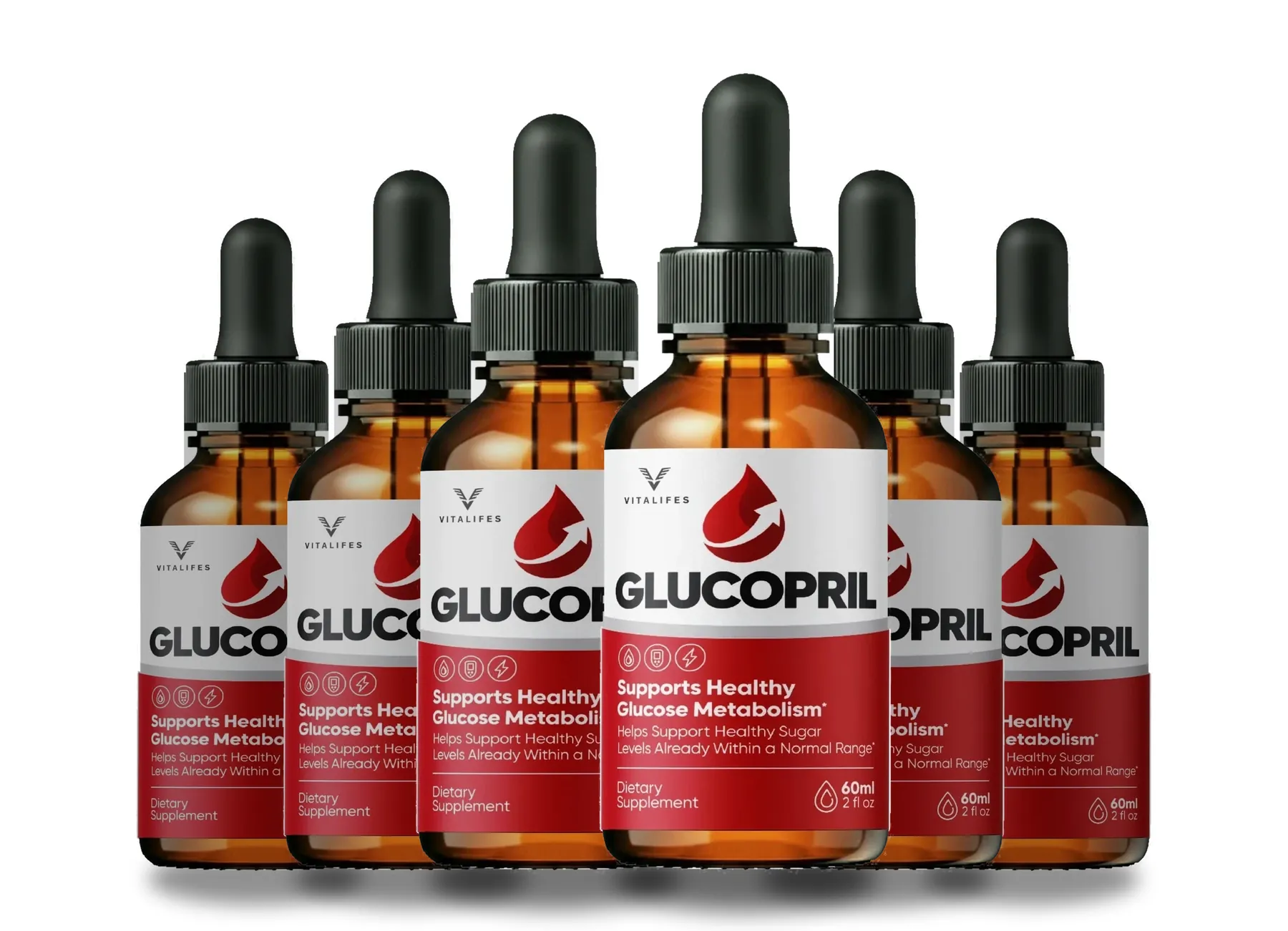
Look at the front of the bottle and there are two claims, each with an asterisk. The first is Supports Healthy Glucose Metabolism. The second is Helps Support Healthy Sugar Levels Already Within a Normal Range. Between them they are the only two things the front of this product is permitted to say, and they are worded the way a supplement label has to be worded: about supporting something that is already healthy, never about treating, curing or lowering anything.
That last part matters more than it looks. A sentence about sugar levels already within a normal range does not make a promise to someone whose levels are high. It makes a narrower and safer promise to someone whose levels are fine and who would like to keep them that way. If your fasting reading has been creeping up, or a doctor has used the word prediabetes, the sentence is not written about you, and the who-it’s-for page is direct about who this bottle suits and who should leave it on the shelf.
So the question this article answers is a practical one. What, in numbers, is “a normal range”, and how would you know you are in it?
The cut-points, from the source
Search engines are full of colourful charts on this. We would rather point at one careful source, and the one we used is the chapter on the classification and diagnosis of diabetes in Diabetes in America, the reference volume published by the US National Institute of Diabetes and Digestive and Kidney Diseases. Its authors, Genuth, Palmer and Nathan, lay out three tests and where the lines fall.
| Test | Below the prediabetes band | Prediabetes band | Diabetes criterion |
|---|---|---|---|
| Fasting plasma glucose (after an overnight fast) | Under 100 mg/dL | 100 to 125 mg/dL (impaired fasting glucose) | 126 mg/dL or more |
| HbA1c | Under 5.7% | 5.7% to 6.4% | 6.5% or more |
| Plasma glucose two hours after a glucose drink | Under 140 mg/dL | 140 to 199 mg/dL (impaired glucose tolerance) | 200 mg/dL or more |
Read from the chapter’s summary. It notes that some definitions start the HbA1c prediabetes band at 6.0% instead of 5.7%. “Below the band” is our wording for the range under each lower cut-point.
Two details in the same summary are worth passing on. One is that the diagnostic criteria were set using diabetic retinopathy, the eye complication, as the specific complication that marks where the disease starts to do harm. The other is that for people with typical symptoms a random plasma glucose of 200 mg/dL or more is diagnostic, and that an abnormal result should be confirmed by repeating the same test. A single number on a single morning is a prompt to check, not a verdict.
The American Diabetes Association revises its own Standards of Care every year, and section 2 of the 2026 edition is the current statement of the same criteria, so it is worth a look if you want the version a clinician will have open on the desk.
Three tests, three answers
You might expect the three tests to sort people into the same boxes. They do not. The same chapter reports that of people meeting the HbA1c criterion for diabetes, between 27% and 98% also meet the plasma glucose criterion, depending on the population studied, and that of people meeting the plasma glucose criterion, between 17% and 78% meet the HbA1c one. The two-hour test picks up the most people, HbA1c the fewest, and the authors put the gaps down to a simple fact: each test measures a different aspect of glucose handling, and those aspects do not always move together.
For a reader looking at the front of a supplement bottle, this has a plain consequence. “Normal” is not a single fact about you. You can have an unremarkable fasting number and a two-hour result that is not, or the reverse. When the label says already within a normal range, it does not say which test, which morning, or which instrument, and it cannot, because there is no single answer.
None of this should send anyone into a spiral. Most people with normal fasting readings have normal everything else. It is simply the reason the fasting number on your home meter is one observation rather than a diagnosis, as the article on what moves a fasting reading describes at more length.
Read the label first, then decide about GlucoPril
Two claims on the front, seven named extracts on the graphic, two drops after a meal, and a return window printed on the listing you buy through.
Price at checkout · three bottles is the pack most buyers take · money-back guarantee as the listing prints it
Order GlucoPril On The Official WebsiteTwo drops a day after a meal · 60 ml a bottle · lot GLU-26/GO-3914
Your own number moves when nothing changes
Here is the part that surprises people who have started checking. Take a healthy person, change nothing in their life, and measure their fasting glucose once a week. The numbers will not be the same, and that spread has been measured carefully.
The European Biological Variation Study drew blood from 91 healthy adults aged 21 to 69 for ten consecutive weeks across six laboratories, specifically to quantify how much things like glucose bounce around within one person. A 2020 critical appraisal and meta-analysis then pooled the well-run biological variation studies. Its estimate for the within-person variation of glucose was 5.0% (95% CI 4.1 to 12.0), against 1.2% for HbA1c. An earlier, smaller study, weekly samples over ten weeks from 15 healthy people and 15 with type 1 diabetes, found glucose varied by approximately 5% in the healthy group and about 30% in the group with diabetes.
Do the arithmetic. Someone whose true average is 90 mg/dL will swing by around 4.5 mg/dL either side of it as a matter of routine, and, if the swings follow the usual bell curve, about one week in twenty will land twice as far out. That is with no supplement, no diet change and no bad night. Someone at 100 has a wobble of about 5. The wobble is a property of the person, not a flaw in the test.
If ordinary biology moves a healthy fasting reading by four or five mg/dL from week to week, then an effect of two or three mg/dL cannot be seen by a person checking their own meter. The only pooled glucose result for any plant on this label is about 2 mg/dL on fasting glucose, for grape seed, and it is much smaller than the variation you carry around anyway. That is not a criticism of grape seed. It is a statement about what a home meter can and cannot detect.
HbA1c is steadier, at about 1.2%, because it averages three months of glucose and does not care what you ate last night. That steadiness is a good reason to prefer it when you want to know whether something has changed over a long stretch, and a good reason to be sceptical of any before-and-after story built on a handful of fingerprick numbers.
Normal is a range, not a line
It is tempting to read the cut-points as a cliff: 99 is fine, 100 is prediabetes, 125 is prediabetes, 126 is diabetes. The chapter is explicit that this is a convention: it notes that the risk of future diabetes is continuously associated with plasma glucose and HbA1c, and that the zone between the upper limits of normal and the diabetes cut-points has simply been given the label prediabetes.
An older study makes the same point from the other direction. A 22-year prospective study followed 1,973 apparently healthy men aged 40 to 59, all with fasting blood glucose below 110 mg/dL at the start. Men in the highest glucose quartile, fasting glucose above 85 mg/dL, had a higher mortality rate from cardiovascular disease than those in the lower three quartiles. After adjusting for age, smoking, lipids, blood pressure, lung function and fitness, the relative risk of cardiovascular death was 1.4 (95% CI 1.04 to 1.8) for men above 85 mg/dL.
Two cautions before anyone reads that as a target. It is a single group of middle-aged men measured at a single time, decades ago, and it shows an association rather than proof that lowering an in-range glucose lowers risk. But it does dent the idea that everything under 100 is identical. Inside the normal range, higher and lower are still different places to stand, which is the very thing a claim about “supporting” a level is gesturing at.
What a supplement can do at 88 mg/dL
Put the pieces together. Someone at a fasting 88 mg/dL is comfortably normal by every cut-point above. Their own reading will wander by roughly 4 to 5 mg/dL from week to week. The only pooled glucose result for a plant on this label is about two mg/dL. And the berberine literature the article on the aisle’s usual names describes says, in its own abstract, that the glucose-lowering effect of the best-studied glucose ingredient depends on where people start: bigger when baseline glucose is higher, smaller when it is lower.
That is the honest arithmetic behind the word support. There is nowhere much to go from 88, so a product aimed at people who are already normal is being asked to hold a position, not to move it. Holding a position is a very hard thing to demonstrate with a meter, because a level that stays the same is exactly what you would see with or without the product. It is also why the results timeline sets the buyers’ day numbers beside the twelve-week floor of the trials instead of promising a figure.
This is not an argument against the bottle. It is an argument for being clear about the question. If the goal is to keep a normal reading normal, the levers with the strongest evidence are the unglamorous ones, and the article on what moves a reading lists them. If the goal is to bring a raised reading down, the front of this bottle is not making that promise, and no blog post should either.
Reading your own log without fooling yourself
Plenty of people do check at home, and there is nothing wrong with that as long as the numbers are asked to do a modest job. A few habits make a log far more honest.
Measure under the same conditions every time. The fasting figure means after an overnight fast, first thing, before coffee, which is why a reading taken after breakfast and labelled “fasting” is not comparable with one taken before it. Pick a small number of mornings, three is plenty, and treat the middle one as your reading for that week rather than fixating on whichever was highest or lowest.
Then compare like with like across time. If your own natural spread is around five per cent, a week that is three points higher than the last one is just a week. What you are looking for is a pattern that persists across many weeks, and a change larger than the wobble, which for a fasting glucose near 90 means something more like ten mg/dL than two or three. Write down anything that might explain a run of high readings, such as illness, a poor night, an unusually late dinner or a week away from routine, because those explain most of what people worry about.
Finally, do not let a log answer a question it cannot. A meter can tell you that a number moved. It cannot tell you why, and it certainly cannot tell you that a bottle of drops was responsible. That takes a design in which one thing changes at a time, and even that only ever gives a suggestion. The article on what a dropper can measure comes at the same problem from the dose side.
How to find out which side of the line you are on
The criteria in the table are written for laboratory plasma measurements taken under defined conditions, an overnight fast for the fasting test and a measured glucose load for the two-hour test. A home meter is a different instrument used in a different way, and it is best thought of as a way of watching a trend once you know your baseline.
The practical route is simple. Ask a clinician for a laboratory fasting plasma glucose or an HbA1c, or both. If either is above the normal band, ask for the repeat that confirms it. Write down the date and the number, because the value of a normal result is what you compare the next one against. If you already know you are in the prediabetes band or above, the honest answer to whether a supplement belongs in that picture starts with the person who manages it.
For anyone who is normal today and wants to stay that way, a yearly check is a reasonable habit, and it costs far less than a bottle of anything. It is also the only way the phrase already within a normal range stops being a slogan and becomes a fact about you.
Three questions to ask of any “normal range” claim
- Normal on which test? Fasting glucose, HbA1c and the two-hour result do not always agree, and a claim that does not say which one is not really a claim you can check.
- How far does my own number move by itself? If the answer is four or five mg/dL a week, then any effect smaller than that is invisible on a meter.
- Is the claim about keeping a level, or moving it? “Supports a level already within a normal range” is about keeping. If you need to move something, you are in a different conversation.
A dietary supplement for healthy adults of 18 and over, not a medicine and not FDA-approved. Nothing on this page diagnoses anything. Diabetes and prediabetes are diagnosed by a clinician on laboratory tests, and a reading that worries you belongs with one.
References
- Genuth SM, Palmer JP, Nathan DM. Classification and Diagnosis of Diabetes. In: Cowie CC, Casagrande SS, Menke A, et al., editors. Diabetes in America. 3rd ed. Bethesda (MD): National Institute of Diabetes and Digestive and Kidney Diseases; 2018. PMID 33651569. https://pubmed.ncbi.nlm.nih.gov/33651569/
- American Diabetes Association Professional Practice Committee for Diabetes. 2. Diagnosis and Classification of Diabetes: Standards of Care in Diabetes-2026. Diabetes Care. 2026;49:S27-S49. PMID 41358893. https://pubmed.ncbi.nlm.nih.gov/41358893/
- Aarsand AK, Díaz-Garzón J, Fernandez-Calle P, Guerra E, Locatelli M, Bartlett WA, et al. The EuBIVAS: Within- and Between-Subject Biological Variation Data for Electrolytes, Lipids, Urea, Uric Acid, Total Protein, Total Bilirubin, Direct Bilirubin, and Glucose. Clin Chem. 2018;64(9):1380-1393. PMID 29941472. https://pubmed.ncbi.nlm.nih.gov/29941472/
- Ricós C, Fernández-Calle P, Gonzalez-Lao E, Simón M, Díaz-Garzón J, Boned B, et al. Critical appraisal and meta-analysis of biological variation studies on glycosylated albumin, glucose and HbA1c. Adv Lab Med. 2020;1:20200029. PMID 37361503. https://pubmed.ncbi.nlm.nih.gov/37361503/
- Carlsen S, Petersen PH, Skeie S, Skadberg Ø, Sandberg S. Within-subject biological variation of glucose and HbA(1c) in healthy persons and in type 1 diabetes patients. Clin Chem Lab Med. 2011;49(9):1501-7. PMID 21631391. https://pubmed.ncbi.nlm.nih.gov/21631391/
- Bjørnholt JV, Erikssen G, Aaser E, Sandvik L, Nitter-Hauge S, Jervell J, et al. Fasting blood glucose: an underestimated risk factor for cardiovascular death. Results from a 22-year follow-up of healthy nondiabetic men. Diabetes Care. 1999;22(1):45-9. PMID 10333902. https://pubmed.ncbi.nlm.nih.gov/10333902/
- Xie W, Su F, Wang G, Peng Z, Xu Y, Zhang Y, et al. Glucose-lowering effect of berberine on type 2 diabetes: A systematic review and meta-analysis. Front Pharmacol. 2022;13:1015045. PMID 36467075. https://pubmed.ncbi.nlm.nih.gov/36467075/
- Asbaghi O, Nazarian B, Reiner Z, Amirani E, Kolahdooz F, Chamani M, et al. The effects of grape seed extract on glycemic control, serum lipoproteins, inflammation, and body weight: A systematic review and meta-analysis of randomized controlled trials. Phytother Res. 2020;34(2):239-253. (Erratum: Phytother Res. 2022;36(3):1413, PMID 35322496.) PMID 31880030. https://pubmed.ncbi.nlm.nih.gov/31880030/