GlucoPril Official Website › Blog › Safety Literature
What Interacts With What: The Safety Literature Behind GlucoPril’s Seven Extracts
Every other article on this blog asks whether these seven plants do anything to a blood sugar reading. This one asks a different question: what does the published record say about taking them at all — on their own, alongside a prescription, or alongside each other? Two of the seven have real case-report literature behind them. One has a randomised trial that found nothing, and a laboratory study that found something. The rest have almost no safety literature to read.
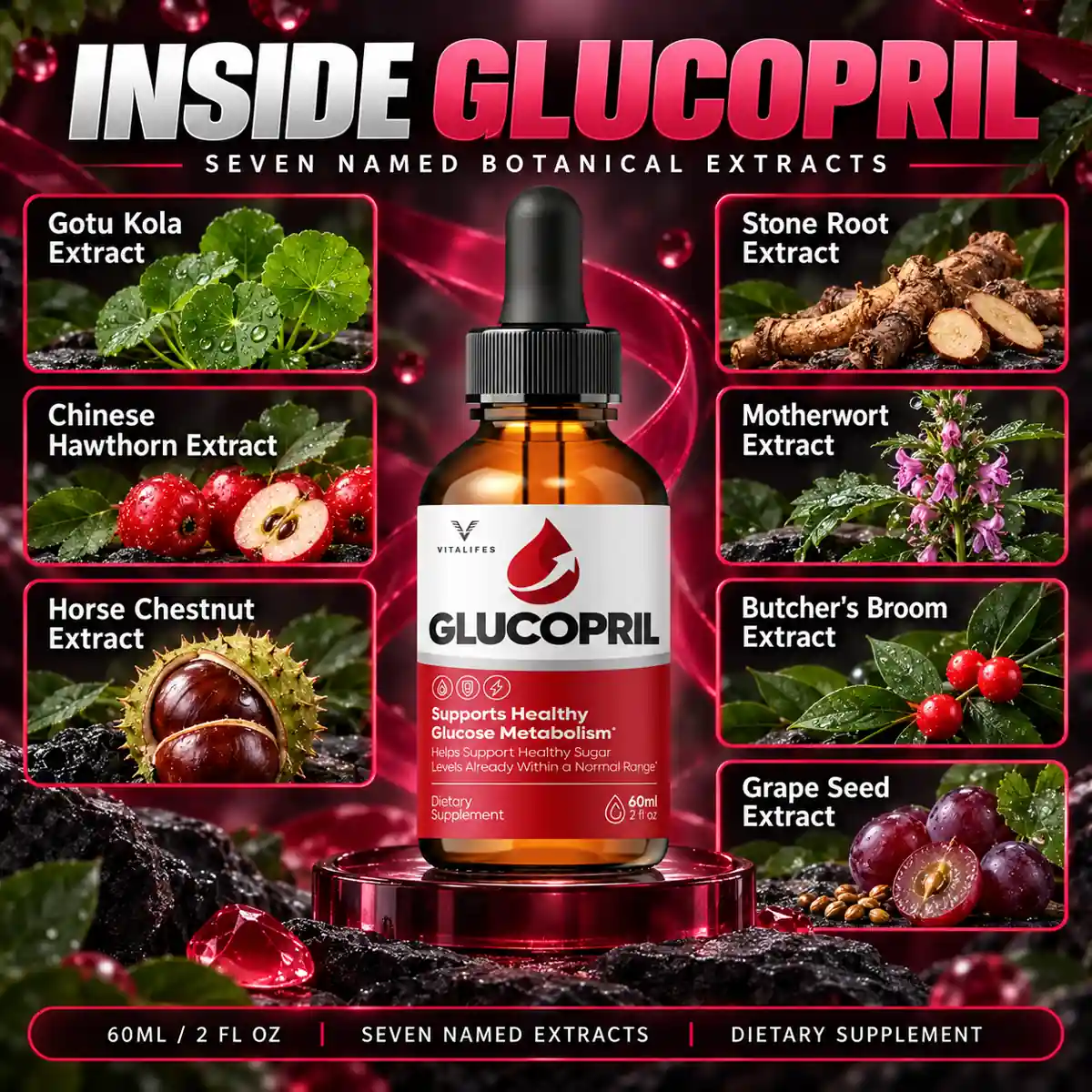
- Gotu kola has two published case-report series of liver injury in people who took it, including one recurrence on rechallenge.
- Horse chestnut has a documented case of life-threatening internal bleeding linked to its anticoagulant-like action, on top of the bleeding risk already flagged in its own efficacy trials.
- Chinese hawthorn produced two different answers in two different kinds of study: no measurable interaction with digoxin in an 8-person human trial, but a measurable one in an isolated-cell laboratory study.
- Grape seed extract has a real human safety trial behind it, and it came back reassuring at doses far above what a proprietary blend is likely to contain.
- Motherwort and stone root have essentially no published human safety data at all, in either direction.
Why a safety read is a different exercise than an efficacy read
Every earlier article on this blog has asked some version of the same question: does this plant, at the dose its trials used, move a measurable outcome? Safety literature is built differently. A case report is not a trial — it is one clinician's account of one patient, with no control group and no way to prove the herb caused what followed. A pharmacokinetic study in eight healthy volunteers is real evidence, but it is a small, short window onto a question people ask about years of daily use. Reading this kind of literature well means holding two things at once: a single case report is not proof of danger, and an absence of case reports is not proof of safety. Both are true here, for different plants on this label.
It is also worth saying plainly what this article is not. It is not a list of side effects lifted from a manufacturer's disclaimer, and it is not a substitute for the side effects page, which covers the standard cautions printed for this product category. This is a search of the published biomedical literature, plant by plant, for what has actually been reported when someone took one of these seven extracts.
The seven extracts, side by side
| Plant | What the safety literature contains | What it does not contain |
|---|---|---|
| Gotu kola | Two case-report series of hepatotoxicity, one with rechallenge | Any large-scale surveillance or trial-level safety data |
| Horse chestnut | A Cochrane-reviewed adverse-event profile from its own trials, plus a serious bleeding case report | Any data on interaction with prescription anticoagulants specifically |
| Chinese hawthorn | A digoxin pharmacokinetic trial (negative) and a digoxin laboratory interaction study (positive) | Agreement between the two |
| Grape seed | A dedicated four-week human safety trial up to 2,500 mg/day | Any signal of harm at the doses tested |
| Butcher’s broom | A pooled adverse-event rate from 69 trials of its drug class | Ingredient-specific case reports |
| Motherwort | Traditional-use description only | Any modern human safety trial or case-report series |
| Stone root | Nothing beyond two 19th-century clinical accounts | Any modern safety data in either direction |
Three of the seven have a real, if small, safety literature. Two have literature that points in different directions depending on the study design. Two have essentially none.
Gotu kola: two case-report series of liver injury
Gotu kola, Centella asiatica, carries the most serious documented safety signal of the seven. A 2005 case series from a gastroenterology department in Mendoza, Argentina, described three women, aged 49 to 61, who developed jaundice after taking Centella asiatica for 20 to 60 days. Their laboratory results were severe: liver enzyme readings (ALT) as high as 1,694 U/L, with bilirubin up to nearly 20 mg/dL in one patient. Biopsies showed granulomatous hepatitis in two of the three, and chronic hepatitis with early cirrhotic change in the third. All three improved once they stopped taking the herb. One patient took Centella asiatica again afterward, and the liver injury returned — a rechallenge, which is one of the stronger pieces of evidence a case report can offer that the herb, rather than coincidence, was the cause.
A second case report, published in 2011, described a child who developed hepatotoxicity after taking gotu kola as an alternative remedy, and the authors used the case to argue for more caution around herbal products in general, not just this one.
Two case-report series across two continents is not a large body of evidence, and it does not establish how common liver injury from gotu kola actually is among the much larger number of people who take it without incident — case reports are published precisely because they are unusual, not because they are representative. But a documented rechallenge, in particular, is a specific and hard-to-dismiss kind of signal, and it belongs in any honest account of this plant, on a label that puts it first on the ingredient list.
Horse chestnut: a bleeding case, and a bleeding signal already in its own trials
An earlier article on this blog covered horse chestnut's best-known trial, the 1996 Lancet comparison against compression stockings. That trial, and the Cochrane reviews built on the wider literature since, also carry a safety finding worth separating out: aescin, the active compound in horse chestnut seed extract, affects blood coagulation, and that is not only a mechanism behind its benefit for venous swelling but a mechanism with a downside.
A 2012 case report in the Journal of Emergency Medicine described a patient taking over-the-counter horse chestnut seed extract for venous insufficiency who suffered a life-threatening rupture and haemorrhage of a kidney tumour (a renal angiomyolipoma), requiring emergency embolisation. The authors' point was not that horse chestnut caused the tumour — it did not — but that its anticoagulant-like action was a plausible contributor to the bleed, and that patients taking it, especially anyone with a known bleeding-prone lesion or on other blood thinners, should be aware of that property.
This is consistent with, not separate from, what the ingredient's own trial literature already shows. The 2012 Cochrane review of horse chestnut seed extract for chronic venous insufficiency describes it as generally well tolerated in the trials pooled, with the adverse events reported being mostly mild (gastrointestinal complaints, dizziness, nausea) — but the same review, like the wider phlebotonic-class review already cited elsewhere on this site, notes that this entire drug class carries a real, if modest, excess of adverse events over placebo. A single case report does not mean this is common. It does mean the mechanism behind horse chestnut's best-evidenced benefit is the same mechanism behind its most serious documented risk.
Chinese hawthorn: one study that found nothing, one that found something
The earlier article on hawthorn and heart failure covered its cardiac trial literature. Hawthorn's interaction profile is a genuinely mixed picture worth reading in full, because the two most relevant studies do not agree, and the disagreement is informative rather than a simple error in one of them.
A randomised, crossover human trial published in 2003 gave eight healthy volunteers digoxin alone for ten days, then digoxin together with a standardised hawthorn extract (450 mg twice daily) for three weeks, and measured digoxin's actual blood levels and clearance throughout. The result was a clean negative: no statistically significant difference in any pharmacokinetic parameter measured. The authors concluded that hawthorn and digoxin, at the doses studied, could be safely co-administered.
A 2010 laboratory study took a different approach: rather than dosing volunteers, it tested hawthorn extract against digoxin immunoassays in vitro, and against isolated rat heart-muscle cells. It found that hawthorn interfered with one specific digoxin blood-test method (though not another), and that hawthorn extract raised intracellular calcium in the heart cells in a way that did not add to digoxin's own effect — suggesting the two may act on the same site in the cell. The authors' conclusion was more cautious than the 2003 trial's: because of both the lab-test interference and the shared mechanism, they recommended that a patient on digoxin avoid hawthorn.
Reading both together rather than picking one: the actual human pharmacokinetic evidence, in the one trial that measured it directly, found no interaction. The laboratory evidence, in cells and immunoassays rather than people, found a shared mechanism and a test-interference problem worth knowing about, especially for anyone whose digoxin dose is being monitored by blood level. A 2010 clinical review in American Family Physician summarises the same tension and, consistent with most cardiology guidance, advises caution with hawthorn for anyone on digoxin or other cardiac medication rather than treating the 2003 trial as the final word.
Read the safety record beside the efficacy record before ordering
Seven named extracts, no amount printed for any of them, and a safety literature that is real for some of the seven and close to empty for others.
Price at checkout · three bottles is the pack most buyers take · money-back guarantee as the listing prints it
Order GlucoPril On The Official WebsiteTwo drops a day after a meal · 60 ml a bottle · lot GLU-26/GO-3914
Grape seed: the one ingredient with a dedicated safety trial
Of the seven, grape seed extract has the most reassuring dedicated safety literature. A 2017 open-label safety trial gave 29 healthy adult volunteers proanthocyanidin-rich grape seed extract at 1,000, 1,500 or 2,500 mg a day for four weeks — doses well above anything a roughly 121 mg total proprietary blend across seven ingredients is likely to contain of any single one. No subject discontinued the study. The only laboratory finding worth noting was a temporary drop in serum iron in two of the highest-dose subjects, which returned to near baseline within two weeks of stopping; the authors' overall conclusion was that oral grape seed extract up to 2,500 mg for four weeks was generally safe and well tolerated.
That is a genuinely different kind of evidence than a case report: a prospective trial, purpose-built to look for harm, in a reasonably sized group, at doses far exceeding what this label is likely to deliver. It is also, notably, a four-week study, which says little about years of daily use, and a Japanese population sample, which limits how confidently it generalises. But among the seven extracts on this bottle, it is the closest thing to a clean bill of health backed by an actual trial.
Butcher’s broom: the class-wide adverse-event number
The earlier article on butcher's broom covered its placebo-controlled efficacy trial. On safety, the most useful number does not come from a single ingredient-specific study but from the phlebotonic class review already cited on this blog: Cochrane's 2020 review pooled 69 randomised trials of the whole venotonic drug class, butcher's broom included, and found, at moderate certainty, a slight increase in adverse events over placebo alongside the modest reduction in oedema. The review does not break that adverse-event count down by individual plant, so it cannot say whether butcher's broom specifically carries more or less of that slight excess than horse chestnut or the rest of the class. What it does establish is that this entire family of ingredients, evaluated honestly across tens of thousands of patients, is not adverse-event-free.
Motherwort and stone root: the two with almost nothing published
This search found no modern human safety trial, and no published case-report series, for either motherwort (Leonurus cardiaca) or stone root (Collinsonia canadensis) at supplement-level intakes. The earlier article on motherwort and the one on stone root, both on this site's sibling GlucoPril blog, cover how thin their efficacy literature is; their safety literature is thinner still.
That absence should be read the same way this blog has read every other evidence gap: it is not evidence of danger, and it is not evidence of safety. It is simply an absence. Traditional use describes both plants as generally well tolerated, but traditional-use description predates modern adverse-event reporting by well over a century, and neither plant has been through the kind of dedicated safety trial that grape seed extract has.
What this means for someone about to take the first drop
None of this changes what the earlier articles on this blog found about whether these seven plants move a blood sugar reading — they still, for the most part, do not, on the evidence available. What this article adds is a second, separate question worth asking before a first bottle: not just does it work, but what happens if I take it alongside something else, or for a long time.
- Anyone on a blood thinner, including low-dose aspirin, has a specific reason to ask a pharmacist about horse chestnut and grape seed extract before adding either.
- Anyone on digoxin or another cardiac medication has a specific reason to ask about Chinese hawthorn, given the laboratory interaction data, even though the one human pharmacokinetic trial found nothing.
- Anyone with pre-existing liver disease, or anyone who notices jaundice, dark urine or unusual fatigue after starting a gotu kola-containing product, has a specific reason to stop and seek care rather than wait it out.
- For motherwort and stone root, the honest answer is that the published literature does not have enough in it to give a confident safety read either way.
Three of these seven extracts have a real, if small, documented safety signal worth knowing before a first bottle; two have literature that disagrees with itself; two have almost nothing published in either direction.
A dietary supplement for healthy adults of 18 and over, not a medicine and not FDA-approved. Nothing on this page is medical advice, and none of it replaces a conversation with a pharmacist or physician about a specific prescription, a bleeding disorder, liver disease or an upcoming surgery. The side effects page carries the standard cautions printed for this product category; this article covers what the published research separately reports.
References
- Jorge OA, Jorge AD. Hepatotoxicity associated with the ingestion of Centella asiatica. Rev Esp Enferm Dig. 2005;97(2):115-24. PMID 15801887. Three case reports of jaundice and liver injury after 20–60 days of use; one recurrence on rechallenge. https://pubmed.ncbi.nlm.nih.gov/15801887/
- Dantuluri S, North-Lewis P, Karthik SV. Gotu Kola induced hepatotoxicity in a child — need for caution with alternative remedies. Dig Liver Dis. 2011;43(6):500. PMID 21334992. https://pubmed.ncbi.nlm.nih.gov/21334992/
- Snow A, Halpenny D, McNeill G, Torreggiani WC. Life-threatening rupture of a renal angiomyolipoma in a patient taking over-the-counter horse chestnut seed extract. J Emerg Med. 2012;43(6):e401-3. PMID 21310579. https://pubmed.ncbi.nlm.nih.gov/21310579/
- Pittler MH, Ernst E. Horse chestnut seed extract for chronic venous insufficiency. Cochrane Database Syst Rev. 2012;11(11):CD003230. PMID 23152216. Adverse events across the pooled trials were usually mild and infrequent. https://pubmed.ncbi.nlm.nih.gov/23152216/
- Tankanow R, Tamer HR, Streetman DS, et al. Interaction study between digoxin and a preparation of hawthorn (Crataegus oxyacantha). J Clin Pharmacol. 2003;43(6):637-42. PMID 12817526. Randomised crossover trial, 8 healthy volunteers; no significant pharmacokinetic interaction. https://pubmed.ncbi.nlm.nih.gov/12817526/
- Dasgupta A, Kidd L, Poindexter BJ, Bick RJ. Interference of hawthorn on serum digoxin measurements by immunoassays and pharmacodynamic interaction with digoxin. Arch Pathol Lab Med. 2010;134(8):1188-92. PMID 20670141. https://pubmed.ncbi.nlm.nih.gov/20670141/
- Dahmer S, Scott E. Health effects of hawthorn. Am Fam Physician. 2010;81(4):465-8. PMID 20148500. Notes theoretic interactions with antiarrhythmics, antihypertensives, digoxin and antihyperlipidemic agents. https://pubmed.ncbi.nlm.nih.gov/20148500/
- Sano A. Safety assessment of 4-week oral intake of proanthocyanidin-rich grape seed extract in healthy subjects. Food Chem Toxicol. 2017;108(Pt B):519-523. PMID 27889390. https://pubmed.ncbi.nlm.nih.gov/27889390/
- Martinez-Zapata MJ, Vernooij RW, Simancas-Racines D, et al. Phlebotonics for venous insufficiency. Cochrane Database Syst Rev. 2020;11(11):CD003229. PMID 33141449. https://pubmed.ncbi.nlm.nih.gov/33141449/